



Labour IV: Build broad global coalitions in fighting methane emissions
This is the fourth installment of the Topic of the Month: EU Methane Strategy - the Four Labours of the European Commission
The four labours of the European Commission
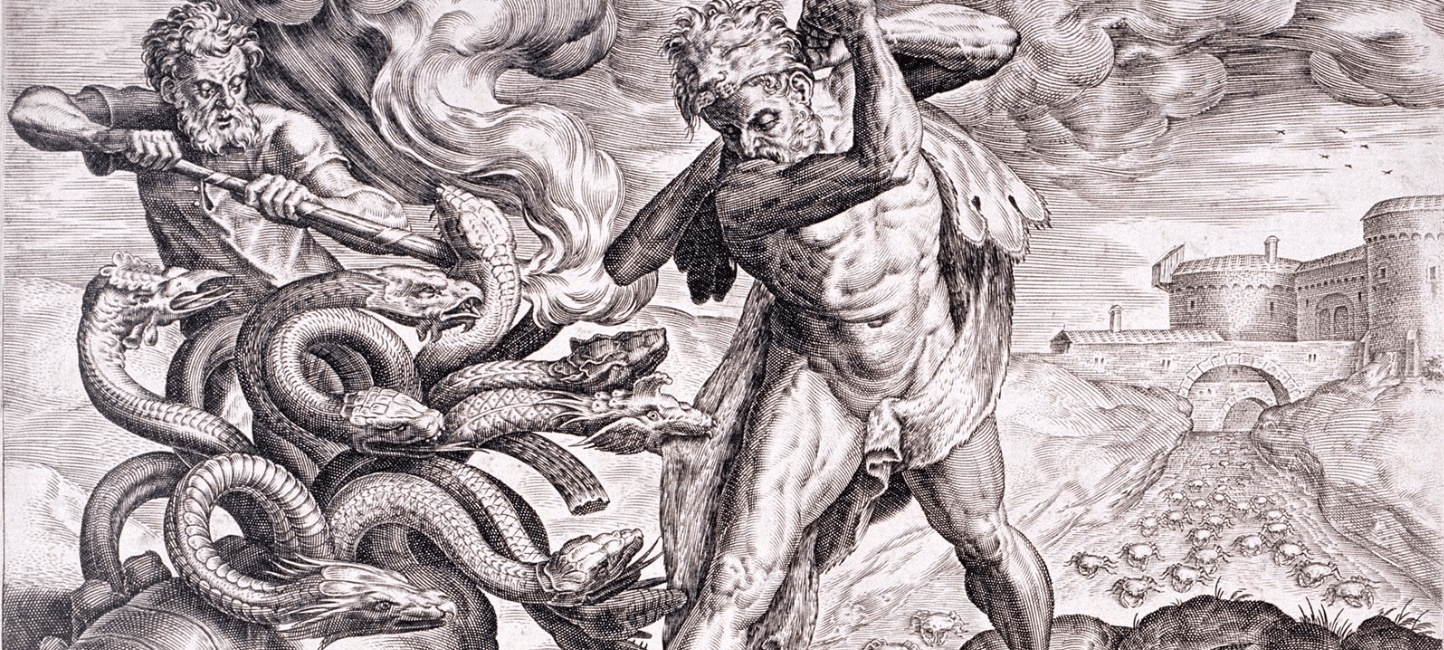
Hercules (known in Greek as Herakles) – one of the best-known heroes in Greek and Roman mythology – went down in history by performing 12 labours, so difficult they seemed impossible. Fighting methane emissions and reaching climate neutrality in roughly three decades may seem equally as impossible. However, in her first State of the Union speech, Ursula von der Leyen – the President of the EU Commission – showed that the European Union is committed to the European Green Deal (EGD) vision.
As the EU Commission is about to present the EU Methane Strategy in the coming weeks, if not days, in this Topic of the Month series we will look at four major (in our opinion) tasks ahead to ensure that the legislative proposals tabled under the Strategy lead to cost-effective methane emissions mitigation and are supported by the oil and gas industry, which is trying to find its way through the energy transition.
Labour IV
In the last episode of this Topic of the Month series we will tackle the external dimension of the EU Methane Strategy. The European Union accounted for only 6% of the global methane emissions in 2012 and its share is expected to reduce even further. It should be noted that EU-28 contributed to the largest cuts in CH4 emissions of all regions in the world with the 0.8% yr-1 over the period 1970-2012.
But on the other hand, the EU is a significant consumer of imported natural gas and the share of imports is expected to increase due to the declining domestic production. Therefore, methane emissions arising during the extraction and transport of natural gas to Europe, either via pipelines or LNG, should be properly accounted for. To this end, the European Union should use its economic and political influence, as well as an established energy dialogue with its all major energy suppliers. The combination of action at home and collaboration abroad, as well as technological development and continual improvement, should allow for cost-effective methane detection, quantification, and abatement, which in turn will allow the policymakers to properly account for methane emissions in the climate policies and action.
The EU should direct its energy diplomacy through multilateral fora such as the UN-led Climate and Clean Air Coalition (CCAC) and should be engaged in the creation of the UNEP-led International Methane Emissions Observatory. Once created, the institute will become a hub for data on methane emissions coming from different sources and will play an important role in the reconciliation of top-down and bottom-up measurements of methane emissions.
The EU should also continue cooperation with mature oil and gas regions and North America is a natural candidate. In 2016, the US, Canada and Mexico announced a joint target to reduce methane emissions from the oil and gas sector, the world’s largest industrial methane source, by 40-45% by 2025 compared to 2012 levels. A month prior to this announcement, the US along with five Nordic countries – Denmark, Finland, Iceland, Norway, and Sweden – reaffirmed their commitment to tackling the issue of methane emission as part of their efforts under the Paris Agreement. The Nordic countries pledged to advocate the “development of a global methane emission goal” in the oil and gas sector and to prevent their domestic oil and gas emissions from rising.
The victory of the Democratic candidate in the presidential elections in the US could definitely open the door for closer cooperation between the EU and the US and the creation of the transatlantic partnership on methane emissions. The Democratic members of the Congress called for the adoption of the net-zero greenhouse gas emissions by 2050. On methane emissions specifically, to end routine flaring of natural gas in shale oil production by 2030 and to reduce methane emissions by up to 70% by 2025 and 90% by 2030, almost doubling the 2016 me-thane reduction target. If you want to learn more about methane regulations in North America, read our Policy Brief and the recent opinion piece on the reversal of the 2016 federal rules on methane by the Trump administration. Since, natural gas is expected to play an important role in supporting the shift away from coal in developing economies, especially in Asia, the European Union should also continue cooperation in this region. China is already the third-largest consumer of natural gas in the world and its recent announcement to achieve carbon neutrality by 2060, may inspire other coal-dependent economies.
The European Union should also continue an energy dialogue with its major natural gas suppliers – Russia, Norway and Algeria. Keeping the dialogue open with those countries is particularly important as suppliers try to find their way through the energy transition. According to the 2020 edition of the BP Energy Outlook, natural gas can play a role in a transition towards a low-carbon energy system in developed economies, either as a direct source of low-carbon energy (when combined with CCS) or to produce blue hydrogen, which could be used in hard to abate sectors. However, in both cases methane emissions associated with natural gas production, transport or consumption will be under increasing scrutiny.
Read the previous installments
Labour III: Include methane emissions from agricultural and waste sectors in the circular economy
Labour II: Design measures to achieve substantial emissions reduction in the energy sector
EU Commission Labour I: Establish high standards in reporting methane emissions
Don’t miss any update on this topic
Sign up for free and access the latest publications and insights
More on the topic