



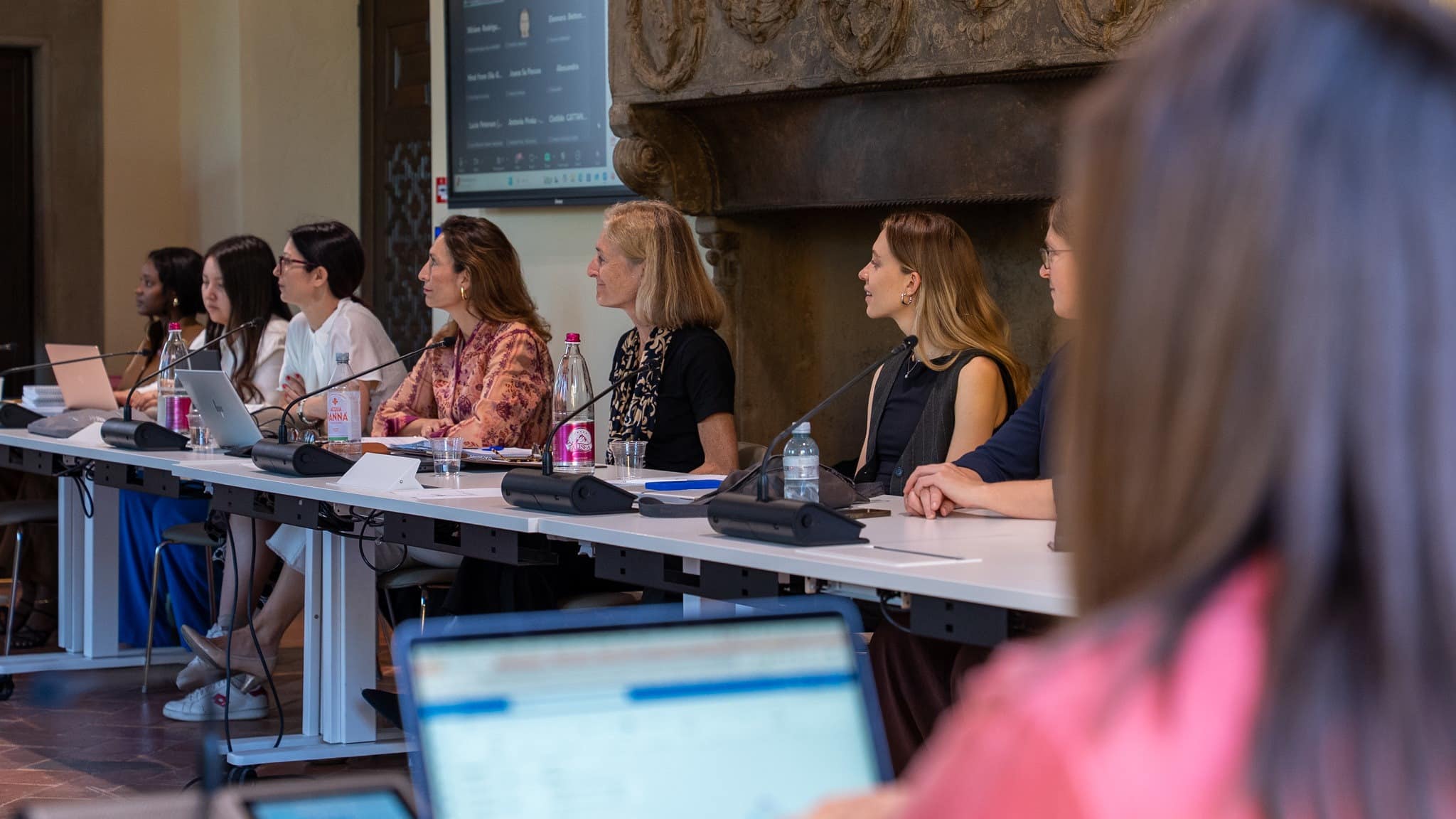
Type of event: Workshop
Workshop
A Clean Industrial Deal for Europe
05 March 2025

In her Political Guidelines in July 2024 [1], Ursula von der Leyen committed to a Clean Industrial Deal to ensure a competitive EU industry and quality jobs as one of the new Commission’s objectives within its first 100 days. The Deal will focus “on supporting and creating the right conditions for companies to reach our common goals. This means simplifying, investing and ensuring access to cheap, sustainable and secure energy supplies and raw materials”.
The Clean Industrial Deal is expected to be tabled on 26 February 2025. Key areas anticipated in the Deal include a new industrial policy, simplification of administrative procedures, a revision of State aid rules, and measures to lower energy costs and improve the functioning of energy markets.
This workshop, taking place shortly after the Deal is introduced, will examine its proposed measures and assess how they address the challenges faced by EU industry, ensuring competitiveness and decarbonisation. Discussions will also consider the broader geopolitical landscape, particularly the potential withdrawal of the US from the Paris Agreement and China’s strategic investments in Green Deal markets.
The event is by invitation only.
A plan for EU competitiveness and decarbonisation
Learn more about the Clean Industrial Deal
[1] Available at: https://commission.europa.eu/document/download/e6cd4328-673c-4e7a-8683-f63ffb2cf648_en?filename=Political%20Guidelines%202024-2029_EN.pdf
Don’t miss any update on our events
Sign up for free and access the latest events from our community.
More on the topic
Online Debate

Feb 25, 2026
Online Debate

Jan 28, 2026
Workshop
Feb 12, 2026

Online Debate

Oct 15, 2025


Workshop
A target model for hydrogen
24 January 2025

FSR Regulatory Policy Workshop Series 2024-2025
The Workshop will consider whether a target model for hydrogen could be defined, which could serve as a reference for the development of the hydrogen market and the related infrastructure requirements.
For this purpose, the Workshop will be structured in three sessions:
- Session I, in the morning, will focus on the prospects for hydrogen demand and supply, the cost competitiveness of renewable and low-carbon hydrogen and the role that it can play in decarbonising energy demand;
- Session II, also in the morning, will explore which market design and trading arrangements are best suited to support the development of the hydrogen sector, as resulting from the previous session;
- Session III, in the afternoon, will look at the implications of the development of demand and supply and the market design and trading arrangements outlined in the previous sessions, for the development of the hydrogen network.
This workshop is by invitation only.
Sustainability assessment
The FSR assesses the sustainability and carbon footprint of all its Workshops of the Regulatory Policy Workshop Series. This Workshop is run mainly ‘in presence’, with some exceptions for participation through internet-based remote connection. It is expected that most participants will join the Workshop in Florence to take advantage of the opportunity for more effective interaction and discussion. Those participants joining the event in Florence will be encouraged to offset any carbon emissions related to their air travel. It is considered that, in this way, a suitable balance is achieved between the effectiveness of the policy dialogue and the net carbon footprint of the event.
Don’t miss any update on our events
Sign up for free and access the latest events from our community.
More on the topic
Online Debate
Oct 15, 2025
Executive Training Seminar
Jun 09, 2026
Workshop

Apr 16, 2026
Lights on Women

6/8/2026 8:30
policy dialogue
Online Debate
Feb 25, 2026



Workshop
Spring Policy Dialogues
From 14 May 2025 to 16 May 2025

Join us in Florence for 3 days of in-person events where we will convene our donors and renowned experts from across the sector.
A detailed agenda with discussion topics and speakers will follow. In the meantime, here is a list of events that will take place during 14-16 May 2025:
Wednesday, 14 May
Policy Advisory Council – Part 1
The Policy Advisory Council discusses the most topical regulatory and policy issues and debates and the relevance and robustness of the latest FSR research findings. The meeting gathers experts from the European Commission, the EU Agency for the Cooperation of Energy Regulators (ACER), the FSR Energy Star and Major Donors and invited renowned academics.
Thursday, 15 May
Policy Advisory Council – Part 2
7th meeting of the Equality Platform for the Energy Sector
The Platform is a European Commission-led initiative that currently includes 38 members from the energy sector, including the Florence School of Regulation.
Established in October 2021, the platform serves as a dedicated forum for addressing equality-related matters, fostering the exchange of experiences, and championing best practices concerning diversity and inclusion in the energy sector workplace.
The meeting is open for Platform members only. For further information and details on becoming a member, please visit the Platform’s webpage.
LUCE Awards 2025
The LUCE Awards, organised by the Lights on Women initiative with the support of Landwärme, Edison, and Eurogas, aims to recognise the significant contributions of women in driving the Green Transition.
Now in its third edition, LUCE Awards will celebrate the accomplishments of two women professionals, presenting a prize in each of the following categories:
- Emerging Talent. The Emerging Talent category aims to recognise contributions of up-and-coming female leaders.
- Legacy Women. The Legacy Women category will honour senior female professionals working to further the Green Transition worldwide.
Watch the highlights from the first and second editions.
Friday, 16 May
Regulatory Policy Workshop
A full-day policy workshop directed by Alberto Pototschnig, FSR Executive Deputy Director, titled “Smartening the Energy Grids and Cybersecurity”. The workshop will consist of a series of seminars led by topic experts with opportunities for intervention from participants.
Don’t miss any update on our events
Sign up for free and access the latest events from our community.
Conference, Workshop
Can emissions trading promote carbon removals?
12 November 2024

Removing greenhouse gas emissions from the atmosphere is essential to maintaining the temperature increase below 2 degrees above the pre-industrial levels. However, a policy gap exists in incentivising investment in carbon removal technologies. Since emissions trading systems are considered a cost-effective solution to drive technological change, can emissions trading promote carbon removals?? How can carbon removals fit into a climate policy mix that targets net zero emissions?
These and other questions will be addressed during the panel discussion “Can emission trading systems be employed to promote carbon removals?” on Tuesday 12 November from 09:30 to 11:00 AZT at the Italian Pavilion of the 29th Conference of the Parties (COP29) in Baku, Azerbaijan.
Chair and Introduction:
- Simone Borghesi, FSR Climate, EAERE & University of Siena
Panel Discussion:
- Robert Jeszke, KOBIZE
- Luca Taschini, University of Edinburgh
- Stephanie La Hoz Theuer, ICAP
- Lorna Ritchie, ICVCM
Concluding Remarks:
- Ottmar Edenhofer, PIK & MCC
The event is organised by the EUI with the support of ICAP and is held in the framework of the project LIFE COASE.
Dive deeper into the topic:
- Read the event highlights from the latest LIFE COASE policy dialogue.
- ICAP report “Emissions Trading Systems and Net Zero: Trading Removals“, May 2021
Don’t miss any update on our events
Sign up for free and access the latest events from our community.
More on the topic




Online Event

Oct 21, 2025
LIFE COASE




Workshop
Renewables Penetration and System Flexibility
29 November 2024

FSR Regulatory Policy Workshop Series 2024-2025
This workshop is by invitation only
Sustainability assessment
The FSR assesses the sustainability and carbon footprint of all its Workshops of the Regulatory Policy Workshop Series. This Workshop is run mainly ‘in presence’, with some exceptions for participation through internet-based remote connection. It is expected that most participants will join the Workshop in Florence to take advantage of the opportunity for more effective interaction and discussion. Those participants joining the event in Florence will be encouraged to offset any carbon emissions related to their air travel. It is considered that, in this way, a suitable balance is achieved between the effectiveness of the policy dialogue and the net carbon footprint of the event.
Don’t miss any update on our events
Sign up for free and access the latest events from our community.
More on the topic


Executive Training Seminar
Jun 09, 2026
Workshop
Apr 16, 2026
Lights on Women
6/8/2026 8:30
policy dialogue
Online Debate
Feb 25, 2026
Workshop
Policy Advisory Council 2024
28 November 2024

The Policy Advisory Council discusses the most topical regulatory and policy issues and debates and the relevance and robustness of the latest FSR research findings. The meeting gathers experts from the European Commission, the EU Agency for the Cooperation of Energy Regulators (ACER), the FSR Energy Star and Major Donors and invited renowned academics
Don’t miss any update on our events
Sign up for free and access the latest events from our community.
Conference, Seminar, Workshop
Workshop on the role of carbon markets in reaching carbon neutrality
From 17 June 2024 to 21 June 2024

As the number of carbon markets grows, the long-term contribution of market-based instruments to reach carbon neutrality by 2050 should be further assessed. In general, the size, scope, parameters, and prices of Emissions Trading Systems (ETSs) vary and evolve depending on the social, economic, political, and legal context of each jurisdiction. All these aspects of regulated carbon markets are to be considered by policymakers. To tackle challenges, regulators may find insights from new scientific evidence.
This workshop aims to collect insights from policy-relevant research on recent trends in carbon markets, with a particular focus on the EU ETS. It will address topics such as future allowance prices, scope expansion of ETSs and market oversight, among others. Furthermore, it will focus on the methodologies used to assess ETSs (i.e., ex-post and ex-ante model-based assessments) and their results.
The 3-day event will comprise a keynote lecture, paper presentations, a policy roundtable and a guest lecture.
It is organised by FSR Climate under the framework of the LIFE COASE project, which is co-funded by the European Union’s Life Programme. The workshop combines the ex-post and the ex-ante model based assessment of ETSs and will take place during the Joint Session of Workshops of the Robert Schuman Centre in the context of the 30 anniversary of the Centre.
Participation in the event is via invitation only. Find out more about the programme of the Joint Session of Workshops here.
Programme
18 June
10:00-10:45 Introduction, Tour de Table, Ice Breaker
11:15-12:05 Keynote speech: The merits and shortcomings of the EU carbon markets
- Sonja Peterson | Kiel Institute for the World Economy
12:15-13:00 Session 1: Chinese National ETS Model
China’s national ETS price outlook: long-term forecast and policy scenarios [Introduction]
- Boyang Jin | London Stock Exchange Group
14:00-15:30 Session 2: EU ETS Models
Economic interaction between climate policy instruments [Abstract]
- Jakub Boratyński | KOBiZE
Sequencing CDR into the EU ETS [Abstract]
- Sebastian Osorio | Potsdam-Institute for Climate Impact Research
16:00-17:10 ETS Model Comparison
- Sebastian Osorio
19 June
10:00-11:30 Session 3: Carbon leakage
Carbon border adjustments: an examination of the direct and indirect effects of the European Carbon Border Adjustment Mechanism (CBAM)
- Antton Haramboure |Organization for Economic Cooperation and Development
Carbon prices, emissions and international trade in sectors at risk of carbon leakage: evidence from 140 countries [Abstract]
- Jonas Teusch | OECD
12:00-13:30 Session 4: Carbon pricing and firm behaviour
The effects of carbon pricing along the production network [Abstract]
- Thomas Stoerk | National Bank of Belgium & LSE
Realist analysis of UK ETS trading and abatement behaviour [Introduction]
- Mary Anderson | CAG Consultants
14:30-15:30 Policy panel: ETS Endgame – Including new sectors and removals ETSs
- Edoardo Croci | Bocconi University
- Sebastian Osorio | Potsdam-Institute for Climate Impact Research
- Elena Marro | European University Institute
16:00-17:30 Session 5: Beyond the EU ETS: Offsets & China ETS Policy Overlap
Willingness-to-claim voluntary carbon offsets: market evidence of revealed-preferences [Abstract]
- Tara L’Horty | Université de Lorraine
Interactions between emissions trading systems and other policies: insights from theory and an application to China [Abstract]
- Carolyn Fischer | World Bank
20 June
09:15-11:30 Session 6: Decarbonising industry and agriculture
Steel in the EU CBAM: will scrap-resource shuffling delay the sector’s global decarbonization? [Abstract]
- Maxime Gérardin | France Stratégie
Market design options for integrating negative emissions into the ETS [Introduction]
- Carlotta Von Bebenburg | Oxera
Options to expand emissions trading to emissions from agriculture in Europe [Abstract]
- Benjamin Görlach | Ecologic Institute
12:00-13:30 Session 7: Legislation for carbon pricing
The integration of negative emissions in the EU legislation [Introduction]
- Elena Bonfiglio | European Roundtable on Climate Change and Sustainable Transition
Enhancing climate policies through the implementation of regulated carbon markets in Brazil: reflecting on strategies for closing the policy-science loop [Introduction]
- Adriana I. B. S. L. Di Pasquale | University of Pisa
14:30-15:30 Guest lecture: Stopping climate change
Paul Ekins | UCL
16:00-17:30 General discussion & conclusions
17.30 Close
Don’t miss any update on our events
Sign up for free and access the latest events from our community.
More on the topic
Online Event
Oct 21, 2025
LIFE COASE
Workshop
FSR Alumni Day – 2nd edition
25 October 2024
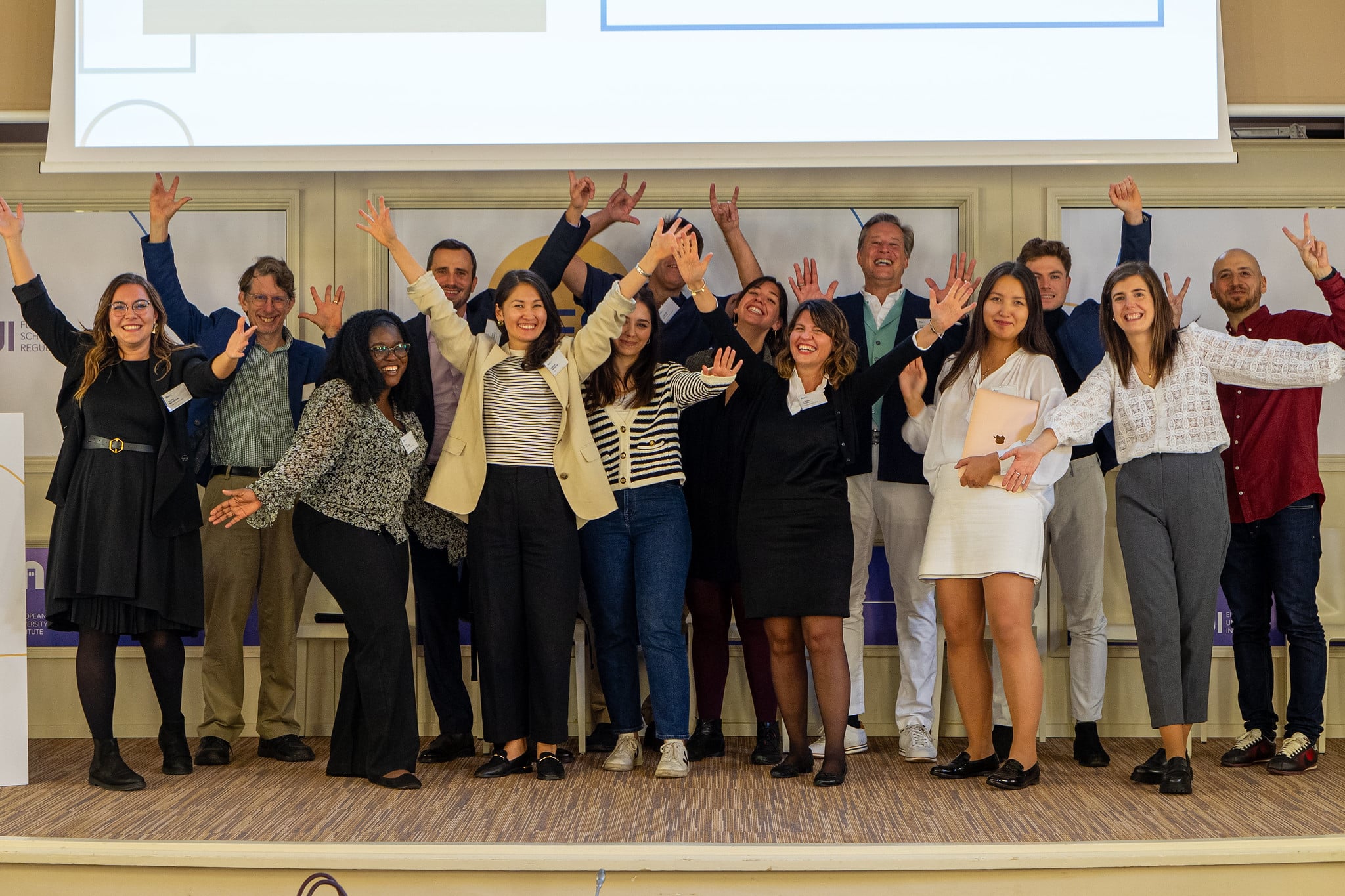
Following the success of the first edition, we are delighted to announce the 2nd FSR Alumni Day. This event will offer former alumni a unique opportunity to reconnect and stay updated on the latest policy developments in fields they previously studied.
An annual event in Florence to welcome the Alumni community
Since its establishment in 2004, the FSR has been training more than 10.000 participants. In 2014, the FSR launched its first online course and since then, more than 60 online courses have been welcoming energy professionals and academics from worldwide.
To hear back from our community of Alumni and celebrate their successful paths, we designed a special event gathering participants from all our courses, course directors, instructors, and coordinators in a friendly atmosphere to offer an additional learning experience.
Another step in your professional path
You will have the chance to network while you get up to speed on the latest developments in your area of expertise. The format will include a keynote address from the European Commission, insights from your peers, working groups (details below), networking activities and a cocktail reception.
Workshop: Gas and Hydrogen
“An Incentive Scheme for Developing a European Hydrogen Industry”
Course Directors: Ilaria Conti and James Kneebone
The integration of renewable and low-carbon gases into Europe’s energy mix has become a priority for the European Union and national governments. However, there are differing views about how to fairly and efficiently achieve this.
For example, fostering the development of the hydrogen industry may require significant subsidies, and/or its cross-subsidisation by current gas market players and consumers, with a long-term impact. However, this approach would not only involve a burden for consumers or taxpayers but may lead to stranded assets. Furthermore, there are ongoing technology races between clean hydrogen and other decarbonisation options in many of the most likely use cases, for example in high-temperature heat or transportation. Given the limited public resources of the EU and Member States, investing in one technology will come at the cost of supporting other solutions.
Given all of these variables and more, how should the EU go about supporting the ramp-up of clean hydrogen? On what grounds should it be justified? And what are the most efficient and lowest-risk options available?
Workshop: Regulation and Integration of Renewable Energy
Should renewable energy characteristics drive electricity market re-design?
Course Directors: Lena Kitzing, Mario Ragwitz
Renewable energy will become the backbone of the European energy system. There is presently an intense debate, whether or not current electricity market design accommodates the characteristics of renewable energy technologies properly, for example regarding generation patterns, supply-demand dependencies, flexibility and financing needs for investment. This session will discuss the question how a better match between renewable energy characteristics and electricity market design can be achieved. Should it be by re-designing electricity markets to accommodate these new characteristics, should it be by adapting renewable energy projects so they can better integrate into existing markets, should it be a combination of both, or something completely different? We will go into depth with the topic of market integration, and discuss how to increasingly facilitate efficient layouting and operational decisions by renewable energy projects, increasing flexibility provision. We will explore smart design of long-term contracts and support schemes including sector coupling options to increase the market value of variable renewable technologies. We will also explore how multi-criteria selection of projects that consider system and market integration. Finally, we will explore if smart electricity market re-designs can alleviate some of the existing market integration issues that renewable energy technologies currently face. We will emphasise the interplay between policy design for renewable energy and electricity market design, and also explore the coupling to other energy markets.
Workshop: Electricity Markets
Offshore systems: current challenges and comparison with onshore systems
Course Directors: Tim Schittekatte, Ellen Beckstedde
The EU Wind Power Action Plan acknowledges the importance of offshore systems to reach the European Union’s ambitions to become the first climate-neutral continent by 2050. The rapid growth and specific nature of offshore systems bring new challenges compared to how we traditionally design electricity markets. While the Electricity Market Design proposal includes some fundamental principles on the market design of offshore systems, open issues remain about the implementation of offshore bidding zones and the allocation of congestion rents between stakeholders. Also the interaction of these mechanisms with long-term instruments, such as power purchase agreements (PPAs) and contracts for difference (CfDs), remains unclear. In this session, participants will learn about the ongoing challenges in offshore systems and the proposed solutions. Using interactive poll discussions, participants will be engaged to think and share about some of these open issues. Furthermore, a comparison will be made with the onshore market design. As a result, participants will learn why some of the proposed solutions in offshore market design might be seen as experiments to the way we traditionally design electricity markets in onshore systems.
Workshop: EU Green Deal
What comes after the European Green Deal? Europe’s New Competitiveness Deal and its effects on EU climate and energy policy
Course Directors: Nicolò Rossetto, Torbjørg Jevnaker
Competitiveness of Europe’s economy is set to take centre stage among the EU’s priorities for the next five years. Following calls from several stakeholders, including energy intensive industries and business associations, the European Council in April 2024 announced a new European Competitiveness Deal, suggesting that this will be put at the core of the European Strategic Agenda for 2024-2029. The European Council called for work to be taken forward decisively and swiftly on the key competitiveness drivers. The latter included an industrial policy that decarbonises Europe’s industry in a competitive manner; achieving a genuine energy union by securing the supply of abundant, affordable and clean energy to pursue European energy sovereignty and climate neutrality; and efforts at increasing circularity and resource efficiency.
The next European Commission is expected to develop an overarching initiative in the months after the June 2024 European Parliament elections. While details will emerge only in the coming months, there is already growing interest on the relation between such a new initiative and the European Green Deal (EGD). The latter was one of the main priorities of the 2019-2024 European Commission, aiming at putting the EU on a robust path towards climate neutrality by 2050. By consistently developing a broad number of legislative proposals that covered multiple policy areas, the Commission claimed in the EGD the possibility to achieve a transition towards an environmentally sustainable energy system that is compatible with a secure and competitive energy supply and that does not leave anyone behind. Although it is difficult and probably too early to assess whether the EGD has delivered on its promises, it is apparent that more attention is needed to the link between the energy transition and competitiveness, also considering that energy prices in Europe are high according to international standards. Similarly, the EU’s increasing emphasis on strategic autonomy points towards the need to avoid external dependencies for strategic resources, such as energy and critical materials, which can undermine Union’s security in a more turbulent world.
In this session, participants will learn about the role of the EU’s overarching strategic priorities for the development of energy and climate policy initiatives in the next political cycle. Participants will have the opportunity to discuss how the energy transition in Europe will be affected by a more competitiveness-oriented agenda, and how this builds on or departs from the EU Green Deal. Polls will be used to engage participants and facilitate an exchange of views and national experiences. As a result, participants will not only become more aware of the multiple objectives and tensions associated with the different goals of energy and climate policies, but also learn how, in some circumstances, it is possible to deal with those tensions successfully.
Event Details:
- Event Fee: 250€
- Registration Deadline: 6 October 2024
Additional Information:
The event will be held exclusively in a residential format, allowing for a limited number of participants. Admission will be granted on a first-come, first-served basis.
Directions to reach the venue
The EUI Badia is easily reachable by taxi from Florence centre or from Fiesole (about 20€) and from Florence Airport (about 35€).
If you prefer public transport (ticket 1,50€ to be bought in official ticket offices, machines and authorised retailers that display the Autolinee Toscane sticker): take bus line number 7 from the center, the main railway station or from Fiesole, and get off at the stop ‘San Domenico 01’ (map) From there walk to our main building, Badia Fiesolana (map).
Logistic info
Please arrange your travel and accommodation as soon as possible as Florence is very popular. Paid registration fee is non-refundable. Please note that the course fee does not cover travel and accommodation costs.
Don’t miss any update on our events
Sign up for free and access the latest events from our community.
Speakers
More on the topic
Executive Training Seminar
Jun 09, 2026
Workshop
Apr 16, 2026
Lights on Women
6/8/2026 8:30
policy dialogue
Online Debate
Feb 25, 2026
Online Debate
Jan 28, 2026
Workshop
European electricity market regulation: implementing past, present and future reforms
18 April 2024

“Implementing Network Codes” (INC) is a collaborative and interdisciplinary research project focusing on the implementation of EU electricity market laws.
About the INC project
INC examines the rulemaking process of market and system operation guidelines and their underlying terms and conditions or methodologies (TCMs) to analyse the impact on the integration of the European electricity market.
The 4-year project runs until 2024, and is funded by the Research Council of Norway, with co-funding from Norwegian stakeholders. It is led by the Fridtjof Nansen Institute, and an international team of scholars from political science, law and economics work in close collaboration with industry experts, user partners and other relevant stakeholders.
Purpose:
Showcase results from the research project Implementing Network Codes 1 and get feedback to ongoing research; link up to discussions of ongoing/prospective discussions on the internal electricity market from perspectives of law, politics, and markets.
Session 1: Applying and enforcing the TCMs
The session will focus on what happens after TCM adoption by ACER, or agreement among NRAs in a region, including TCM adoption via individual decisions by each NRA, and the process for adopting TCMs within the EEA EFTA countries. The session will also showcase examples from regional cooperation in the Nordic and Core regions, as well as from the European level.
Session 2: After EMD: what next for network codes and TCMs?
A major development that emerged from the previous legislative reform (Clean Energy Package) was the code on demand response and a new European DSO entity. The ongoing electricity market reform (EMD) could also have implications for prospective work on network codes and guidelines (re-starting CACM revision), and the terms, conditions and methodologies (TCMs). What can we expect from these processes in the aftermath of EMD adoption? Given the EU’s 2050 climate ambitions, the electricity sector would need to decarbonise by 2040. How might this affect the processes for developing new, and revising existing, network codes, guidelines and TCMs?
Session 3: An offshore market design: How seaworthy are network codes and TCMs?
In principle, the EU electricity market regulation, including subsidiary rules like network codes, guidelines and TCMs would apply also to an offshore electricity market. However, this could create new problems, as seen with the discussion on offshore bidding zones in the ongoing EMD negotiations. The regulation of an offshore electricity network could potentially form part of a structural reform of the electricity market design in the next EU electoral cycle. This session will focus on the regulation of an offshore electricity market, and the application of NC/GL/TCMs offshore. The discussion could zoom in on the North Sea basin, where there is also collaboration with the UK and Norway, for illustration.
Session 4: Evolving role of ACER through crises and transition
What changes have materialised over time as regards to the role of ACER – formally and informally – within and beyond the regulation of the EU electricity market? What impact has the energy crisis had on the role and work of ACER? What are the prospects moving forward in a world of heightened geopolitics and energy transition? This session would discuss how ACER is getting a larger role as regards the energy transition agenda (cf. EP proposal to have ACER assess national flexibility plans) and the subsidiarity issues a greater role of ACER might entail. This session could link up to the discussion of a potential structural reform of the electricity market design in the next electoral cycle in the EU (2024-2029). While several tasks have been placed at regional and European levels, enforcement remains very much in national hands. The session could discuss whether more cooperation at regional and European level might be needed, e.g., moving beyond monitoring, capacity-building, and identification of best practices. Enhancing regulatory cooperation at EU level, including via ACER, also raises the issue of participation of non-EU NRAs as well as issues of accountability.
Don’t miss any update on our events
Sign up for free and access the latest events from our community.
More on the topic



Online Debate
Jan 28, 2026
Workshop
Feb 12, 2026
Workshop
FSR 20th Anniversary
03 July 2024

Celebrating two decades of impact in policy and regulation
This year, the Florence School of Regulation celebrates its 20th Anniversary.
#FSR20more
Twenty years of advancing knowledge have paved the way for what lies ahead. As we reflect on our milestones, we renew our commitment to enhancing research, training and policy dialogue to support regulators, policymakers, and industries in addressing climate change and shaping a sustainable future for all.
Exciting research topics, events, courses and many more novelties await us in the coming years.
Cheers!
A special event will take place in Florence on 3 July 2024, to celebrate these 20 years and to look forward.
Programme
Welcome address
Patrizia Nanz | President, European University Institute
A journey through the FSR: history, prospects, and shaping tomorrow
Leonardo Meeus | Director, Florence School of Regulation
Roundtable on “Europe at a cross-road: affordability, sustainability, autonomy”
Moderator: Erik Jones | Director, Robert Schuman Centre for Advanced Studies
Panellists:
Catharina Sikow-Magny | Director Green Transition and Energy System Integration, DG for Energy, European Commission
Nathalie Berger | Director, Support to Member State Reforms, DG Reform, European Commission
Clara Poletti | Board of Regulators Chair, ACER, and Commissioner, ARERA
Don’t miss any update on our events
Sign up for free and access the latest events from our community.
More on the topic
Executive Training Seminar
Jun 09, 2026
Workshop
Apr 16, 2026
Lights on Women
6/8/2026 8:30
policy dialogue
Online Debate
Feb 25, 2026
Online Debate
Jan 28, 2026
Workshop
The Green Deal: five years on
19 April 2024

FSR Regulatory Policy Workshop Series 2023-2024
This workshop is by invitation only. Please note that the day before, the FSR is organising an Open Evening for prospective donors, and those participating will be exceptionally invited to join this workshop. For more information on the FSR Open Evening, please visit this page.
Sustainability assessment
The FSR assesses the sustainability and carbon footprint of all its Workshops of the Regulatory Policy Workshop Series. This Workshop is run mainly ‘in presence’, with some exceptions for participation through internet-based remote connection. It is expected that most participants will join the Workshop in Florence to take advantage of the opportunity for more effective interaction and discussion. Those participants joining the event in Florence will be encouraged to offset any carbon emissions related to their air travel. It is considered that, in this way, a suitable balance is achieved between the effectiveness of the policy dialogue and the net carbon footprint of the event.
Don’t miss any update on our events
Sign up for free and access the latest events from our community.
More on the topic
Executive Training Seminar
Jun 09, 2026
Workshop
Oct 03, 2025
Workshop
Apr 16, 2026
Lights on Women
6/8/2026 8:30
policy dialogue
Online Debate
Feb 25, 2026
Workshop
FSR Policy Advisory Council 2024
22 May 2024

The Policy Advisory Council discusses the most topical regulatory and policy issues and debates and the relevance and robustness of the latest FSR research findings. The meeting gathers experts from the European Commission, the EU Agency for the Cooperation of Energy Regulators (ACER), the FSR Energy Star and Major Donors and invited renowned academics.
Don’t miss any update on our events
Sign up for free and access the latest events from our community.