




Type of event: Online Debate
How can AI help achieve EU’s energy goals?

This webinar will explore how AI-driven solutions can optimise energy distribution, improve grid resilience, and support the EU’s decarbonisation and sustainability goals.
Watch the recording:
Artificial intelligence (AI) is a game-changing technology with the potential to significantly advance Europe’s energy transition. As the EU seeks to enhance energy efficiency, reduce costs, and accelerate the shift to sustainable power, AI-driven solutions could revolutionise how energy is produced, consumed, and distributed.
The Competitiveness Compass for the EU underscores the importance of AI leadership, stating that ‘Integrating AI into strategic sectors where Europe has traditionally been strong will be critical to maintaining their competitive edge.’ The Apply AI Strategy, currently under development, aims to drive new industrial applications of AI, including in the energy sector, ensuring Europe remains at the forefront of innovation.
From AI-powered smart grids that optimise energy distribution to predictive maintenance that prevents equipment failures, AI is already transforming energy management. Machine learning algorithms enhance grid resilience, improve the reliability of renewable energy, and provide real-time recommendations for efficient energy use. AI also plays a key role in energy market forecasting and trading, ultimately supporting the EU’s decarbonisation and sustainability goals.
However, AI adoption in the energy sector is not without challenges. High initial investment costs, the need for a skilled workforce, and increasing cybersecurity risks remain barriers to large-scale implementation. As the International Energy Agency (IEA) notes, while AI innovation is advancing rapidly, its full impact and adoption remain uncertain.
To fully unlock AI’s potential, collaboration between energy providers, policymakers, and AI developers is essential. A shared understanding of the most promising applications and key enablers will be critical to bridging gaps and accelerating AI-driven transformation.
Don’t miss this opportunity to gain valuable insights into how AI can help achieve the EU’s energy goals.
Introduction – Ivars Ijabs, MEP
Case Studies – Real-world applications of AI in energy
Luis Cunha, E-REDES
Carla Silva Gonçalves, INESC TEC
Panel Discussion
Vincent Berrutto, DG ENER, EC
Jesse Scott, Hertie School
François Beaude, ACER
Jorge Vasconcellos, FSR
Presentations
Don’t miss any update on our events
Sign up for free and access the latest events from our community.
More on the topic






An overview of recent energy case law from the CJEU, March 2026
During this event, Professors Leigh Hancher and Kaisa Huhta, senior legal experts from FSR, will provide an in-depth analysis of recent notable energy-related cases and pending case law at the Court of Justice of the European Union (CJEU).
The FSR Law Area will present a comprehensive review of the most significant energy cases brought before the Court of Justice of the European Union in recent months. Professors Leigh Hancher (FSR and Universities of Tilburg and Bergen) and Kaisa Huhta (FSR and University of Eastern Finland) will offer an expert analysis of the latest developments in case law. The discussion will also include an overview of key pending cases.
Following the presentation, an interactive Q&A session will allow attendees to engage directly with the experts and deepen their understanding of the topics discussed.
The cases that will be discussed include:
T-485/21 – BNetzA v ACER [T-482/21; T-446/21; T-476/21; T-472/21; T-482/21; T-483/21; T-484/21]
T-526/19 – RENV – Nord Stream 2 v Parliament and Council (appeal: C-118/25 P)
C-205/23 – Engie Romania
C-794/21 P – Germany v Infineon Technologies Dresden and Others [C-790/21 P; C-792/21 P]
C-701/21 P – Mytilinaios v DEI and Commission
C-255/22 P – Orlen v Commission
C-59/23 P – Austria v Commission (Centrale nucléaire Paks II) [Opinion of AG Medina]
C-48/23 – Alajärven Sähkö and Others
The discussion will also cover an overview of the most important pending cases.
Presentations
Don’t miss any update on our events
Sign up for free and access the latest events from our community.
Speakers
More on the topic




Regulating CO2 transportation infrastructure
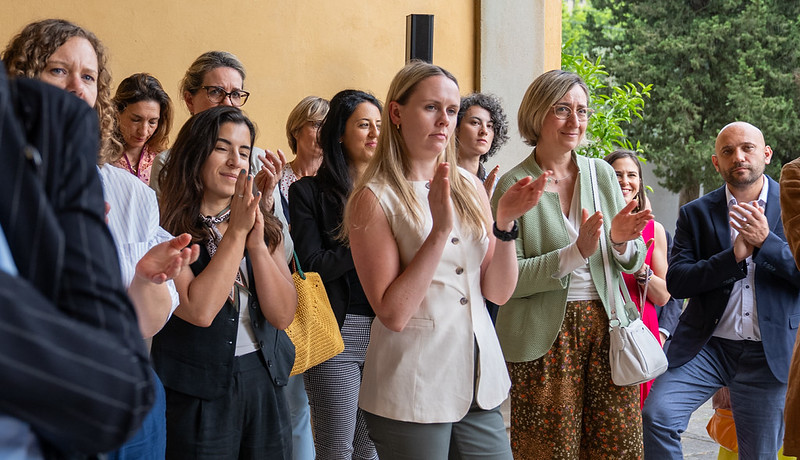
Regulating CO2 transportation infrastructure: Exploring European approaches and future policy directions
On 30 January 2025, the European Commission announced the allocation of almost €250 million from its Connecting Europe Facility to support the construction of three projects and fund nine preparatory studies for CCS infrastructures. This financial support follows the Net Zero Industry Act (June 2024), which set a capture capacity target of 50 MtCO₂ per year by 2030. However, in contrast to these developments, NGOs have sent a letter to Commission President Von der Leyen calling for the urgent development of an EU Action Plan for CCS—specifically calling for the regulation of CO₂ transportation infrastructures. In light of this context, the debate will focus on regulating CCS transportation.
Recent European developments demonstrate a growing interest in CCS. In 2024, the Net Zero Industry Act established a storage target of 50 MtCO₂ per year by 2030 and imposed an obligation on oil and gas companies to contribute to this goal. To meet these targets, the EU has expanded several funding mechanisms, including the Connect Europe Facility (CEF) fund, the Innovation Fund, and Horizon Europe. Similarly, the European Commission has published Revised Guidance on the 2009 CCS Directive (2009/31/EC) for CO₂ storage.
However, little attention has been paid to regulating transportation infrastructure. The 2009 CCS Directive briefly addresses CO₂ transportation regulation, and the Revised Guidance offers no further clarification. Interestingly, the 2023 DG Ener report “EU Regulation for the Development of the Market for CO₂ Transport and Storage” explores various regulatory options for CO₂ transportation infrastructure but does not recommend a preferred model. At the national level, significant regulatory disparities exist, with countries such as Norway and the United Kingdom taking major regularory initiatives.
Against this background, Adrien Nicolle from FSR will present insights from his co-authored paper, which introduces an analytic model for CO₂ pipeline transportation. Following his presentation, the debate will offer different visions for regulating transportation infrastructure, drawing on expert opinions from the panel. The session, moderated by Marzia Sesini and Nicolò Rossetto from FSR, will invite audience participation for an engaging and thought-provoking dialogue.
Presentations
Don’t miss any update on our events
Sign up for free and access the latest events from our community.
Speakers
More on the topic
Methane emissions from the biogas and biomethane supply chains

This debate will discuss the findings of the JRC Report on methane emissions coming from the biogas and biomethane supply chains. Starting from the data presented, the panel debate will expand to the wider role that biogas and biomethane will have in the upcoming decade and assess their contribution to reaching the EU decarbonisation targets.
Read the JRC Report titled “Methane emissions in the biogas and biomethane supply chains in the EU” here.
The scaling up of renewable gases, such as biogas and biomethane, is a critical and effective component of the EU’s long-term decarbonisation strategy. The gradual replacement of fossil-based energy with cleaner energy sources – either to produce renewable electricity or used in the form of ‘clean molecules’ – is at the core of the EU Green Deal, as outlined in the EU System Integration Strategy (2020).
More specifically, the REPowerEU Plan of 18 May 2022 set the target to 35 bcm of biogas/biomethane by 2030, with the double aim of reducing the EU’s dependency on natural gas imports while, at the same time, improving the overall European GHG footprint, by replacing molecules of fossil origin with molecules of biological origin.
According to the European Biogas Association (EBA), in 2023, biomethane production alone reached 4.9 bcm, the highest level ever, with the greatest year-on-year increase concentrated in the EU area (21%). Combined biogas and biomethane production in 2023 amounted to 22 bcm, which represented 7% of the natural gas consumption of the European Union.
On the other hand, the biogas and biomethane supply chains are not zero-GHG emissions supply chains and particular attention has been paid by several observers to the emissions of methane.
The doubling of methane emissions concentration levels in the last 200 years has been blamed on anthropogenic activities, particularly in the fossil fuels, agriculture and waste management sectors. Coal mining and gas generation and transport are among the main causes of this detrimental impact on the atmosphere.
Moreover, about 54% of man-made methane emissions come from the agriculture sector and particularly from enteric fermentation (81%) and manure.
A recently published report from the Joint Research Centre (JRC) carries out a review of all methane emissions from biogas and biomethane production to provide an updated, comprehensive methodology for emissions accounting for biogas and biomethane production, including methane losses.
Draft Programme
Introduction to the Debate and Opening Presentations
14.00 – 14.05 Introduction to the Debate
Ilaria Conti | Florence School of Regulation
14.05 – 14.20 Presentation of the Report
Marco Buffi | Scientific Project Officer, Unit C2, Joint Research Centre
14.20 – 14.30 The regulatory perspective
Benoît Esnault | Vice-chair of the Gas Working Group, CEER
Panel Discussion: Introductory Remarks and Discussion
Moderator: Alberto Pototschnig | Florence School of Regulation
14.30 – 14.50 Introductory remarks from the panellists
Maria Olczak | Research Fellow, Oxford Institute for Energy Studies
Harmen Dekker | CEO, European Biogas Association
James France | Scientific Adviser, IMEO
14.50 – 15.20 Discussion and Q&A from the audience
Panellists
15.20 – 15.30 Concluding remarks
Ilaria Conti | Florence School of Regulation
Alberto Pototschnig | Florence School of Regulation
Presentations
Don’t miss any update on our events
Sign up for free and access the latest events from our community.
More on the topic







Nuclear energy in the EU: Challenges and opportunities
Join this online debate to examine the evolving role of nuclear energy in the EU, including its potential for achieving decarbonisation goals, the development of Small Modular Reactors, and the European Commission’s shifting stance on nuclear as a key contributor to a sustainable energy future.
Achieving a 90% GHG reduction by 2040 will require the (quasi) complete decarbonisation of the electricity system. Since electricity falls within the ETS, the economic signals to drive this transformation are expected to be in place. Nuclear energy is increasingly recognised as a key and growing contributor to this goal in an increasing number of Member States.
In recent statements, the Commission is gradually becoming more positive and proactive: first, on the value of nuclear for achieving decarbonisation goals (with the traditional caveat of ‘for those Member States that choose this path’); secondly, on the importance of the EU being a technology leader; and finally, on the enormous potential of Small Nuclear Reactors.
Against this backdrop, the next Commission will need to determine how to support these developments effectively. This webinar looks to review developments in the nuclear sector and ask – What’s next for the EU?
- How are the new investments being financed and what is coming down the road?
- How advanced is SMR development, and when can we expect the first investments? Should the EU’s safety and security evolve to reflect the unique challenges of SMRs?
- Should EU financing instruments be made available for nuclear investments?
- What other actions will be necessary for the next Commission to support nuclear energy?
- How will the EU’s approach to State aid for nuclear evolve, considering the CfD requirement in the NZIA?
- EU technology leadership in nuclear is an important goal – what needs to be done?
Keynote address:
Jan Panek | DG ENER
Panel debate:
Brian Scott-Quinn | ICMA-Center
Aymen Grira | Westinghouse
Antoine Bizet | EDF
Moderators:
Christopher Jones | FSR
Andris Piebalgs | FSR
Presentations
Don’t miss any update on our events
Sign up for free and access the latest events from our community.
More on the topic
Electricity network investments and the regulatory framework

This debate will discuss how the regulatory framework might support the additional massive investments required in electricity networks over the next decades, by providing the appropriate incentives, manage risk effectively, continue to attract investors to the sector and protect present and future consumers.
In this context, a relevant issue is who is best placed to take the risk on investments against a still uncertain future: the electricity network undertakings or consumers, through the regulatory framework?
Draft Programme
Introduction to the Debate and Opening Presentations
14.00 – 14.05 Introduction to the Debate
Alberto Pototschnig | Florence School of Regulation
14.05 – 14.20 The EU Action Plan for Grids: The Policy Perspective
Raphael Sauter | Team Leader, Electricity, DG ENER C.4, European Commission
14.20 – 14.30 The regulatory perspective
Mara Berzina | Secretary General, CEER
Panel Discussion: Introductory Remarks, Polls and Comments
Moderator: Ilaria Conti | Florence School of Regulation
14.30 – 14.50 Introductory remarks from the panellists
Carmen Reittinger-Hubmer-Ruck | Co-Convenor of the Economic Framework Working Group, ENTSO-E
Peter Claes | President, IFIEC Europe
Pierre Schlosser | Deputy Director, Florence School of Banking and Finance, EUI
14.50 – 14.55 Polls
14.55 – 15.20 Comments on the polls outcome and Q&A from the audience
Panellists
15.20 – 15.30 Concluding remarks
Ilaria Conti | Florence School of Regulation
Alberto Pototschnig | Florence School of Regulation
Presentations
Don’t miss any update on our events
Sign up for free and access the latest events from our community.
More on the topic






The Clean Industrial Deal: Evolution or Transformation?
- How can EU effectively support and retain its energy-intensive industries?
- Is the CBAM effective? What reforms could enhance its role in safeguarding EU industry?
- Do existing trade policy tools adequately shield against unfair competition? If not, what measures should be considered?
- A reform of State aid is announced. What are the concrete changes that are needed?
- What additional actions are required to enable the EU to decarbonise and to retain energy intensive industry, especially in strategic sectors?
- Adina Georgescu, Eurometaux
- Markus Kerber, former CEO of BDI
- Ronnie Belmans, KU Leuven
- Ioana Petcu, Eurelectric
Presentations
Don’t miss any update on our events
Sign up for free and access the latest events from our community.
More on the topic






Certification of Hydrogen Imports: Which Requirements, Which Perspectives?
The REPowerEU Communication, published by the European Commission in 2022, confirmed the previously set target of 10 million tons (Mt) of renewable hydrogen to be produced in the EU by 2030 and added a target of 10 Mt of imported renewable hydrogen on top of it. Still in 2022, hydrogen accounted for less than 2% of Europe’s energy consumption and was primarily used to produce chemical products, such as plastics and fertilisers.
In order to facilitate the market uptake of hydrogen and in particular its upscale to the international dimension, the Commission envisaged the development of three major hydrogen import corridors via the Mediterranean, the North Sea area and, as soon as conditions allow, with Ukraine; at the same time, it supported the development of Green Hydrogen Partnerships, to facilitate the imports of green hydrogen while supporting the decarbonisation in the partner countries.
Alongside the natural matching of demand with supply, and the development of the necessary infrastructure, what is further needed as to set the basis for an international trading of hydrogen, seems to be a robust system of reliable and mutually recognised certification system.
Worldwide certification systems are typically based on aligned understanding of terminology and standardization, as well as on trust.
The EU and the US seem to be the first movers on getting to an agreed set of rules/definitions. Regarding terminology, the European Commission enshrined in regulation the definition of renewable hydrogen (as belonging to the category of RFNBOs, Renewable Fuels of non-biological origin) and has recently opened a consultation aiming to complete the definition of low-carbon hydrogen. In the US, the Inflation Reduction Act (IRA) includes comparable rules focusing on hydrogen’s generation emission intensity.
On EU RFNBO Certification, the EU Commission is evaluating different types of certificates. These certification schemes can be used by a production company to serve the needs of its customers and want to offer products meeting certain sustainability criteria. However, these certificates are only voluntary at present. Identifying and implementing mandatory standards should probably become the very first step to advance international certification of hydrogen traded products.
If so, are there any best practises to build on? Where are the main bottlenecks?
Programme
Introduction to the Debate and Opening Presentations
14.00 – 14.05 Introduction to the Debate
Ilaria Conti | FSR
14.05 – 14.20 Certification Requirements in the EU
Ruta Baltause | DG ENER
14.20 – 14.30 Certification Requirements in the US
Chelsea Baldino | ICCT
Panel Discussion: Introductory Remarks, Polls and Comments
Moderator: Alberto Pototschnig | FSR
14.30 – 15.00 Introductory remarks from the panellists
Maximilian Kuhn | Hydrogen Europe
Peter Biltoft-Jensen | Ørsted, Energy Traders Europe
Katrien Verwimp | AIB
Nicolai Romanowski | CEFIC
Francisca Gallegos | University of Eastern Finland
15.00 – 15.25
Discussion and Q&A with the audience
15.25 – 15.30 Concluding remarks
Ilaria Conti | Florence School of Regulation
Alberto Pototschnig | Florence School of Regulation
Presentations
Don’t miss any update on our events
Sign up for free and access the latest events from our community.
More on the topic

Voluntary Carbon Markets: Is Skepticism Justified?
In this joint FSR-NYU episode of #FSRDebates, we explore Voluntary Carbon Markets (VCMs) as they have emerged as a mechanism for organizations and individuals to offset their carbon emissions by purchasing carbon credits. While they hold promise to contribute to global carbon reduction efforts, they face several challenges that hinder their effectiveness and credibility.
VCMs often lack a unified global regulatory framework, leading to inconsistencies in standards and methodologies across different markets. This fragmentation can result in differences in the quality and reliability of carbon credits. Transparency issues and insufficient verification mechanisms can lead to double-counting, overestimations of carbon reductions, and fraud.
Ensuring that projects genuinely contribute to carbon reductions is a significant challenge. Moreover, concerns exist about the social impacts of certain carbon offset projects, particularly those involving land use changes.
Addressing these and other challenges requires serious efforts to create a more transparent and equitable carbon market that can effectively contribute to global climate goals. Our discussions in this episode will carefully examine all these aspects. The tri-continental perspective the debate brings aims to help understand the complexities of VCMs and enrich ongoing discussions, facilitating informed decision-making across various sectors and disciplines.
Keynote Speaker
Nat Keohane | President, Center for Climate and Energy Solutions
Damien Meadows | Legal and Policy Advisor, DG Climate Action
Debate
Peter Vis | Senior Adviser, Rud Pedersen Public Affairs, Brussels
Gregory Trencher | Kyoto University
Conclusions
Simone Borghesi | FSR
Moderators
Marzia Sesini | FSR
Christoph Graf | NYU
Don’t miss any update on our events
Sign up for free and access the latest events from our community.
More on the topic




Which Hydrogen Network for Europe?
This FSR Debate will discuss which hydrogen infrastructure vision is more likely to prevail in the period to 2030 and, more generally, what this implies for the development of the renewable/low carbon hydrogen sector.
Despite the fact that renewable and low-carbon hydrogen represents one of the pillars of the EU decarbonisation and system integration strategies, there is still significant uncertainty regarding how the sector will develop in the years to come and what this implies for the hydrogen transport infrastructure. In 2020 and again in 2022 the EU set goals for the production and import of renewable hydrogen. However, an agreed ‘target model’ for the nascent hydrogen sector is still to emerge. This might impact the development of the hydrogen transport infrastructure. Reference is often made to a ‘no-regrets’ network. But what would this be?
This FSR Debate will compare two visions – one mostly based on ‘hydrogen valleys’, similar to the current setting of the sector, and another one bases on the development of an EU-wide hydrogen backbone network- and discuss how they could contribute to a ‘no-regrets’ approach to the hydrogen network and what this implies for the development of the renewable/low carbon hydrogen sector.
Programme
Introduction to the Debate and Opening Presentations
14.00 – 14.05 Welcome to the Debate
Ilaria Conti | Florence School of Regulation
14.00 – 14.05 Introduction to the Debate
Alberto Pototschnig | Florence School of Regulation
14.05 – 14.20 the EU vision on hydrogen transport infrastructure
Lukas Wernert | Policy Officer, Decarbonisation and Sustainability of Energy Sources, DG Energy, European Commission
14.20 – 14.30 The regulatory perspective for the EU hydrogen transport infrastructure
Csilla Bartok | Head of Department, Gas, Hydrogen & Retail. ACER
Panel Discussion: Introductory Remarks, Polls and Comments
Moderator: Ilaria Conti | Florence School of Regulation
14.30 – 14.50 Introductory remarks from the panellists
María Sicilia | Chairwoman, European Hydrogen Backbone Initiative
Jorgo Chatzimarkakis | CEO, Hydrogen Europe (TBC)
Peter Claes | President, IFIEC Europe
Abel David Enriquez Rodriguez | Moderating Team, ENNOH Foundation Process
Ralph Bahke | CEO, ONTRAS and Board Member, GIE
14.50 – 14.55 Polls
14.55 – 15.20 Comments on the polls outcome and Q&A from the audience
Panellists
15.20 – 15.30 Concluding remarks
Ilaria Conti | Florence School of Regulation
Alberto Pototschnig | Florence School of Regulation
Background
Renewable and low carbon hydrogen is currently considered one of the pillars for the decarbonisation of energy demand. The 2020 EU System Integration Strategy1 included “the use of renewable and low-carbon fuels, including hydrogen, for end-use applications where direct heating or electrification are not feasible, not efficient or have higher costs” as one of the concepts to deliver low-carbon, reliable and resource-efficient energy services, at the least possible cost for society.
In 2022, hydrogen accounted for less than 2% of Europe’s energy consumption and was primarily used to produce chemical products, such as plastics and fertilisers. 96% of this hydrogen was produced from natural gas, resulting in significant amounts of CO2 emissions. Therefore, the 2020 EU Hydrogen Strategy2, unveiled at the same time as the System Integration Strategy, defined a roadmap for the development of renewable and low-carbon hydrogen. The Strategy set the priority for the EU to develop renewable hydrogen, while recognising that in the short and medium term other forms of low-carbon hydrogen are needed.
In terms of short-term ambition, the Hydrogen Strategy set strategic objectives:
- For the period to 2024, to install at least 6 GW of renewable hydrogen electrolysers in the EU for the production of up to 1 million tonnes of renewable hydrogen;
- For the period to 2030, to install at least 40 GW of renewable hydrogen electrolysers for the production of up to 10 million tonnes of renewable hydrogen in the EU, with an additional objective of 10 million tonnes imported from third countries later set by the REPowerEU Plan3.
Beyond 2030, “renewable hydrogen technologies should reach maturity and be deployed at large scale to reach all hard-to-decarbonise sectors where other alternatives might not be feasible or have higher costs”4.
Two visions for the development of the renewable/low-carbon hydrogen market and the supporting network are possible:
- One based on hydrogen valleys, i.e. local hydrogen clusters based on decentralised renewable hydrogen production and local demand, transported over short distances. This is the model currently prevailing.
- One based on an EU-wide hydrogen market, with “unhindered cross-border trade and efficient allocation of hydrogen supply among sectors”5.
The Hydrogen Strategy seemed to favour the second vision, at least for the 2030 horizon and beyond.
In order to support this vision, a suitable infrastructure is required:
- In the REPowerEU, the Commission indicated its intention to support the development of three major hydrogen import corridors via the Mediterranean, the North Sea area and, as soon as conditions allow, from Ukraine.
- An increasing group of energy infrastructure operators, under the European Hydrogen Backbone (EHB) initiative, have been looking at and proposing how a EU-wide hydrogen network could be developed, mostly by repurposing gas infrastructure no longer used in the future. The latest (EHB) report highlights a set of 40 projects managed by the EHB’s TSO members, representing 31.500 km of hydrogen pipelines with expected commissioning prior to 2030. By 2040, the backbone network should extend to close to 40,000 km. Two thirds of this network will consist of repurposed infrastructure.
Moreover, the 6th List of Project of Common Interest in 2023 included 65 hydrogen and electrolyser projects. Of these, 17 projects (some of which include several components) related to hydrogen transport infrastructures (although in some cases defined quite generically).
However, so far the hydrogen sector seems to be developing at the local level. All seven projects which were allocated support at the first auction of the European Hydrogen Bank earlier this year envisage the production of renewable hydrogen for local consumption (possibly for the production of ammonia), including in the same industrial complex6.
The regulators are also taking a cautious approach to the hydrogen network in Europe. Both at the 38th European Gas Regulatory Forum in Madrid in April and at the 10th Energy Infrastructure Forum in Copenhagen in June different views were expressed regarding which hydrogen network will be needed and by when. It seems that the sector is looking for a ‘no-regrets’ approach to the hydrogen network, which however risks of pushing the debate into a vicious circle. What such an approach will be depends on how much and where (renewable and low-carbon) hydrogen will be produced and consumed, or imported into the EU. This partially depend on the cost of producing such hydrogen. However, until it is clear which infrastructure will be available, it is unlikely that project beyond those with a local footprint will emerge.
What seems to be missing at the moment is a ‘hydrogen target model’, an agreed vision for the development of the hydrogen sector, in the same way as the ‘electricity target model’ and the ‘gas target model’, although very different in shape, guided the integration of the electricity and gas markets in Europe.
A separate, although related, issue is how any hydrogen network will be paid for. Regulation (EU) 1789/20247 allows, probably for the first time in modern European regulatory history, cross-subsidisation of the hydrogen infrastructure across time and from natural gas network users. The extent to which this cross-subsidisation is needed will depend on the size of the hydrogen network to be developed and the way in which it will be developed.
Presentations
Don’t miss any update on our events
Sign up for free and access the latest events from our community.
More on the topic


What’s next for the EU’s Energy and Climate Policy?
With the winding down of the current Commission, thoughts are moving to ‘what should be the priorities for the next Commission’s mandate?’
This question is coming at an important time, where many observers argue that the EU’s current approach is ‘under fire’ and that the ‘Fit for 55’ package has placed challenges for EU industry that threaten our competitiveness. Indeed, the Commission has already suggested that the ‘Industrial Green Deal’ will be a forthcoming priority.
A Panel of two former Energy Commissioners- Miguel Arias Cañete and Andris Piebalgs– and two former Deputy Directors-General of Energy of the Commission – Christopher Jones and Klaus-Dieter Borchardt – will debate this question, and try to suggest some priorities.
Catharina Sikow-Magny, the DG ENER Director for Green Transition and Energy System Integration of the European Commission will act as moderator, and ask questions, including those from the audience.
Questions to be addressed by the Panel will include:
- How should the next Commission/Co-legislators approach the EU’s 2040 GHG target? What are the consequences for EU citizens and industry of this?
- What new legislative initiatives should be taken to make sure that the EU meets 2040 target (and indeed the 2030 one)?
- Do we already need a 2040 RES target?
- How should the ETS and CBAM be revised during the next Commission?
- What should the EU do to ensure the competitiveness of its industry? What could the ‘Green Industrial Deal’ be?
- Do you expect the EU’s GHG, RES and energy efficiency 2030 targets to be met? If not which ones, and what should be done to put us back on course?
- What next for buildings?
- Is the EU’s hydrogen policy ‘fit for purpose’? What needs to be done?
- The Carbon Management Strategy now needs to be implemented – what should the Commission propose in concrete terms to kick-start CCUS?
- Should the EU ‘roll-back’ its technology specific target-driven approach to energy policy.? If so, why and how?
- Should the EU put a price on methane emissions?
Join us for what will surely be an entertaining and informative debate!
Don’t miss any update on our events
Sign up for free and access the latest events from our community.
More on the topic

LNG Markets and Sustainability: How to include emissions intensity information in LNG agreements?
This online debate organized in the context of the EU-funded project LNGnet, will discuss how to include emissions intensity information in LNG Agreements
The importance of Liquefied Natural Gas (LNG) in Europe’s overall energy mix has considerably increased in the last three years: since the Russian aggression to Ukraine in February 2022 and its impact on EU gas supply strategy, LNG imports to Europe have grown and LNG has proven to be a valid and reliable instrument to quickly compensate for the sudden shortage of Russian gas via pipeline.
LNG is likely to remain as part of the EU energy mix for some decades, particularly for its important contribution to energy stability and security of supply. At the same time, Europe cannot forget its climate targets and commitments. Upstream and import regulations are going to evolve in the next few years, as to facilitate the achievement of decarbonisation commitments; in parallel, technological pathways are going to evolve, affecting market conditions and global players’ behaviours and drivers.
Therefore, it’s reasonable to think that, going forward, in LNG contracts (Sales and Purchase Agreements, SPAs) a differentiation of the product depending on its carbon or emission intensity will automatically emerge: the more emissions associated with the production of feed-gas or its liquefaction and transport, the higher the costs of both its production and use in the destination market.
How should this information be tackled? What are the possible challenges in making it compatible or even standardized as to facilitate trading in a global market like LNG?
While not addressing the question of measurement, reporting and verification of said emission intensity values, this workshop will debate how carbon intensity can be taken into account and translated into LNG contracts, how it may be structured and which information would need to be considered for the relevant provisions.
Programme
Introduction to the Debate and Opening Presentations
14.00 – 14.05 Introduction to the Debate
Ilaria Conti | FSR
14.05 – 14.20 Specialised WG5: LNG Trading Arrangements in the Context of the Energy Transition
Gunnar Steck | LNGnet Team Leader
14.20 – 14.30 EU Energy Prospects
Adam Szolyak | Policy Officer, DG ENER
Panel Discussion: Introductory Remarks, Polls and Comments
Moderator: Alberto Pototschnig | FSR
14.30 – 14.50 Introductory remarks from the panellists
Luis Ignacio Parada | President of Gas LNG Europe, Gas Infrastructure Europe
Kim Talus | Professor of Energy Law at UEF Law School, University of Helsinki
Andreas Guth | Policy Director, Eurogas
Michaela Duve | Chair Legal Committee, Energy Traders Europe
14.50 – 14.55 Polls
14.55 – 15.20 Comments on the polls outcome and Q&A from the audience Panellists
15.20 – 15.30 Concluding remarks
Ilaria Conti | Florence School of Regulation
Alberto Pototschnig | Florence School of Regulation
Presentations
Don’t miss any update on our events
Sign up for free and access the latest events from our community.