




Archives: Events
The New Governance of Renewables

This online debate will discuss three of the most contentious issues regarding new governance of renewables. The European Parliament and the Council are discussing the proposals presented in November 2016 by the European Commission on the energy and climate targets for the next decade. Renewable energies continue to be in the limelight, since they can help to decarbonise the energy sector, increase security of supply and provide new business opportunities for the European economy.
However, the two European co-legislators expressed different positions in the past few months. Join us to address the following questions:
- RES target level for 2030 – how ambitious shall Europe be?
- Integration of RES into the electricity market – is priority dispatch still needed? is the current market design providing fair treatment to RES?
- Cross-border participation in support schemes – do Member States think beyond narrow national interests when promoting the deployment of RES?
These and other questions will be addressed by a high level panel made up of academics, representatives of the institutions and professional practitioners.
An interactive Q&A section with the audience will follow the panel debate.
Moderator:
- Nicolò Rossetto, Research Associate at FSR
Panellists:
- Mario Ragwitz, Professor at the Fraunhofer ISI
- Alberto Pototschnig, Director of ACER
- Dirk Hendricks, Senior Policy Advisor at European Renewable Energies Federation (EREF)
Interested in this topic?
Learn more on our Training Course on Regulation and Integration of Renewable Energy: 23 – 25 May 2018, Florence
Don’t miss any update on our events
Sign up for free and access the latest events from our community.


Active Customer – Vulnerable Customer

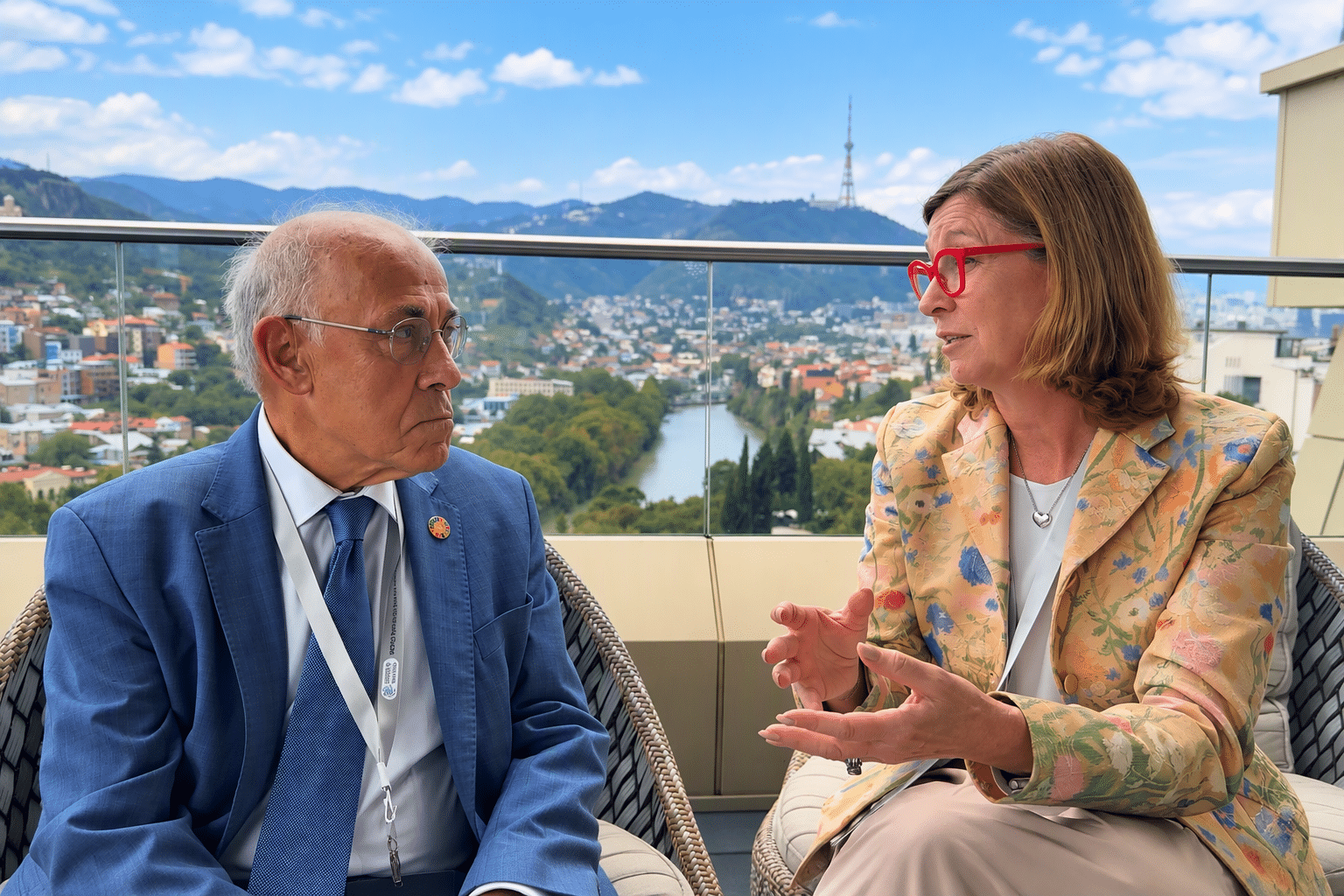
The online debate gathers experts, academia and policy makers. It will be introduced by Susanne Nies on the state of play of energy poverty in the EU, but also active customers in the EU, moderated and commented by Leonardo Meeus, FSR. A Q&A with the audience will follow, for a total event duration of 1 hour’15.
The Clean Energy package for all Europeans rightly emphasizes the central place of the customer, for who dynamic prices are needed, and who should be empowered to participate in all markets. The active customer can be seen as the modern and digital citizen, supportive to the energy transition, keen on participating in change. However, around 11 %[1] of the EUs 510 million inhabitants are energy poor, vulnerable, and expect from new legislation to protect them, as energy is a public basic good. Some governments claim regulated prices to be the solution to address energy poverty. But avoiding price signals will prevent from active customers to rise.
- Are measures for active customers negative for vulnerable customers?
- What about other incentives for ending energy poverty?
- Is the newly established energy poverty observatory a good step on the EU fight against energy poverty?
- What targeted approach is suitable and what models do we see in EU?
- What are the provisions for active and for vulnerable customers in the new package?
- What should be emphasised in addition?
- What are best solutions to end energy poverty and vulnerability of customers?
Panellists
- Anna Colucci, Head of Retail, DG ENER
- Anne Vadasz Nilsson, Vice President, CEER
- Branislava Marsenic Maksimovic, ECRB Natural Gas Expert, Energy Community Secretariat
- Elizabeth Errington, Senior Policy Researcher, Citizens Advice
- Theresa Griffin, MEP
Introduction and moderation
- Leonardo Meeus, Professor at Vlerick Business School and FSR
- Susanne Nies, ENTSO-E
Don’t miss any update on our events
Sign up for free and access the latest events from our community.
State Aid in the Energy Sector

The seminar will mark the publication of our latest research project, a multi-authored volume, State Aid in the Energy Sector, from Hart Publishing edited by Leigh Hancher, Adrien de Hauteclocque, and Francesco Salerno.
The book provides a comprehensive, detailed analysis of the increasingly complex issues surrounding the definition and application of State aid law and policy in the energy sector, from both a legal and economic perspective. It delves into issues such as price regulation and taxation, before considering the criteria for compatibility with capacity mechanisms, RES, projects of common interest, and services of general economic interest.
The research then turns to procedure by looking into State aid recovery, arbitration, and enforcement, and, finally, examining its application across key jurisdictions within the EU, the EEA, and the Energy Community. Pre-order the publication
Join the seminar to debate all issues related to State aid in energy, with speakers:
- Guido Bortoni (ARERA – Italian Energy Regulatory Authority)
- Anna Jarosz-Friis (DG COMP, European Commission)
- Simone Mori (ENEL)
Download the programme
Don’t miss any update on our events
Sign up for free and access the latest events from our community.



2nd Young Researcher Seminar
FSR Young Researcher Seminar, 2nd edition: Call for papers on Electricity Market Design and Electricity Grid Regulation
Deadline extended! Submit your paper by the 30th of April 2018
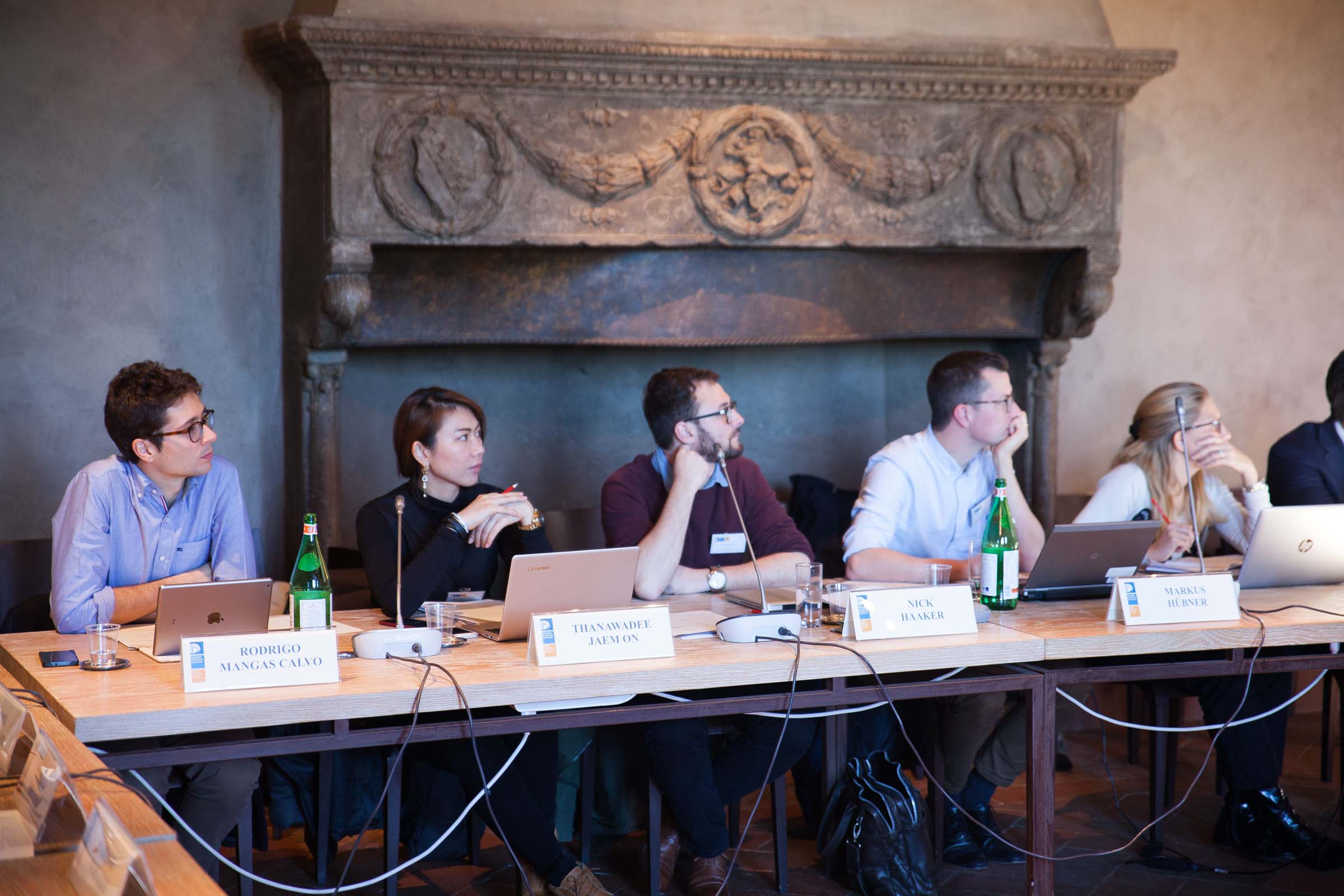
The FSR strongly engages in contributing to the development of the next generation of researchers in Europe. After accomplishing a very successful first edition in 2017, we are now launching the second edition of the 2-day Young Researcher Seminar. It will be hosted on the 3rd and 4th of July 2018 in Florence covering the following two topics:
- Electricity Market Design (Day 1)
- Electricity Grid Regulation (Day 2)
On both days, the morning session will be dedicated to a panel debate with experts coming from academia, industry and regulatory authorities; while the afternoon sessions will offer the selected young researchers the opportunity to present their papers and to receive a thorough feedback.
The seminar is organised under the scientific supervision of:
- Jean-Michel Glachant | Florence School of Regulation at RSCAS (EUI)
- Leonardo Meeus | Vlerick Business School and Florence School of Regulation at RSCAS (EUI)
Call for papers
For the second edition of the Young Researcher Seminar, the Florence School of Regulation is inviting young researchers in the field of electricity market design and electricity grids regulation to submit their working papers. The papers cannot be already published in scientific journals. The researchers must be Ph.D. candidates or young post-doctoral researchers.
Interested? Here is all you need to know to participate
Timeline & paper guidelines
- Join other researchers from all over Europe and submit your paper at the e-mail-address: mara-nelucia.radulescu@eui.eu.
- Target group: young researchers (Ph.D. students or young postdocs) working on the electricity sector (no specific discipline limit is envisaged: researchers can be economists, engineers or even lawyers and political scientists)
- Scope of the contribution to be submitted: working papers on Electricity Market Design or Electricity Grid Regulation not yet published in a scientific journal
- Paper submission deadline: 30 April 2018
- Confirmation of acceptance: 14 May 2018.
The best eight papers will be selected for presentation at the seminar. The Florence School of Regulation will cover the accommodation costs for two nights for the eight selected candidates.
Non-selected candidates who submit good papers could be invited to participate in the seminar.
No registration fee will apply.
When submitting your paper, please include the following information and documents into your application e-mail:
- Name
- Country of origin
- Current university/institution and role
- Title of submitted paper
- A short CV (please note that the selection process will not be based on your CV but on the submitted paper alone)
- The full working paper with an abstract and a short set of keywords
Co-authored papers will be considered. There is no specific template that needs to be used for the papers (no specific constraints for the length as well as the format of the paper).
For any issue regarding the submission, please contact Mara Radulescu
Are you on Twitter?
Send us your Twitter account name, or that of your university and Keywords to be used as hashtags. FSR will promote your work and will live tweet the event. The hashtag of the seminar is: #FSR_YRS18
Don’t miss any update on our events
Sign up for free and access the latest events from our community.
More on the topic



Executive Symposium: Road Safety

Organised jointly by the Cabinet of Commissioner Violeta Bulc, the European Commission Directorate-General for Mobility and Transport (DG MOVE) and the Transport Area of the Florence School of Regulation at the European University Institute (FSR Transport), this Executive Symposium is part of the extensive consultation process that the European Commission is undertaking to prepare a strategic EU framework to guide road safety regulation for the period 2020-2030.
This event is by invite only.
Full engagement from diversified stakeholders on #roadsafety. Session still in progress to transform ideas into concrete actions. pic.twitter.com/WWEGPQaTtg
— Violeta Bulc (@Bulc_EU) 22 gennaio 2018
DOWNLOAD:
ORGANIZED WITH:

Don’t miss any update on our events
Sign up for free and access the latest events from our community.


EU ETS Reform and Implications

This workshop will examine the reform of the EU ETS and its implications for the energy markets.
The increasing penetration of renewable-based generation in the electricity sector poses challenges to the operation of energy systems. This is happening not only because of the greater variability of some technologies’ generation levels, but also because such generation is promoted through support mechanisms which prevent it from being exposed to market/price signals. While improvements in the design of support mechanisms have been introduced, a shrinking share of generation is fully exposed to market signals/prices.
At the same time, support for renewable-based generation is advocated on the basis that market prices do not currently internalise some of the negative externalities associated with ‘conventional’ electricity generation. One of these externalities is clearly the impact of greenhouse gas (GHG) emissions produced from fossil fuel-based electricity generation.
The EU Emission Trading Scheme (ETS) was introduced in 2005 with the aim to address this market failure, by creating a market for GHG emission allowances (EUAs), hence setting a price for carbon emission reflecting their negative externalities. While the fundamental design of the EU ETS seems appropriate, its implementation has been hindered by the last decade’s economic crises, as well as by the overlapping targets for the different EU environmental policy objectives (energy efficiency, renewables penetration and GHG emission reductions). As a result, EUAs have been traded at lower levels, below those believed to be necessary to promote any fuel/technology switching.
The European Commission is currently revising the EU ETS for the period beyond 2020. This new system includes a new emissions reduction target of 43% by 2030 (compared to 2005 levels) and a cap which will be reduced by a linear reduction factor of 2.2% from 2021 onwards (compared to the current 1.74%). The proposal also includes a set of rules to avoid carbon leakage for sectors facing the highest risk of relocation of production outside the EU, with a gradual phase-out of free allocation for the less exposed sectors after 2026. The Market Stability Reserve (MSR) mechanism will also be revised.
The Workshop, jointly organized by the Energy and Climate Areas of the FSR, will consider how the EU ETS might be revised to be able to address the inadequacies in its implementation, and to what extent this revision might result in higher EUA prices. A fundamental step in this process relates to the need of calibrating the EU ETS considering also the interaction with other climate and energy policies. The Workshop will also aim to assess what the implications of such higher EUA prices could be for the electricity market’s prices, as well as investigating to what extent the renewable-based generation would be able to participate in the electricity market without requiring further support.
This workshop is exclusively open to national regulators, representatives from public bodies and associate & major donors of the FSR Energy area.
Don’t miss any update on our events
Sign up for free and access the latest events from our community.



Market Abuse and Abuse of Market Power in Wholesale Energy Markets
FSR Regulatory Policy Workshop Series 2017 – 2018: Market Abuse and Abuse of Market Power in Wholesale Energy Markets
The EU Regulation No 1227/2011 on wholesale energy market integrity and transparency (REMIT) has introduced specific obligations and prohibitions to promote the integrity and transparency of trading in wholesale energy products. Specifically, it prohibits market abuse in the forms of market manipulation, attempted market manipulation and insider trading. It also envisages a sector-specific monitoring framework to detect and deter these types of abusive behaviour.
Article 2(2) of REMIT distinguishes four different categories of market manipulation: (i) false/misleading transactions, (ii) price positioning, (iii) transactions involving fictitious devices/deception and (iv) dissemination of false and misleading information.
The Workshop will aim at comparing and contrasting the notion of market manipulation, particularly in the form of price positioning; as well as the notion of abuse of dominant position, mainly in the form of artificial limitations in the production of an energy product. The event will try to identify and assess any overlaps between the two concepts and conclude on how to approach those specific cases in the best way.
Download the programme
This workshop is exclusively open to national regulators, representatives from public bodies and associate & major donors of the FSR Energy area.
Further background information:
Price positioning is defined as securing – or attempting to secure – by a person, or persons acting in collaboration, the price of one or several wholesale energy products at an artificial level – unless the person who entered into the transaction or issued the order to trade establishes that their reasons for doing so are legitimate and that the transaction (or order) to trade conforms to accepted market practices on the wholesale energy market concerned. Transactions involving fictitious devices or deception are those aimed to give false or misleading signals regarding the supply of, demand for, or price of wholesale energy products.
Examples of price positioning practices include those amounting to “abusive squeeze” (also known as “market cornering”), where a party (or parties) with a significant influence over the supply of, or demand for, or delivery mechanisms for a wholesale energy product and/or the underlying product of a derivative contract, exploit a decisive position in order to materially distort the price at which others have to deliver, take delivery or defer delivery of the instrument/product to satisfy their obligations. The European Agency for the Cooperation of Energy Regulators (ACER) notices that the proper interaction of supply and demand can – and often does – lead to market tightness, but that this is not market manipulation in itself. Similarly, having a significant influence does not constitute market manipulation by itself.
Another example of market manipulation in the form of “price positioning” are the “actions undertaken by persons that artificially cause prices to be at a level not justified by market forces of supply and demand, including actual availability of production, storage or transportation capacity, and demand (‘physical withholding’)”. For the actions of a person to have an influence on the market price, such a person should have a “significant influence/decisive position”.
The “significant influence” over the supply of wholesale energy products and the “decisive position” in their markets resemble the notion of “dominant position” referred to in Article 102 of the Treaty on the Functioning of the European Union, prohibiting the abuse of market power.
The notion of abuse of a dominant position in these forms is therefore closely related to the notion of market abuse in the form of market manipulation through price positioning practices. These two notions do not necessarily overlap, and it is clear that market manipulation (under REMIT) takes also forms that do not necessarily involve an abuse of dominant position. Another interesting question is whether all forms of abuse of a dominant position involving an artificial limitation of energy production (e.g. through capacity withholding) also represent market abusive behaviour under REMIT.
Don’t miss any update on our events
Sign up for free and access the latest events from our community.

Webinar: EU Clean Energy Package

Interactive webinar with Leonardo Meeus
This webinar on the EU Clean Energy Package gives you a teaser of the new online training course that will start in January 2018:
- Electricity markets: “ensuring the internal market level playing field”
- Electricity Grids: “adapting to the decentralization of the power system”
- New deal: “empowering customers and citizens”
Learn more about the new online course
During this 1-hour interactive webinar, you will get a taste of the content of the training, and also experience the kind of online interaction we will have during the online course.
The webinar will finish with a Q&A via the chat-box to clarify any question you might have regarding this upcoming training opportunity.
The training is part of a partnership of Florence School of Regulation with InnoEnergy and Vlerick Business School to help organisations manage the energy transition supported by the EU Clean Energy Package
Don’t miss any update on our events
Sign up for free and access the latest events from our community.
Connecting the dots of the energy transition: Local, national, regional, European, digital

The Florence School of Regulation is partnering with ENTSO-E for its Annual Conference.
Power grids are the key enablers of the energy transition, of the interaction between geographies, between sectors and between the physical and growing digital dimension.
The digital layer developing on top of the physical power networks enables more variable renewables and new flexibility solutions with market-based service platforms. Microgrids are developing and having them network-based and linked to the wider system will allow maximisation of social welfare. E-Mobility is moving transport and power networks closer together. Smart houses and energy efficiency will see buildings play a new role in power systems. The customer and the market are to be at the heart of this fundamental change.
ENTSO-E’s Annual Conference – one of the key events on Brussels’ energy scene – will address connections between geographies and sectors, between small and big. ENTSO-E will explain its own strategic vision and will invite prestigious speakers from the different parties involved to challenge and voice their own through a series of interviews, fish-bowls, e-voting and ping-pong sessions.
Be part of the debate. Join us to find out how the dots of the energy transition, from local, regional, national, European and digital, are connected.
Don’t miss any update on our events
Sign up for free and access the latest events from our community.
Contractual Arrangements and Business Models for a Liquid and Flexible Global LNG Market

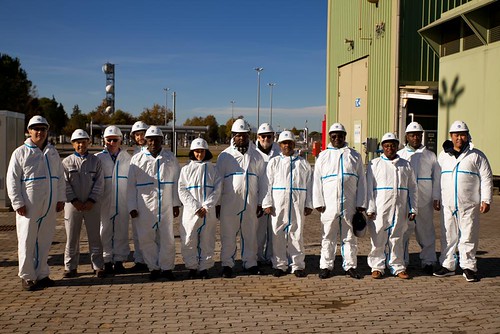
The FSR is honoured to host this high-level workshop co-organised by European Commission Directorate-General for Energy and the Ministry of Economy, Trade and Industry of Japan.
Experts from Europe and Japan will focus on flexibility in Liquefied Natural Gas (LNG) sale and purchase agreements, including in the context of newer business models for trade in the global LNG market. They will also discuss ‘best practices’ with trading contracts and their flexibility arrangements and to build up confidence (also in legal terms) for their use. The workshop could lead to a number of recommendations to enhance the use of these contracts.
Background
International LNG markets are set for major change, with substantial new liquefaction capacity coming on stream in the period to 2020.
Both Europe and Japan have published in 2016 a strategy for liquefied natural gas. For the EU, the current developments in the global LNG market offer an opportunity to let LNG play its full role in diversifying gas supplies to all EU member states and in enhancing the competitiveness in the internal gas market. For Japan, the world’s largest LNG importer, secure LNG supplies are strategically important.
In July 2017, the EU and Japan signed a Memorandum of Cooperation on promoting and establishing a liquid, flexible and transparent global Liquefied Natural Gas (LNG).
The Florence workshop opens the series of 4 workshops taking place in various European and Japanese locations between 2017 and 2018.
Don’t miss any update on our events
Sign up for free and access the latest events from our community.
More on the topic










Incentive properties of coincident peak pricing

FSR Energy Seminar Series with Professor R. Baldick (University of Texas at Austin)
Coincident peak pricing is used in several electricity markets to recover the embedded cost of infrastructure, such as transmission. Measured consumption at the time of the peak is used to set charges for a subsequent period. If transmission costs are truly sunk, then such a recovery is unlikely to be efficient. However, in the context of growing peak demand, additional system capacity must be built. We discuss the incentive properties of coincident peak pricing when investments are not considered to be sunk.
Presenter: Prof. Ross Baldick (University of Texas at Austin)
The Seminar is organised by the Research Team of the Florence School of Regulation – Energy and open to all EUI members.
Don’t miss any update on our events
Sign up for free and access the latest events from our community.
More on the topic
Wind variability and the impact on markets
FSR Energy Seminar Series with Professor R. Baldick (University of Texas at Austin)
Description: In this seminar we discuss the growth of wind in Texas and the challenges to electricity system operation under high levels of wind. Texas has, by far, the highest wind penetration of the three interconnections in the United States and the highest penetration of any balancing area, so that it represents a microcosm of high wind challenges. To understand some of the challenges, we describe a statistical modeling of wind power production. We utilize a so-called generalized dynamic factor model and investigate the characteristic Kolmogorov spectrum of wind power. This modeling allows to understand the manner in which wind power and wind power variability evolve with the increase in installed capacity. We observe that aggregation of large amounts of wind capacity across large areas of the United States will mitigate short-term variability, but generally will not completely ameliorate intermittency over longer time scales. We then describe the implications for the electricity system and for organized wholesale markets, including negative wholesale prices and commitment of thermal resources to meet net load.
Presenter: Prof. Ross Baldick (University of Texas at Austin)
The Seminar is organised by the Research Team of the Florence School of Regulation – Energy and open to all EUI members.
Don’t miss any update on our events
Sign up for free and access the latest events from our community.
More on the topic