




Archives: Events
Empowering energy consumers and promoting system flexibility in the age of artificial intelligence
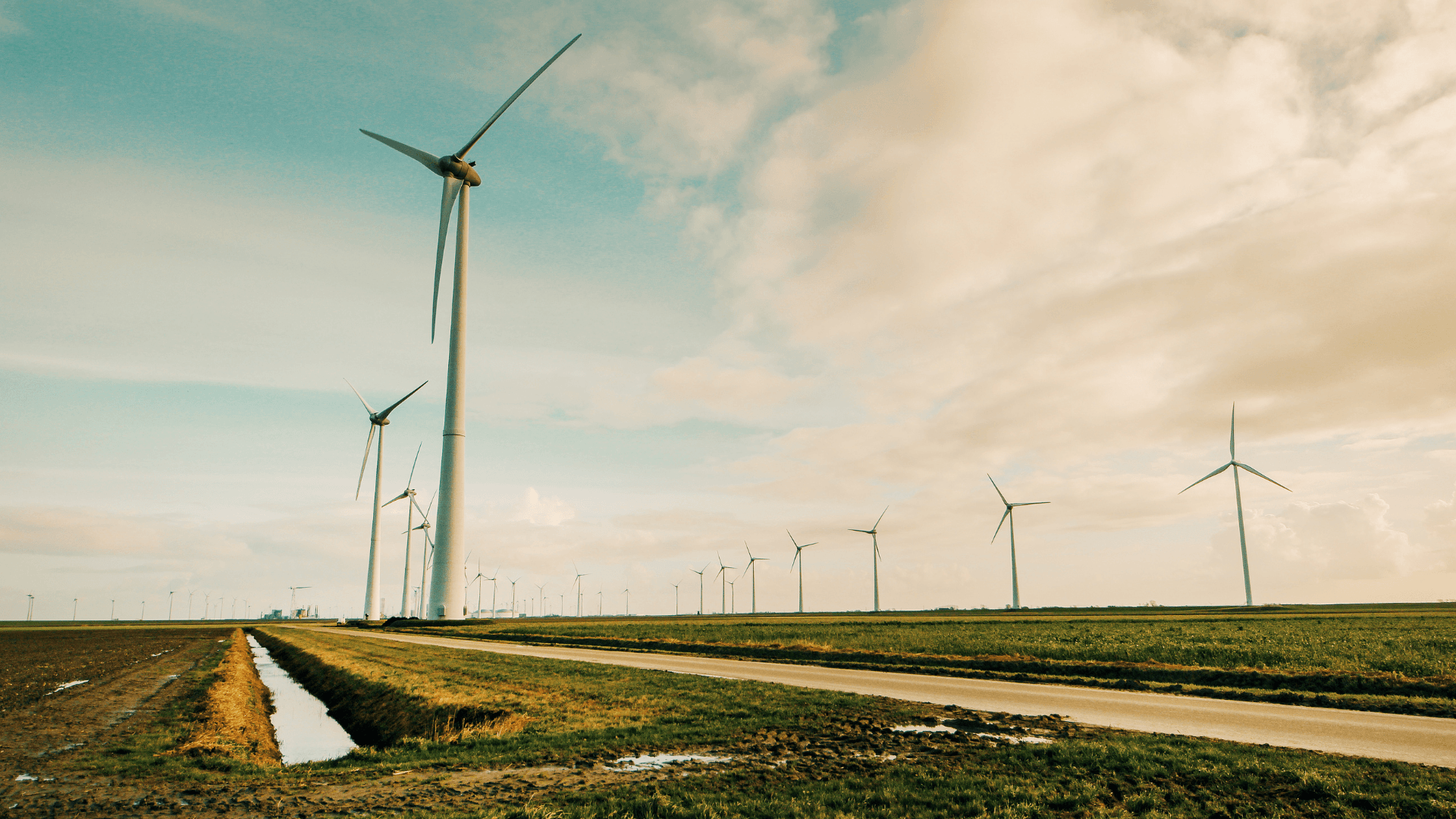
This workshop will examine how digitalisation and artificial intelligence can enhance consumer empowerment and system flexibility in the EU energy market, focusing on the development of a common energy data space and the adequacy of existing consumer protection rules.
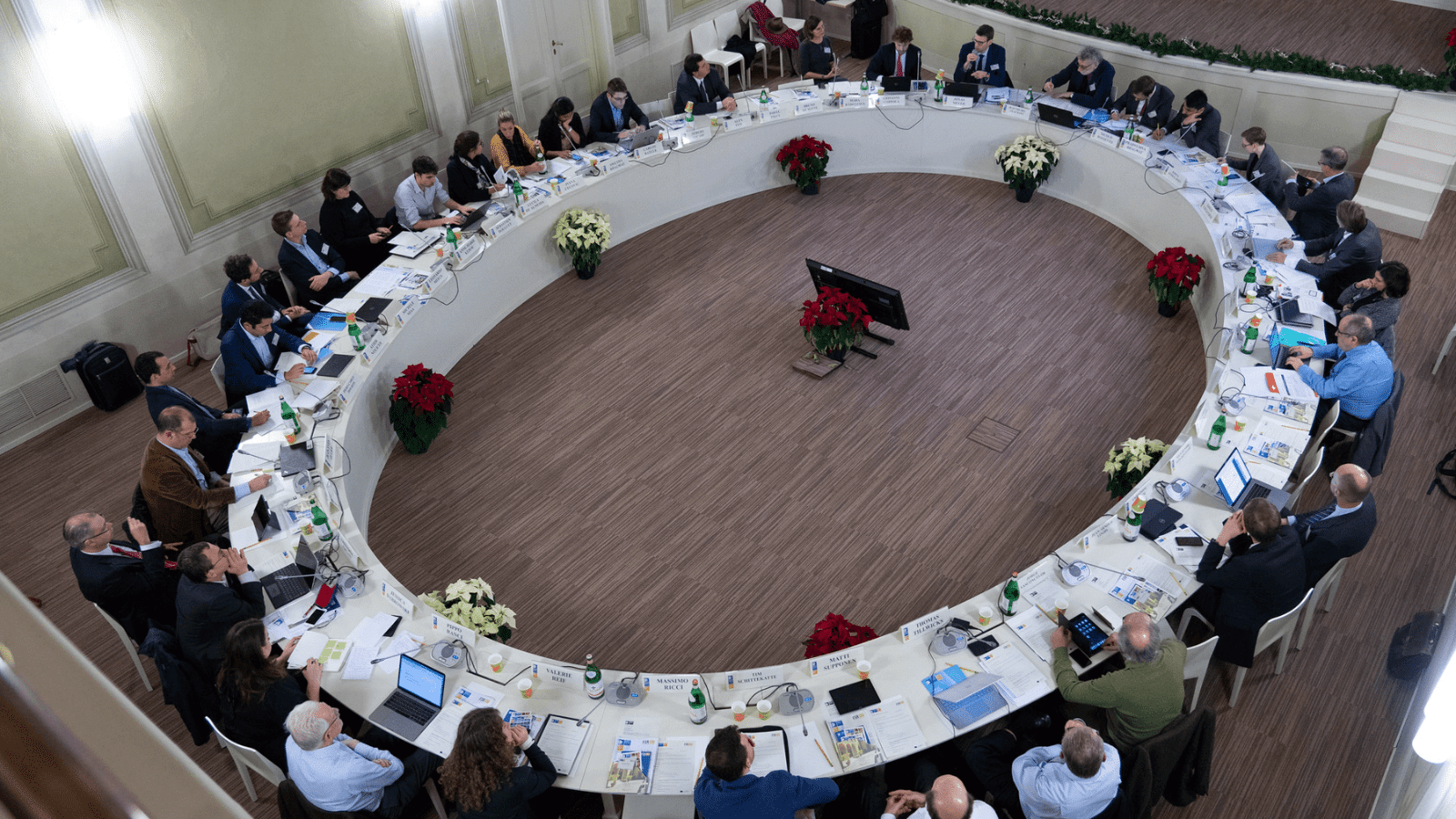
The Internal Energy Market (IEM) ultimately aims at providing greater choice and better prices to energy consumers, through a sustainable energy system, and at promoting security of supply. Empowering energy consumers, so that they take full advantage of the opportunities provided by the IEM, has proven to be a challenge since the liberalisation of the European retail energy market. At the same time, the energy sector is undergoing a profound transformation, with an increasing penetration of renewable sources to pursue decarbonisation and security of supply, with the related challenge of making the energy system more flexible. Digitalisation and Artificial Intelligence (AI) open new perspectives for energy-related services to consumers and support the greater flexibility of the energy system. This Workshop focuses on two relevant aspects associated with the digitalisation of the energy sector and the potential role of AI: (i) the need and the best way to enhance energy data exchange across the EU and to develop AI Foundational Models for the energy sector; and (ii) the need to assess to what extent the current horizontal and sectoral consumer protection legislation is fit for the future.
The Workshop will be structured in an opening part followed by three sessions:
– Session I, in the morning, will discuss the value of enhancing energy data exchange across the EU for improving the planning and operation of the energy system, for facilitating the development of innovative energy-related services for consumers and for supporting the development of AI models for the energy sector, identifying the main uses of the data and models, but also highlighting any challenge in the process;
– Session II, also in the morning, will focus on the governance of energy data exchange across the EU, exploring different frameworks and evaluating merits and challenges of each of them.
– Session III, in the afternoon, will discuss the consumer protection framework within which consumers, and in particular residential customers, will be able to be engaged in the future energy sector.
Please note that this event is by invitation only and exclusively reserved for donors of the Florence School of Regulation.
At the EUI and the Robert Schuman Centre, we are dedicated to removing barriers and providing equal opportunities for everyone. Please indicate in the registration form your accessibility needs, if any. Alternatively, you can contact the logistics organiser of the event.
At FSR, we actively work to achieve gender-balanced representation at all our events. As a platform that connects diverse voices and perspectives in the sector, we strongly value inclusive and gender-balanced panel debates and training courses.
Don’t miss any update on our events
Sign up for free and access the latest events from our community.
Citizens’ Energy Package and FSR study on the relevance of consumer protection

During this online debate experts discussed how consumer protection frameworks should evolve in the context of emerging energy services, building on the findings of the FSR Study published alongside the European Commission’s Citizens Energy Package.
Watch the recording:
On 10th March, the European Commission released its long-awaited Citizens Energy Package, a key step towards delivering affordable energy for all Europeans and empowering citizens actively to participate in the energy transition. Alongside the Citizens Energy Package, the Commission also published the FSR Study on the relevance of consumer rights and protections in the context of innovative energy-related services (de Almeida, Pototschnig, Porcari and Rossetto 2026), which provides evidence to support the Citizens Energy Package. The Study identifies a set of innovative energy-related services and examines the applicable consumer protections across the ‘energy consumer journey’. It highlights common issues and potential gaps in the current regulatory framework and formulates policy recommendations to ensure high standards of consumer protection for these emerging services.
This Online Debate aims to discuss how the current consumer protection provisions should be enhanced to remain effective in the context of emerging innovative energy-related services. The main findings and policy recommendations contained in the FSR Study on consumer rights, published with the Citizens Energy Package, will be presented during the debate.
Programme
Introduction
Alberto Pototschnig | Florence School of Regulation
The Citizens Energy Package
Massimo Bengt Serpieri | Deputy Head of Unit at DG Energy Justice &Consumer, European Commission
The main findings and policy recommendations of the FSR Study
Lucila de Almeida | Florence School of Regulation
Alessandra Porcari | Florence School of Regulation
Panel Discussion and Polls:
Frederico Oliveira da Silva | BEUC
Bram Claeys | CEER
Rita Alexandra Mota | Eurelectric
Laurent Schmitt | smartEn
Moderator: Nicolò Rossetto | Florence School of Regulation
Concluding remarks
Lucila de Almeida
Alberto Pototschnig
Presentations
- The Citizens Energy Package - Affordable energy for all
- A study on the relevance of consumer rights and protections in the context of innovative energy-related services
- Massimo Bengt Serpieri
Don’t miss any update on our events
Sign up for free and access the latest events from our community.
Carbon Markets and Climate Targets: Aligning Domestic and International Approaches

Session as part of the EUI Climate Week 2026
Several jurisdictions like the European Union have decided to use international carbon credits as a complement to domestic mitigation efforts. Questions arise about their implications for cost-effectiveness, environmental integrity, climate justice and equity, and incentives for domestic emissions reductions. The policy dialogue is part of the EU-funded project LIFE NETS – Net-Zero Emissions Trading Schemes – which runs from 2026-2028.
This session as part of EUI Climate Week aims to address the question of how countries have combined domestic climate targets with the use of international carbon credits, and what regulatory and governance safeguards may be needed to ensure that such credits reinforce rather than weaken domestic climate action.
The event is organised by the Climate area at the Florence School of Regulation, in collaboration with the Florence School of Transnational Governance and the Policy Outreach Committee of EAERE (the European Association of Environmental and Resource Economists).
Opening remarks: Simone Borghesi, Florence School of Regulation, EUI
Presentation of Background Report: Marie Raude, Florence School of Regulation, EUI
Panelists:
- Toshi Arimura, Waseda University
- Carolyn Fischer, World Bank
- Dirk Forrister, IETA
- Injy Johnstone, Oxford Net Zero
- Sebastien Paquot, European Commission
Conclusion: Simone Borghesi, Florence School of Regulation, EUI
More information and the full programme of the EUI Climate Week 2026 can be found here.
Don’t miss any update on our events
Sign up for free and access the latest events from our community.
More on the topic








Electrifying EU: from Commission plans to real progress
This session is part of the EUI Climate Week 2026
Electrification is one of the EU’s most powerful levers for decarbonisation, enhancing energy security and boosting industrial competitiveness. By electrifying the economy based on zero-emission sources, the use of fossil fuels can be limited and the emissions can be significantly reduced. Currently electricity accounts for only 25% of the EU’s final energy consumption. In 2024, more than 47% of electricity generation came from renewable energy sources. The share of renewables in the electricity mix is growing rapidly, although it continues to face numerous barriers, from insufficient grid development to limited system flexibility and high costs.
This session as part of EUI Climate Week aims to address the question of what factors are slowing Europe’s electrification, which reforms are needed to accelerate it, and how affordable electricity prices for households and businesses can be ensured.
Chair: Joanna Pandera, European University Institute and Forum Energii
Speakers:
- Leonardo Meeus, European University Institute
- Marco Mensink, Cefic
- Monika Morawiecka, RAP
- Jan Rosenow, Oxford University
Conclusion: Joanna Pandera, European University Institute and Forum Energii
More information and the full programme of the EUI Climate Week 2026 can be found here.
Don’t miss any update on our events
Sign up for free and access the latest events from our community.
More on the topic


37th Young Energy Economists and Engineers Seminar (YEEES)

YEEES is a long-standing seminar series offering PhD students in energy engineering and energy economics modelling the opportunity to present their work and receive feedback from peers and senior experts.
The Florence School of Regulation is pleased to host the 37th edition of the Young Energy Economists and Engineers Seminar (YEEES), a long-standing network and working paper seminar for PhD researchers in the fields of energy economics, engineering, and energy system modelling.
Founded in 2006 by Yannick Perez and Leonardo Meeus, YEEES brings together emerging scholars twice a year to present their work, receive constructive feedback, and build a community of young researchers across Europe and beyond. Previous editions have been organised in Leuven, Dresden, Vienna, Paris, Madrid, Florence, Cambridge, Dublin, Berlin, Stockholm, Basel, Edinburgh, Nuremberg, Lodz, Delft, Ghent, Copenhagen, and other academic hubs.
We invite PhD students working on topics related to engineering and economic modelling for energy systems to submit an abstract and register for consideration.
About the seminar
YEEES is designed as a working paper seminar that provides PhD students with in-depth feedback on their ongoing research. Each selected participant:
- presents their working paper (15–20 minutes),
- receives comments from two reviewers:
- one senior reviewer (a professor or post-doctoral researcher identified by the organisers),
- one junior reviewer (another participating PhD student),
- acts as a junior reviewer for another participant’s paper.
Review assignments are made by the organisers according to the reviewers’ fields of expertise. The aim is to create a constructive, rigorous, and friendly environment where young researchers can refine their work and expand their academic network.
Who should apply
The seminar is open to PhD students whose research focuses on:
- Energy economics
- Energy system modelling
- Engineering approaches to electricity and gas systems
- Market design and regulatory modelling
- Renewable integration modelling
- Power system flexibility and storage
- Techno-economic analysis and optimisation models
- Demand modelling, forecasting, and related areas
The selection process ensures that accepted abstracts align with the scientific scope of the seminar.
Submission and Selection Process
Participation in the seminar follows a two-stage submission process:
1. Abstract Submission & Registration
Deadline: 18 January 2026
PhD students submit an abstract and register through the online form. Abstracts are evaluated based on their relevance to the seminar’s themes.
2. Notification of Acceptance
23 January 2026
Selected candidates are invited to submit their full papers.
3. Full Paper Submission
Deadline: 29 March 2026
Full papers are required to assign junior and senior reviewers.
4. Reviewer Feedback Submission (Junior Reviewers)
Deadline: 13 April 2026
Each participant submits written feedback on the paper they have been assigned to review.
All selected participants will receive detailed guidance and deadlines by email following acceptance.
Don’t miss any update on our events
Sign up for free and access the latest events from our community.
Driving Industrial Transformation
Understanding the EU Industrial Accelerator Act

During this debate experts examined the EU’s proposed Industrial Accelerator Act, exploring its key measures to boost manufacturing, strengthen net-zero industries, and reshape investment rules.
Watch the recording:
The European Commission has tabled the Industrial Accelerator Act on March 4th, 2026. The main aim of the draft Act is to see a rejuvenation of investment in the EU’s industrial base.
It proposes the headline goal of increasing manufacturing to represent 20%+ of EU GDP by 2035, from its current level of around 14%. To do so it proposes a range of measures, including accelerating planning procedures and implementing ‘Industrial Acceleration Areas’.
However, the most impactful proposals for industry concern:
• ‘Lead Markets’ requirements on Member States to buy low-carbon steel, cement and aluminium for part of their procurement and support schemes,
• EU content obligations on Member States to require that a proportion of the goods under procurement and support schemes come from ‘EU origin’ producers. This is proposed to cover steel, cement, aluminium, battery storage systems, PV, heat pumps, wind, nuclear, hydrogen and certain vehicles.
• A significant restrictions on non-EU union producers investing in the EU. When non-Union companies wish to invest in key sectors (battery technologies, EVs, PV, critical raw materials (the list expandable by Commission Delegated Act)), Member States, in addition to applying Foreign Direct Investment requirements, must put limitations on the investment which may include ownership, employment, IP, EU sourcing, and R&D, and
• Voluntary green product labelling schemes.
In combination with the Net-Zero Industry Act, the Foreign Subsidies and Foreign Direct Investment Regulations, the draft revision of the Cybersecurity Act, and the anti-dumping rules, the EU is putting into place a more protective framework for industry, focused particularly on ‘Net-Zero’ Green Deal technologies.
During this webinar, Professor Jones will first give an explanation of the proposals in the Industrial Accelerator Act focussing on energy sectors, followed by comments from key industry figures on whether the draft measures are both adequate and effective to meet the challenges facing industry.
Programme
Introduction
- Andris Piebalgs, FSR
Introduction of the main elements of IAA
- Christopher Jones, FSR
Panel discussion: Are the measures proposed effective to address the challenges of industry
- James Watson, Eurometaux
- Nick Avery, Eurofer
- Elina Pihlajamaki, E3G
Q&A with the audience and conclusions
- Christopher Jones
At FSR, we actively work to achieve gender-balanced representation at all our events. As a platform that connects diverse voices and perspectives in the sector, we strongly value inclusive and gender-balanced panel debates and training courses.
Don’t miss any update on our events
Sign up for free and access the latest events from our community.

The EU Emissions Trading System and Aviation Support
FSR 23rd Aviation Forum

During this Forum, experts will focus on ETS support and how to make sure it is best fit for kickstarting the SAF industry and enable the long-term sector’s decarbonisation.
The EU’s aviation climate action framework is entering a new phase in which delivery and implementation matter as much as policy design.
Under the European Green Deal and the ‘Fit for 55’ package, the EU combines a tightening carbon constraint with a fuel-switching strategy. The EU Emissions Trading System (ETS) provides the price signal, while ReFuelEU Aviation creates a long-term market for sustainable aviation fuels (SAF) through blending mandates.
Two milestones make the 23rd Florence Air Forum particularly timely.
First, aviation in the ETS is transitioning to full auctioning of allowances, phasing out free allocation, while introducing an ETS-financed SAF support mechanism to help close the price gap with conventional fuels. This raises key challenges around ensuring that support is targeted, administratively feasible, and resistant to gaming, while maximising emissions reductions.
Second, the upcoming ETS review will revisit aspects of aviation ETS design, including its interaction with ICAO’s CORSIA and its scope. While these issues frame the broader context, the Forum focuses on practical implementation—particularly how ETS-linked support can work in practice and how policy interactions can be simplified.
Against this backdrop, the Forum will discuss three key areas:
-ETS-financed SAF support: How to design effective, cost-efficient support mechanisms that encourage long-term SAF uptake, ensure additionality, maintain traceability, and deliver sustainable outcomes.
-Integrity and alignment across EU instruments: How to ensure robust monitoring, reporting and verification (MRV), avoid fraud and double-counting, and align ETS support with ReFuelEU and other instruments without unnecessary complexity.
-Beyond SAF: What ETS-linked mechanisms could further reduce aviation’s climate impact, including support for electric and hydrogen-powered aircraft technologies.
Kindly note that this event is by invitation only.
At the EUI and the Robert Schuman Centre, we are dedicated to removing barriers and providing equal opportunities for everyone. Please indicate in the registration form your accessibility needs, if any. Alternatively, you can contact the logistics organiser of the event.
At FSR, we actively work to achieve gender-balanced representation at all our events. As a platform that connects diverse voices and perspectives in the sector, we strongly value inclusive and gender-balanced panel debates and training courses.
Don’t miss any update on our events
Sign up for free and access the latest events from our community.



From vision to implementation: Pesticide standards and international trade

During this debate experts examined how EU pesticide Maximum Residue Limits shape food safety, environmental protection, and international agri‑food trade, focusing on regulatory divergence, competitiveness concerns, and the implications of the Commission’s planned impact assessment on hazardous pesticide residues in imports.
Watch the recording:
Effective food safety and plant health standards are central to protecting human health, the environment, and the sustainability of agri-food systems, while enabling international trade. Maximum Residue Limits (MRLs) for pesticides in food are essential for consumer protection and are intended to facilitate trade between countries. However, the stringency of MRLs set in the EU is criticized by producers in third countries for increasing compliance burdens, leading to border rejections and restricting market access—particularly affecting exporters in developing and least-developed countries, including small and medium-sized enterprises. On the other hand, European stakeholders call for even stricter MRLs, in particular for active substances prohibited in the EU.
In the Vision for Agriculture and Food, the Commission announced that it will establish a principle that the most hazardous pesticides banned in the EU for health and environmental reasons are not allowed back to the EU through imported products . To advance on this, the Commission has launched in November 2025 a study to prepare an Impact Assessment that will consider the impacts on the EU’s competitive position and the international implications and, if appropriate, propose amendments to the applicable legal framework. The divergent regulation of pesticide residues in the EU and other major economies is becoming an increasingly important and contested dimension of global agri-food trade.
Programme
Introduction:
- Fabio Santeramo (Florence School of Regulation, EUI)
Speakers:
- Klaus Berend (DG SANTE)
- Niklas Möhring (Production Economics Group at the University of Bonn)
- Margaux Rundstadler (CROPLIFE AFRICA)
Q&A session:
- Alexander Gohin (INRAE)
- Mahdi Ghodsi (WIIW) Vienna Institute for International Economic Studies (WIIW)
- Michelle Martins- Universidade Federal de Vicosa
- Mmatlou Kalaba- Bureau for Food and Agricultural Policy(BFAP)
Moderator:
- Aliénor Cameron (OECD and Florence School of Regulation, EUI)
Presentations
-
Pesticides standards and international trade: reviewing the evidence
Anirudh Shingal
-
EU Legislation on Maximum Residue Levels (MRLs) for Pesticides – principles and current developments
Berend Klaus
-
From Vision to Implementation: Pesticide Standards and International Trade
Margaux Rundstadler
-
MAXIMUM RESIDUE LEVELS: A FARM-LEVEL PERSPECTIVE
Niklas Möhring
Don’t miss any update on our events
Sign up for free and access the latest events from our community.
More on the topic



27th Florence Rail Forum: Financing High-Speed Rail

The 27th Florence Rail Forum brings together international experts, policymakers, and industry leaders to examine the evolving landscape of HSR financing.
The Forum, co-organised by the Transport Area of the Florence School of Regulation together with the UIC, will analyse financing models for High-Speed Rail, based on the Study prepared by FSR for the UIC, to be shared with the participants for comments during the forum, with the objective of drafting the final version.
This is a pivotal moment for the development of high-speed rail (HSR) networks at the European and international level. However, governments face increasing budgetary pressure, making the question of how to finance and deliver major rail projects more critical than ever. The European Commission’s Communication Connecting Europe through High-Speed Rail highlights HSR as a strategic driver of competitiveness, cohesion, job creation and climate action. Despite this potential, Europe is not progressing fast enough: high-speed traffic has grown only 17% since 2015, and major gaps remain, particularly in central and eastern Europe. Completing the TEN-T high-speed network by 2040 will require an estimated €345 billion. In 2026, the Commission aims to present the ‘High-Speed Rail Deal’ as a multilateral commitment to mobilise investment for Europe’s priority HSR projects. This initiative would provide long-term certainty to investors by clarifying EU and national commitments and paving the way for targeted regional dialogues to accelerate financing for strategic high-speed rail corridors. To meet these ambitions, HSR requires robust, sustainable, and innovative financing models. Drawing on global experience, it is possible to explore the strengths and limitations of public delivery models, the role of PublicPrivate Partnerships, and the emerging potential of Regulated Asset Base frameworks.
By providing a comparative, evidence-based view of financing tools and governance models, the event seeks to support informed decision-making and to contribute to a more sustainable, financially robust future for HSR worldwide.
The Forum tackled the following questions:
• Improvements in Public Delivery (Rail funds, ETS, Corporate Finance): How can governments ensure predictable, long‑term funding cycles for HSR projects? What can be the role of transport/rail funds? What safeguards are needed to ensure ETS funds are devoted to high-speed rail? What role can corporate finance (e.g., green bonds) play in HSR?
• PPPs – Portugal, Czechia, and Tours–Bordeaux: In what scenarios is a PPP model preferable to traditional public procurement for HSR? How to derisk the projects? What are the defining features of the new HSRPPPs?
• RAB Models for High‑Speed Rail: What are the key advantages and challenges of applying a RAB model to HSR infrastructure? What lessons from other sectors are most relevant for rail RAB design? Is the institutional framework in rail ready to implement RAB?
Kindly note that this event is by invitation only.
At the EUI and the Robert Schuman Centre, we are dedicated to removing barriers and providing equal opportunities for everyone. Please indicate in the registration form your accessibility needs, if any. Alternatively, you can contact the logistics organiser of the event.
At FSR, we actively work to achieve gender-balanced representation at all our events. As a platform that connects diverse voices and perspectives in the sector, we strongly value inclusive and gender-balanced panel debates and training courses.
Presentations
- RAB MODEL for High Speed
- How Economic Regulation Supports Cost Efficient Investments
- High-Speed Lines preparation in the Czech Republic
- ADIF ALTA VELOCIDAD
Don’t miss any update on our events
Sign up for free and access the latest events from our community.
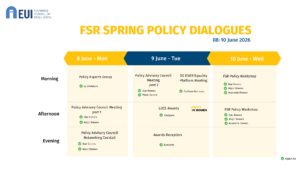
Spring Policy Dialogues 2026
Join us in Florence for 3 days of in-person events where we will convene our donors and renowned experts from across the sector.
A detailed agenda with discussion topics and speakers will follow. In the meantime, here is a list of events that will take place during 8-10 June 2026:
Monday, 8 June 2026
📌 Policy Advisory Council – Part 1
The Policy Advisory Council discusses the most topical regulatory and policy issues and debates and the relevance and robustness of the latest FSR research findings. The meeting gathers experts from the European Commission, the EU Agency for the Cooperation of Energy Regulators (ACER), the FSR Energy Star and Major Donors and invited renowned academics. Find more information about the PAC meetings here.
Please note that this event is by invitation only.
Tuesday, 9 June 2026
📌 Policy Advisory Council – Part 2
On the second day, participants continue the dialogue, focusing on key regulatory developments and recent research findings.
Please note that this event is by invitation only.
📌 9th meeting of the Equality Platform for the Energy Sector
The Platform is a European Commission-led initiative that currently includes more than 40 members from the energy sector, including the Florence School of Regulation.
Established in October 2021, the Platform provides a dedicated space to discuss equality-related issues, exchange experiences, and promote best practices in diversity and inclusion within the energy sector workplace.
The meeting is exclusive to Platform members. For further information and details on becoming a member, please visit the Platform’s webpage.
📌 LUCE Awards 2026
The LUCE Awards, organised by the Lights on Women initiative with the support from Edison, celebrates the outstanding contributions of women advancing the Green Transition.
Now in its fourth edition, the LUCE Awards will honour the achievements of two women professionals, with a prize awarded in each of the following categories:
• Emerging Talent: recognising the contributions of up-and-coming female leaders.
• Legacy Women: honouring senior female professionals who have made a lasting impact on the Green Transition.
Watch the highlights from the first, second and third editions.
Wednesday, 10 June
📌 Regulatory Policy Workshop
Empowering energy consumers and promoting system flexibility in the age of artificial intelligence
A full-day policy workshop directed by Alberto Pototschnig, FSR Executive Deputy Director. The workshop will consist of a series of seminars led by topic experts with opportunities for intervention from participants.
Please note that this event is by invitation only.
Don’t miss any update on our events
Sign up for free and access the latest events from our community.
The evolving EU framework for phytosanitary measures

This webinar examined how evolving EU plant health and phytosanitary regulations can balance safety, trade, and sustainability, with a focus on innovative post-harvest treatments and their implications for international market access.
Watch the recording:
Effective plant health measures are essential to protect agriculture, biodiversity, and global food security while enabling safe international trade. Yet many food, plant, and human health regulations—such as SPS measures—though crucial for safety, create compliance costs, cause border rejections in case of non-compliance, and subject market access to the respect of conditions.
Their stringency and limited harmonization place burdens on exporters in developing countries, especially smallholders, thereby challenging market access.
Against this backdrop, the regulatory framework for plant health and phytosanitary treatments is evolving rapidly. This webinar examined upcoming EU developments, focusing on innovative, cost-effective, and environmentally friendly post-harvest treatments—such as heat, cold, irradiation, and controlled atmosphere—to prevent the spread of regulated pests. Experts from DG AGRI and DG SANTE, academics and businesses discussed future standards, compliance requirements, scientifically based protocols, and engagement with regulatory authorities and industry. The session provided a platform to explore how policy and regulation can balance safety, trade, and sustainability.
Programme
Introduction:
- Fabio Santeramo (Florence School of Regulation, EUI)
Speakers:
- Wolfgang Reinert (DG SANTE, European Commission)
- Dany Bylemans (Pcfruit, KU Leuven)
- Emilia Lamonaca (University of Foggia)
Q&A Session:
- Darija Lemic (University of Zagreb, GREENER)
Presentations
- Dealing with invasive fruit pests in Belgium
- Phytosanitary Measures and International Trade
- The evolving EU framework on phytosanitary measures
Don’t miss any update on our events
Sign up for free and access the latest events from our community.
More on the topic
Unlocking Europe’s geothermal potential
What GeoMap changes for policy and markets

Watch the recording:
Geothermal energy is increasingly recognised as a strategic pillar of Europe’s clean energy transition, particularly for district heating, industrial heat, and firm renewable power. Yet its deployment has long been constrained by fragmented geological data, high upfront risks, and regulatory complexity.
This online debate centres on the launch of GeoMap Europe, a new continent-wide geothermal mapping platform developed by Project InnerSpace, which integrates millions of subsurface data points into an open, accessible visualisation of Europe’s geothermal resources.
The discussion examined how GeoMap Europe can help overcome information and risk barriers, support the implementation of EU climate and energy legislation, and accelerate geothermal deployment in line with the European Green Deal and revised Renewable Energy Directive. Speakers reflected on policy, regulatory, and market implications, including permitting acceleration, heat planning, and the role of geothermal in strengthening Europe’s energy independence.
The session is of particular interest to policymakers, regulators, researchers, energy system planners, and stakeholders involved in heat decarbonisation and renewable energy deployment.
Programme
Introduction:
- Andris Piebalgs, FSR
Presentations:
Geothermal energy in the EU policy framework
- Marianna Jakab, European Commission
GeoMap Europe: data, methodology and policy relevance
- Drew Nelson, Project InnerSpace
Panel discussion: Regulatory and planning implications
Session focus: Data availability and permitting acceleration, Geothermal and national heat planning, Investment risk, public policy, and system integration
- Annamária Nádar, Chair of EU Geo-energy Expert Group
- David Bruhn, Fraunhofer IEG
- Sanjeev Kumar, European Geothermal Energy Council
Don’t miss any update on our events
Sign up for free and access the latest events from our community.