



Outward Foreign Direct Investments Patterns of Italian Firms in the EU-ETS
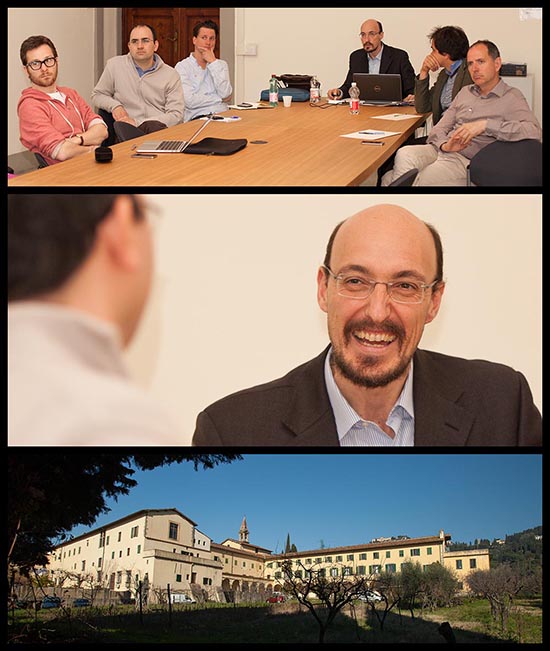
Speaker: Simone Borghesi, Assistant Professor of Environmental Economics, Codirector R4S – Regulation for Sustainability, University of Siena, Italy
Abstract The European Emission Trading System (EU-ETS) has attracted increasing attention among scholars in the last few years both as the cornerstone of the European environmental policy and as a benchmark for the other countries’ Emission Trading Schemes. The seminar presents the author’s current policy, theoretical and empirical research lines on the EU ETS. Particular attention will be devoted to the role played by the EU-ETS as a possible driver of outward Foreign Direct Investments (FDI henceforth). For this purpose, we aim at assessing whether EU-ETS has any effect on the intensive and extensive margins of outward FDI patterns of Italian firms. Using a novel panel dataset of about 50,000 firms covering the first two phases of the EU-ETS (pilot phase and first commitment period) and the pre-EU-ETS period, we are able to observe the patterns of FDI by destination country of firms, distinguishing between those with plants covered by the EU-ETS and other firms. Results show that firms in the EU-ETS tend to increase their presence in countries not covered by the EU-ETS as well as in countries within the EU-ETS. Moreover, FDI patterns in sectors exempted by the auctioning in the current second commitment period of the EU-ETS, are generally greater than the ones observed for EU-ETS firms in other sectors.
Don’t miss any update on our events
Sign up for free and access the latest events from our community.
More on the topic