



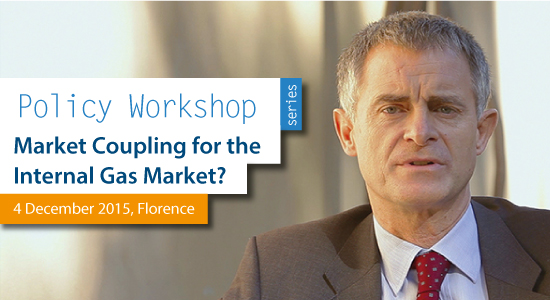
Market Coupling for the Internal Gas Market?
FSR Regulatory Policy Workshop Series 2015-2016
A review and update of the Gas Target Model was presented by the Agency for the Cooperation of Energy Regulators (ACER) earlier this year. This model, in line with the main targets of a successful Internal Gas Market (IGM), would not only promote competition and fluidity but also suggest a “cooperative approach” among Member States in Europe to cope with possible supply disruptions. It is indeed pivotal to ensure that gas can be traded seamlessly within and across EU internal borders and while the CAM NC substantially contributed to making gas capacity allocation more efficient, the issue of coordination between procurement of capacity and trading of the gas commodity still remains unsettled.
In the early stages of liberalization of the electricity market, the same issue of “lack of coordination” perceived drove market development towards market coupling. Is there an equivalent concept to “market coupling” in electricity which may favour integration of the IGM and make gas trading between hubs and across different zones really seamless?
This workshop will be structured in two sessions. Session I will review the basic features of market coupling and compares them with the current functioning of the IGM, especially with respect to trading within and between (entry-exit) zones. Accordingly to such conclusions, Session II will explore whether an equivalent concept to market coupling can be identified for the gas sector.
This workshop is open exclusively to National Regulators, representatives from public bodies and FSR donors. Special registration requests must be submitted to the Coordinator of this workshop, Ilaria Conti, by e-mail or phone (+39 055 4685 961).
Download the Final Programme
Don’t miss any update on our events
Sign up for free and access the latest events from our community.
More on the topic