



COP31 in Antalya: Article 6 meets CBAM
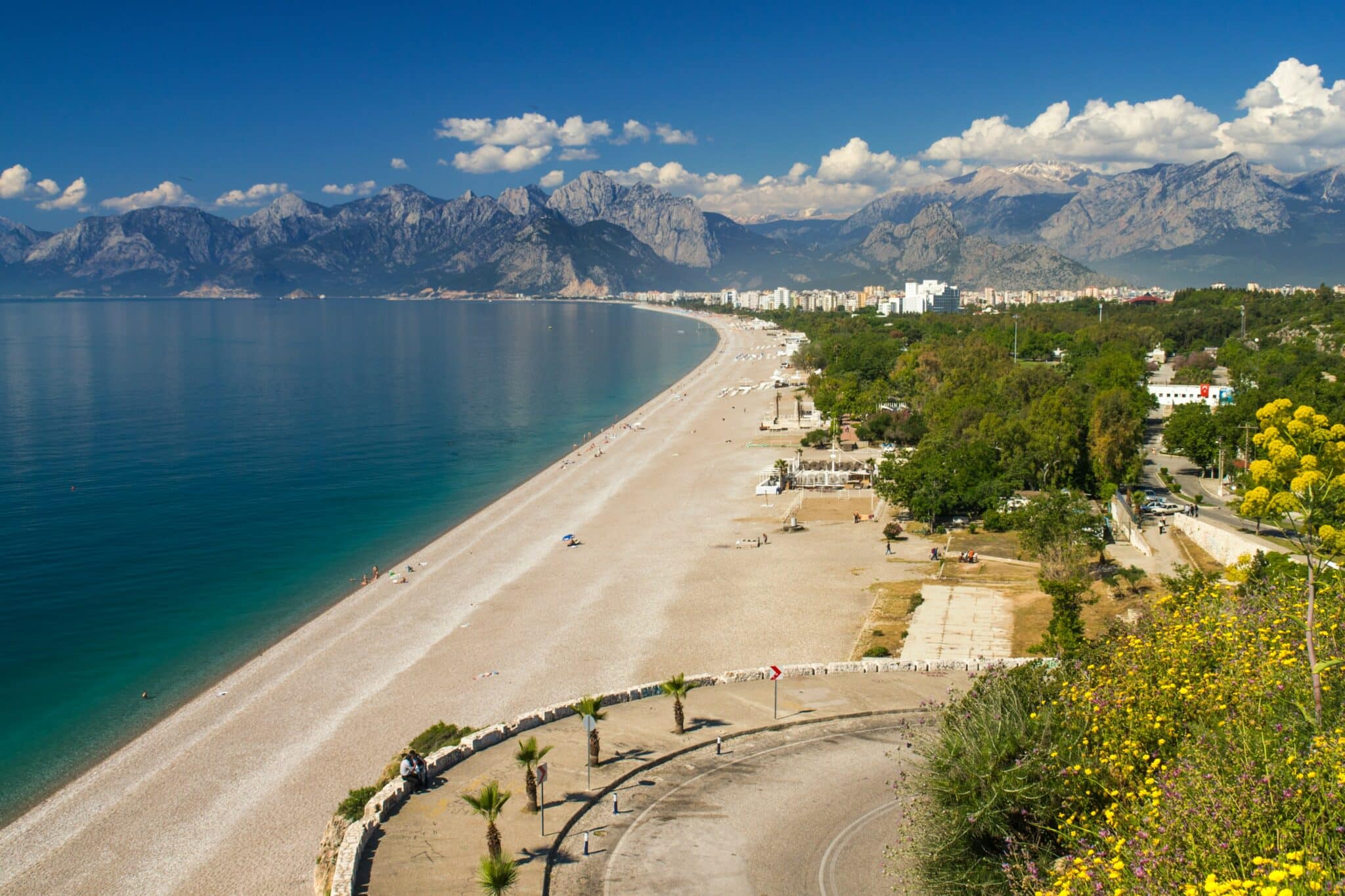
The 31st Conference of the Parties (COP31) to the United Nations Framework Convention on Climate Change (UNFCCC) opened in Antalya (Turkey) on 9 November and runs until 20 November under a shared leadership: Murat Kurum serves as COP31 President and Australia’s Chris Bowen as President of Negotiations (COP31 Presidency, 2026a). The Presidency closed the first week by highlighting more than 100 world leaders at the Leaders’ Summit, over 100,000 registered participants, and an agenda adopted by consensus on the opening day.
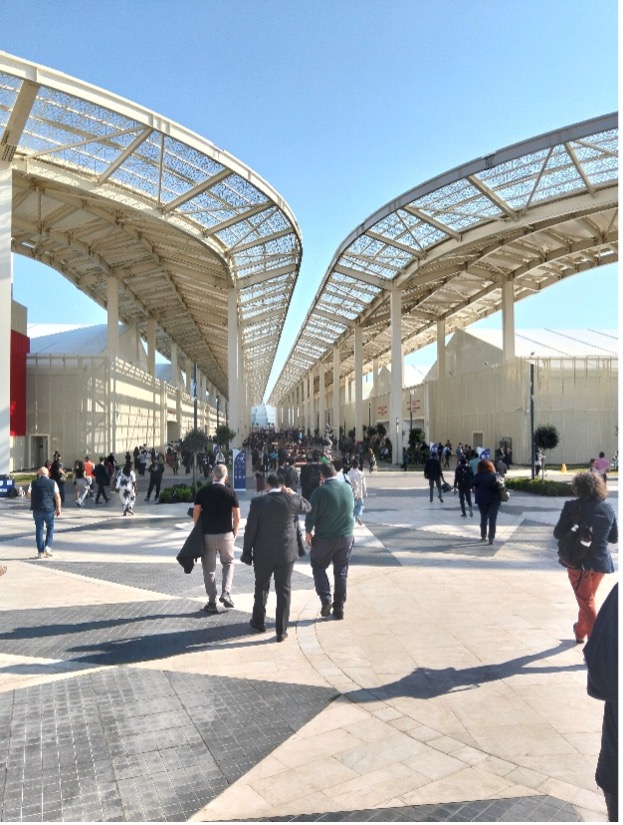
The harder work was left to the ministerial week. With more than 100 agenda items and around 60 significant mandates on the table, the Presidency planned an initial draft cover decision for early in the second week and set Friday as the target for outcomes. Since the draft appeared on 16 November, discussions have shown how far apart parties remain on the energy transition and sectoral goals such as the Presidency’s 35-by-35 electrification pledge, which targets 35% electrification by 2035 (Earth Negotiations Bulletin, 2026).
Negotiations on international carbon markets under Article 6 of the Paris Agreement have received less attention than the cover decision. However, they are a practical test of whether the Agreement’s cooperative mechanisms can turn rules already agreed into real emission reductions and climate finance.
This contribution argues that it can no longer be read in isolation. In the very same days, the European Union (EU) adopted rules that give Article 6 credits a role at its own border, through the Carbon Border Adjustment Mechanism (CBAM).
Article 6: from rulebook to delivery
The Article 6 rulebook was completed at COP29 in Baku after almost a decade of negotiations, and Antalya was never expected to reopen it. The question now is whether the architecture works in practice, and two issues have shaped the talks. The first is related to financial resources: the infrastructure that supports cooperative approaches under Article 6.2 and the Paris Agreement Crediting Mechanism (PACM) under Article 6.4 faces budget shortfalls, and parties must decide how to fund it on a stable basis. The second issue is more political: how demanding should the PACM be? The draft decision under discussion asks the mechanism’s Supervisory Body to examine whether its conservative assumptions, taken together, unduly reduce the number of credits issued and raise project costs. Several groups of developing countries pushed for this review, arguing that the rules are slowing down projects and the finance that comes with them. The EU and other parties have resisted anything that appears to lower the bar on environmental integrity.
Behind both issues lies a structural gap between potential and actual supply. Host countries have said they are willing to transfer mitigation outcomes abroad. Nevertheless, authorisations naming a specific buyer remain scarce, and very few units have actually changed hands. Without authorisation, an Article 6 unit has little value outside the host country.
CBAM: where Article 6 meets the EU border
On 5 November, just a few days before COP31, the European Commission adopted Implementing Regulation (EU) 2026/2498 which sets out how carbon prices effectively paid in third countries can be deducted from CBAM obligations. The logic is to avoid charging twice for the same emissions: if imported goods have already borne a carbon price at origin, the importer surrenders fewer CBAM certificates. To qualify, the foreign scheme must be mandatory, apply across the relevant sector and cover domestic and exported production alike. It can be an emissions trading system, a carbon tax, a levy or a fee, and declarants may instead rely on default carbon prices, including for the first CBAM declarations, which are due by 30 September 2027.
The provision most relevant to Antalya concerns international carbon credits. A third country may allow its firms to meet part of their carbon-pricing obligation with credits. In that case, the credits can be taken into account, but only under three conditions. They must be authorised and issued under Article 6. Only the amount actually paid for them counts. And their use is capped at 10% of the emissions covered by the domestic scheme.
This design links the two debates in three ways. First, it makes the integrity of Article 6 a trade matter as well as a climate one. The standards that parties set for the PACM and for Article 6.2 now indirectly define what can reduce a CBAM bill, which gives the EU a direct stake in keeping them robust. Second, credits never enter on their own, but only through a recognised domestic carbon price. CBAM thus rewards partners that build their own carbon pricing with a limited window for Article 6 units. This is a constructive answer to the criticism, raised again on the road to Antalya by India, China and others, that CBAM is a unilateral trade measure. Third, the opening is deliberately narrow. The 10% cap, the verification requirements and the scarcity of authorised units mean that demand will be modest at first. For now, the significance of the rule lies more in the signal it sends than in the volumes it creates. A deeper analysis of these issues can be found in the FSR Climate book chapter entitled “European and global climate policies: Pursuing fairness and carbon neutrality in an increasingly fragmented world”.
Looking ahead
In its final days, Antalya’s contribution to carbon markets will be judged on two outcomes. One is whether the PACM decision manages to make the mechanism workable without weakening its integrity. The other is whether parties secure stable funding for the Article 6 infrastructure. Whatever the outcome in Antalya, the new CBAM rules create a direct link between multilateral and unilateral climate policy. The credibility of Article 6 credits will now matter not only to the parties exchanging them, but also to the EU’s trading partners seeking recognition of their carbon pricing at the European border. In this sense, the integrity of international carbon markets has become a shared interest, rather than a concern of the UNFCCC alone.
The author is a member of the EUI-FSR delegation at COP31, participating in person within the framework of the LIFE NETS project, co-funded by the European Commission.
References
Cammeo, J., Ferrari, A., Borghesi, S., Davalos, J., Henseler, M., Maisonnave, H., Salisu, A., & Adediran, I. (2026). European and global climate policies: Pursuing fairness and carbon neutrality in an increasingly fragmented world. In M. Biggeri & A. Ferrannini (Eds.), Navigating transitions to sustainable human development: Frameworks, evidence and policies (pp. 140–157). Edward Elgar Publishing. https://doi.org/10.4337/9781035390670.00014 (open access version: https://cadmus.eui.eu/bitstreams/c3a487d9-d673-4057-bf04-b349ea9a5595/download)
COP31 Presidency. (2026a, November 16). First week of COP31 ends with clear momentum for concrete action. https://cop31.tr/news-detail/first-week-of-cop31-ends-with-clear-momentum-for-concrete-action
COP31 Presidency. (2026b, November 16). How to join the 35-by-35 Global Electrification Pledge. https://cop31.tr/news-detail/how-to-join-the-35-by-35-global-electrification-pledge
Earth Negotiations Bulletin. (2026). Daily report for 16 November 2026: UN Climate Change Conference – Antalya, November 2026. International Institute for Sustainable Development. https://enb.iisd.org/antalya-un-climate-change-conference-cop31-daily-report-16nov2026
European Commission. (2026). Commission Implementing Regulation (EU) 2026/2498 of 5 November 2026 laying down rules for the application of Regulation (EU) 2023/956 of the European Parliament and of the Council as regards the conversion of the carbon price paid in a third country into a corresponding reduction in the number of CBAM certificates to be surrendered, the evidence of payment of that carbon price, the qualifications of the independent person and conditions to ascertain its independence and qualifications. Official Journal of the European Union, L 2026/2498, 16 November 2026. https://eur-lex.europa.eu/legal-content/EN/TXT/PDF/?uri=OJ:L_202602498
Raude, M., Heinrich, L., Cammeo, J., Casamassima, A., & Borghesi, S. (2026). International carbon credits in the EU: Ensuring flexibility without undermining credibility [Policy paper]. Florence School of Regulation, European University Institute. https://hdl.handle.net/1814/95138
United Nations Framework Convention on Climate Change. (2026). UN Climate Change Conference – Antalya, November 2026. https://unfccc.int/cop31
Don’t miss any update on this topic
Sign up for free and access the latest publications and insights
More on the topic