Warming in mixing water and power: the case of CRM

The EC has launched a sector inquiry on capacity remuneration mechanisms (CRMs). Analysts are wisely scared that the implementation of national CRMs could balkanize the European electricity market while harmonisation is right on track on short-term markets. It is indeed difficult to define capacity products through interconnections. Without the reliance on interconnections, there is fear that the capacity markets will be as concentrated as national markets.
Harmonisation of these capacity markets would be a good idea to foster competition in this field as it was done in the energy market.
To see how it could work consider two power markets. To simplify, the first one is fully thermal and the second one is fully hydro.
The generation adequacy problem in the fully thermal is for power to cover peak demand. In the fully hydropower, the problem is different: reservoirs must attain a high enough level to be able to supply energy during the dry season.
Generation adequacy products should then be designed differently in both systems, while remaining harmonised enough to authorise exchanges through interconnections.
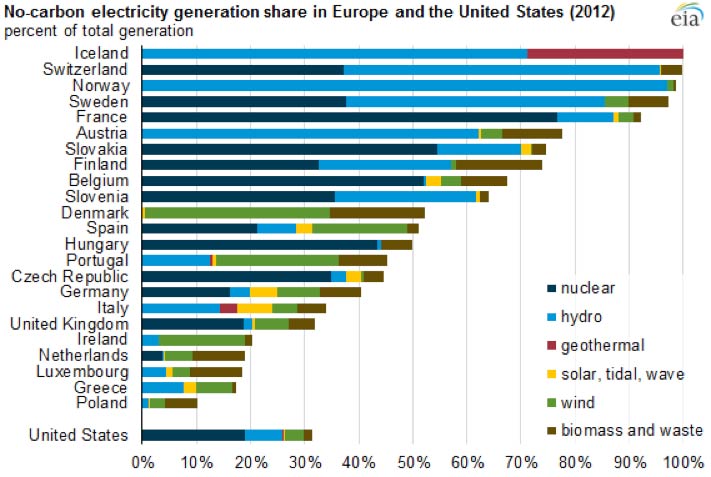
Source www.eia.gov
Written by Vincent Rious
Read the previous article: What is the age of the hydropower captain?
Don’t miss any update on this topic
Sign up for free and access the latest publications and insights
More on the topic