
Schizophrenic opening of hydropower markets: who to blame?

Written by Vincent Rious
Introducing markets into the European power system has always been challenging. When this involves hydropower, things get slippery. Of course, hydropower offers new opportunities to the system. It is a cheap local carbon-free energy source.
It can store electricity and provide flexibility to the power system and is all the more useful as the share of intermittent generation gets higher and higher. But it also brings new issues. It has an unneglectable impact on other water and land uses and as such forces us to consider the associated interest of local actors and decision-makers on water management. Hydropower is also challenging if not a nightmare (depending on your point of view) to include in market modelling, for instance for a market actors and policy makers to test performances of market designs, for TSOs to manage the system balance or for market actors to manage energy storage and formulate their market bids. Therefore, considering hydro in Europe is an interesting way to refresh the challenge of designing power markets.
The right to use hydropower can be attributed in different ways. It can be granted through a competitive procedure whereby competitors bid to obtain the rights to develop or operate the power plant for a fixed duration. Without a competitive procedure, a public authority simply grants the rights after a bilateral negotiation with the applicant.
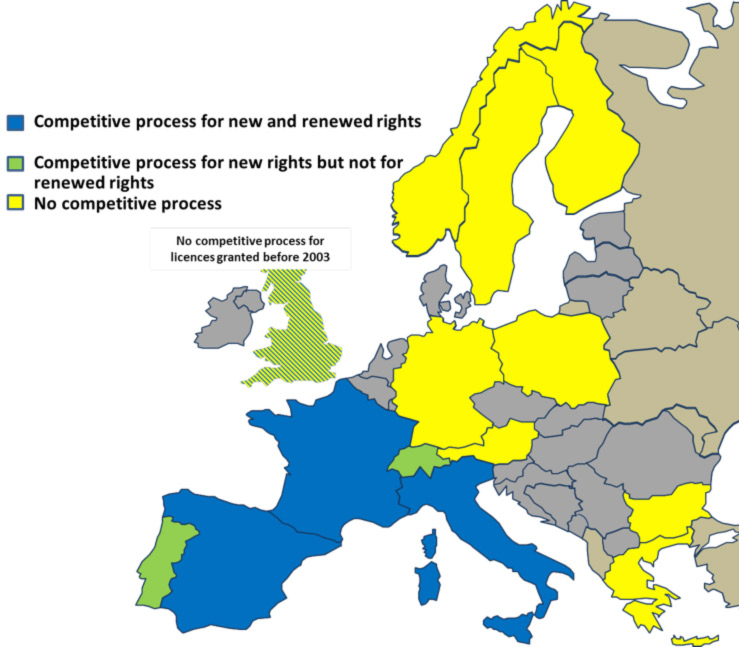
Under the pressure of DG Competition and seemingly in order to boost competition in their whole power market, France, Spain and Italy grant or renew the right to use hydropower through a competitive process (or have planned to do it – sic). Great Britain does the same for licences granted after 2003. A competitive process for new power plants is only in place in Portugal and Switzerland. Norway, Sweden, Finland, Germany, Austria, Poland, Bulgaria and Greece have not implemented any competitive procedure. Obviously, the implementation of a competitive process to grant or renew the right to use hydropower provides opportunities for new entrants to access this resource and these national markets. Limited reciprocity might then limit the willingness of countries under pressure to open their hydro markets.
Don’t miss any update on this topic
Sign up for free and access the latest publications and insights