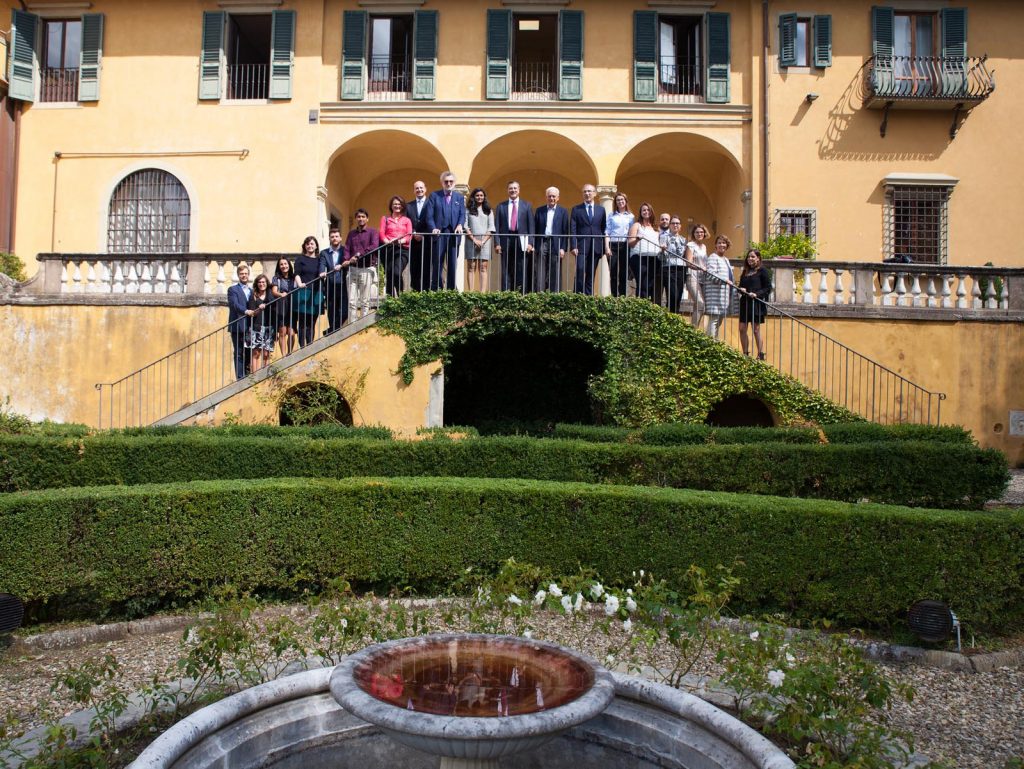
On Wednesday 13th September 2017, a delegation from the International Renewable Energy Agency (IRENA) visited the Florence School of Regulation at the European University Institute, in Florence.
On this occasion, the Director General of IRENA, Mr. Adnan Z. Amin, gave a presentation on the role of renewables in the transition towards a sustainable energy future.
Renewables and the transition to a sustainable energy future
(Excerpts from the talk)
The share of renewables in the global electricity mix is fast growing. Thanks to the significant drop in the cost of technologies, 2016 saw record renewable energy capacity addition with developing and emerging countries leading the way. ‘Renewables today are no more in transition but transformation.’ Disruptive technologies are giving a new dimension to the energy sector. Countries will now be ‘Electrified, Decentralised and Digitalised’. Also, the key to the transformation of renewables is firstly the Companies, who are taking voluntary actions despite the country mandates; secondly the People, who are keen on a cleaner and greener environment and lastly Young Experts who are central to ushering the efforts for the coming generations. Regarding regulation and policy, one size does not fit all; countries should adapt and adopt methods that best suit their needs, based on learnings from best practices from across the world. With Europe having played a key role in kick-starting the renewable energy transition, it should continue to lead the way towards a more sustainable future by increasing its efforts.
A decarbonised future is possible
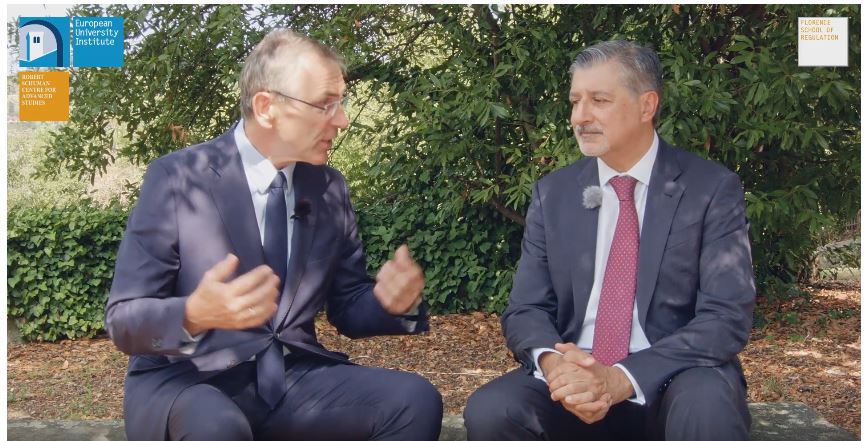
In the future, the energy Sector could work without green gas emissions. At the Florence School of Regulation, the former Commissioner and FSR Senior Fellow A. Piebalgs interviews the Director-General at IRENA.
Watch the interview:
The team of the Florence School of Regulation was pleased to welcome the representatives from the International Renewable Energy Agency and to get inspired by the valuable insight offered on the energy sector’s global challenges.