




Type of event: Seminar
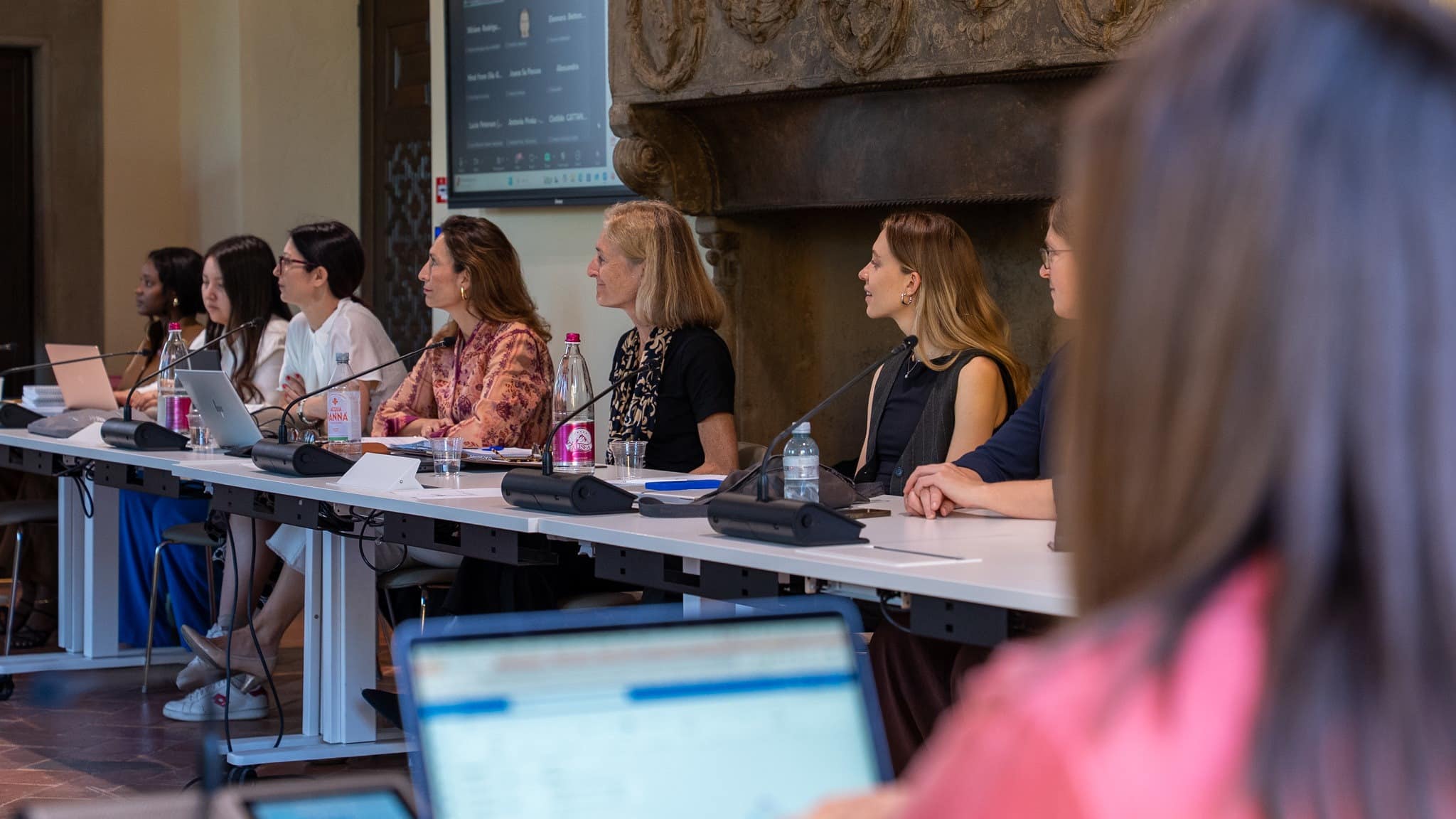
Lights on Women Info Session

Gender equality and women’s leadership are essential to building a more inclusive and resilient energy transition. Since its launch in 2017, the Lights on Women initiative has worked to make this vision a reality by supporting women professionals in the energy, climate, and sustainability sectors through training, visibility, and professional development opportunities.
The upcoming Info Session will present the initiative’s journey so far, its milestones, community growth, and impact, while also outlining upcoming activities and opportunities for engagement.
During the session, participants will learn more about Lights on Women’s flagship initiatives, including:
- Energybase, a free talent matchmaking platform that connects women professionals with organisations and job opportunities worldwide.
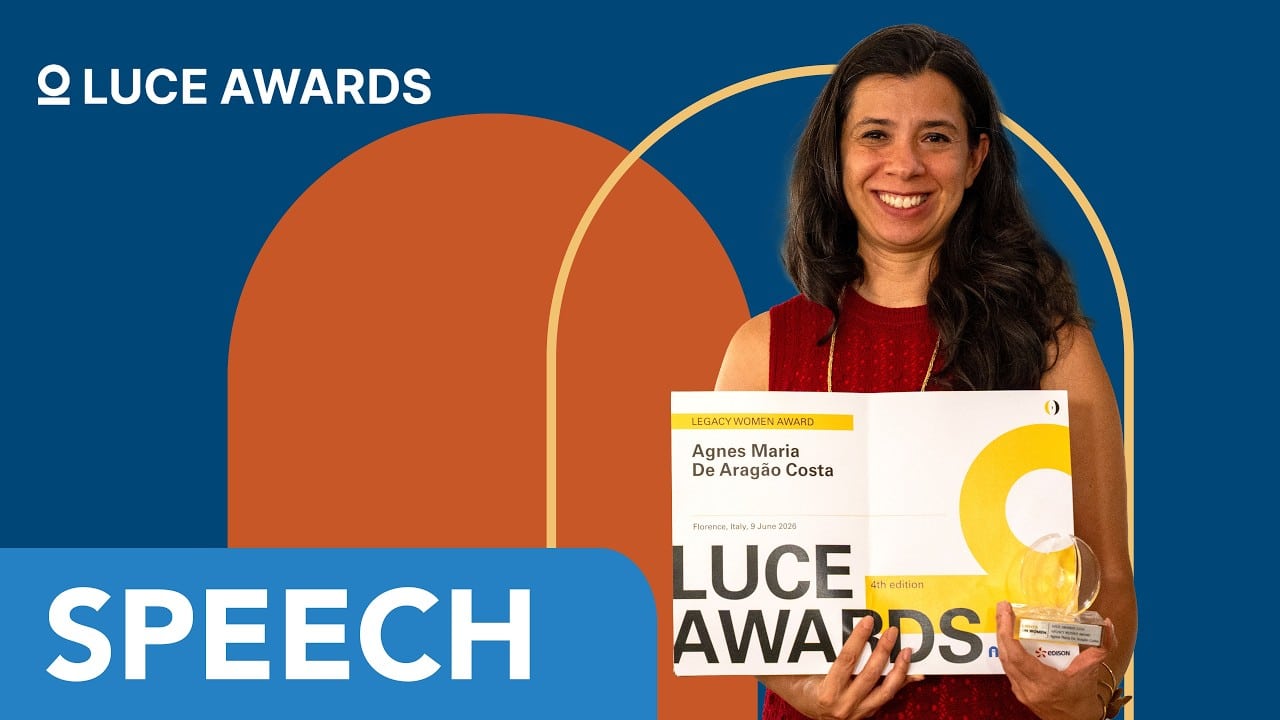
- LUCE Awards, celebrating both emerging and established women leaders who are shaping the future of the energy, climate, and sustainability fields.
- Scholarships, supporting professional development and training for women across diverse areas of energy and regulation.
- New blog series, “Powering Gender Equality”, examining the intersections of gender and energy and featuring insights from diverse experts in the Lights on Women network.
This Info Session will be an opportunity to discover these initiatives, connect with others committed to gender equality, and explore ways to collaborate in building a more inclusive and forward-looking energy transition.
Participation is free and open to all.
For details and registration, please contact Roberta Ruggero at roberta.ruggero@eui.eu
Don’t miss any update on our events
Sign up for free and access the latest events from our community.

Workshop on the role of carbon markets in reaching carbon neutrality

As the number of carbon markets grows, the long-term contribution of market-based instruments to reach carbon neutrality by 2050 should be further assessed. In general, the size, scope, parameters, and prices of Emissions Trading Systems (ETSs) vary and evolve depending on the social, economic, political, and legal context of each jurisdiction. All these aspects of regulated carbon markets are to be considered by policymakers. To tackle challenges, regulators may find insights from new scientific evidence.
This workshop aims to collect insights from policy-relevant research on recent trends in carbon markets, with a particular focus on the EU ETS. It will address topics such as future allowance prices, scope expansion of ETSs and market oversight, among others. Furthermore, it will focus on the methodologies used to assess ETSs (i.e., ex-post and ex-ante model-based assessments) and their results.
The 3-day event will comprise a keynote lecture, paper presentations, a policy roundtable and a guest lecture.
It is organised by FSR Climate under the framework of the LIFE COASE project, which is co-funded by the European Union’s Life Programme. The workshop combines the ex-post and the ex-ante model based assessment of ETSs and will take place during the Joint Session of Workshops of the Robert Schuman Centre in the context of the 30 anniversary of the Centre.
Participation in the event is via invitation only. Find out more about the programme of the Joint Session of Workshops here.
Programme
18 June
10:00-10:45 Introduction, Tour de Table, Ice Breaker
11:15-12:05 Keynote speech: The merits and shortcomings of the EU carbon markets
- Sonja Peterson | Kiel Institute for the World Economy
12:15-13:00 Session 1: Chinese National ETS Model
China’s national ETS price outlook: long-term forecast and policy scenarios [Introduction]
- Boyang Jin | London Stock Exchange Group
14:00-15:30 Session 2: EU ETS Models
Economic interaction between climate policy instruments [Abstract]
- Jakub Boratyński | KOBiZE
Sequencing CDR into the EU ETS [Abstract]
- Sebastian Osorio | Potsdam-Institute for Climate Impact Research
16:00-17:10 ETS Model Comparison
- Sebastian Osorio
19 June
10:00-11:30 Session 3: Carbon leakage
Carbon border adjustments: an examination of the direct and indirect effects of the European Carbon Border Adjustment Mechanism (CBAM)
- Antton Haramboure |Organization for Economic Cooperation and Development
Carbon prices, emissions and international trade in sectors at risk of carbon leakage: evidence from 140 countries [Abstract]
- Jonas Teusch | OECD
12:00-13:30 Session 4: Carbon pricing and firm behaviour
The effects of carbon pricing along the production network [Abstract]
- Thomas Stoerk | National Bank of Belgium & LSE
Realist analysis of UK ETS trading and abatement behaviour [Introduction]
- Mary Anderson | CAG Consultants
14:30-15:30 Policy panel: ETS Endgame – Including new sectors and removals ETSs
- Edoardo Croci | Bocconi University
- Sebastian Osorio | Potsdam-Institute for Climate Impact Research
- Elena Marro | European University Institute
16:00-17:30 Session 5: Beyond the EU ETS: Offsets & China ETS Policy Overlap
Willingness-to-claim voluntary carbon offsets: market evidence of revealed-preferences [Abstract]
- Tara L’Horty | Université de Lorraine
Interactions between emissions trading systems and other policies: insights from theory and an application to China [Abstract]
- Carolyn Fischer | World Bank
20 June
09:15-11:30 Session 6: Decarbonising industry and agriculture
Steel in the EU CBAM: will scrap-resource shuffling delay the sector’s global decarbonization? [Abstract]
- Maxime Gérardin | France Stratégie
Market design options for integrating negative emissions into the ETS [Introduction]
- Carlotta Von Bebenburg | Oxera
Options to expand emissions trading to emissions from agriculture in Europe [Abstract]
- Benjamin Görlach | Ecologic Institute
12:00-13:30 Session 7: Legislation for carbon pricing
The integration of negative emissions in the EU legislation [Introduction]
- Elena Bonfiglio | European Roundtable on Climate Change and Sustainable Transition
Enhancing climate policies through the implementation of regulated carbon markets in Brazil: reflecting on strategies for closing the policy-science loop [Introduction]
- Adriana I. B. S. L. Di Pasquale | University of Pisa
14:30-15:30 Guest lecture: Stopping climate change
Paul Ekins | UCL
16:00-17:30 General discussion & conclusions
17.30 Close
Don’t miss any update on our events
Sign up for free and access the latest events from our community.
More on the topic






Secondary EU renewable energy support law: current trends and future options
EUI Seminar with Theodoros G. Iliopoulos
Attaining an energy transition proves more pressing and more challenging than expected. In late 2019 the ‘Green Deal’ emphasised the need to revise EU energy law, as it had just been formed after the ‘Clean Energy Package’. In 2022, after the Russian invasion of Ukraine, a rethink of these revision plans was also necessitated. In this regard, it is common ground that we need more energy from renewable sources, so that a clean energy transition and a phaseout of Europe’s dependence on (fossil fuel) imports can be attained. In the lack of a sufficient supply of such energy, the law needs to regulate and ensure an intervention in the market that will boost the development of renewable energy sources, without aggravating the energy price crisis that Europe is experiencing.
Given the above, the question raised is, how does and should secondary EU renewable energy support law evolve to ensure a sustainable financing of RES projects? It is noted that the supranational intervention in the field has so far relied on conditions, mostly expressed in State aid Guidelines and in a Commission’s Guidance, that impact on the design and implementation of national support schemes. Support allocation support has always been at the epicentre of the EU legal order, but after the ‘REPowerEU Plan’ one can notice that attention is shifting towards the administrative procedures that necessarily accompany the relevant investments. This seminar presentation will give a critical overview of these developments and will investigate the role of the EU legal order (including considerations of competences and harmonisation) in the design, enactment and implementation of support policies for renewable energy sources.
This seminar presentation is part of dr. Iliopoulos’s research stay at EUI Florence School of Regulation, and is linked with his postdoctoral research ‘Quo vadis, European renewable energy support law?’, funded by Flanders Research Foundation, and conducted within the premises of Hasselt University and Ghent University.
Theodoros G. Iliopoulos is an FWO (Research Foundation – Flanders) postdoctoral fellow in Energy and Environmental Law, working at Hasselt University and Ghent University.
Don’t miss any update on our events
Sign up for free and access the latest events from our community.
More on the topic



Linking Emissions Trading Systems: research insights from LIFE DICET

In the context of the Paris Climate Agreement, there is today a strong need for enhanced international cooperation fostering emissions trading around the world. Based on the research of the project called LIFE DICET – Deepening International Cooperation for Emissions Trading, this webinar will provide a better understanding of the regulation of carbon markets and the implications for their possible integration. It will take place on 7 April from 12.00 to 13.00 CEST.
WATCH THE RECORDING:
The webinar “Linking Emissions Trading Systems: research insights from LIFE DICET” aims at summarising the Carbon Market Policy Dialogue about the relevance and challenges of linking emissions trading systems (ETSs). Building upon the Online Training, the objective of this webinar is to translate the research of the project LIFE DICET – Deepening international cooperation on emissions trading – into learning and to bring it to a much wider audience.
Special attention is devoted to the six ETSs represented in the Carbon Market Policy Dialogue (those of California, Quebec, EU, Switzerland, China and New Zealand) and to the topics of research “Emissions trading systems with different measures for carbon leakage prevention: implications for linking” (topic 3) and “ETS Alignment: possible reforms for carbon market integration” (topic 5).
A brief summary of the past and current research will be presented by the lead researchers, then, the floor will be open for questions.
12.00-12.05: Welcome by Simone BORGHESI, Director of FSR Climate and LIFE DICET.
12.05-12.40: Presentations
- “ETSs with different measures for carbon leakage prevention: implications for linking” by Stefano F. VERDE, Assistant Professor at the University of Siena
- “ETS Alignment: possible reforms for carbon market integration” by Baran DODA, Head of Programme Carbon Markets and Pricing at adelphi, Senior Project Manager at the International Carbon Action Partnership and External Collaborator of LIFE DICET
12.40-13.00: Questions and answers
Check out the resources and publications of LIFE DICET here.
LIFE DICET is a project co-financed by the EU LIFE Programme of the European Commission.
Don’t miss any update on our events
Sign up for free and access the latest events from our community.
Innovative models for the management, regulation and governance of natural resources

The FSR Water & Waste and RENEL Chair from Lorraine University are co-organising an hybrid seminar on Thursday, October 28th 2021 to present and discuss cases of innovative approaches to the management, regulation and governance of natural resources.
Natural resources (including forests, watersheds, oceans, air, fauna and flora) as well as material resources (non-metallic minerals, biomass, fossil fuels, and metals) produce benefits and services on which human existence depends and are also critical to livelihoods, economic growth, development and well-being. However, human activities are putting unsustainable pressure on these resources, and current trends in biodiversity and ecosystem loss are believed to threaten 80 per cent of the Sustainable Development Goals (SDGs) targets related to poverty, hunger, health, water, cities, climate, oceans and land. Under current population and growth trends, the 2030 Water Resources Group predicts global water demand will exceed available supply by 40 percent by 2030. The demand and use of material resources have been growing over the past century, fuelled by economic and population growth, urbanisation and societal changes. From 1990 to 2017, material use has more than doubled, and is projected to double again by 2060 (OECD, 2019). As a result, pressure on natural resources continues to grow, bringing negative impacts in terms of pollution, ecosystem degradation, biodiversity loss and climate change. The complex policy issues and difficult choices regarding the management, conservation, and use of natural resources necessitate comprehensive innovative approaches to rejuvenate the management, regulation and governance of natural resources.
Download the final programme
Please note that this event will take place in Florence (by invitation only) and online (open to everyone upon registration).
The seminar is organised in partnership with:

Don’t miss any update on our events
Sign up for free and access the latest events from our community.
More on the topic




Summer school on Economic Foundations for Energy and Climate Policies

After the great success of the first edition, Universidad Carlos III, DIW Berlin, Florence School of Regulation (EUI), Technical University Berlin, Universidad Autónoma de Madrid, University College London and Université Libre de Bruxelles are happy to announce the second edition of the PhD Summer School on “Economic Foundations for Energy and Climate Policies”.
The PhD Summer School will be held on September 6-10, 2021 at Universidad Carlos III de Madrid (Downtown campus) The plan is to organise the school on-site but a mixed format could eventually be considered in case the situation does not improve as expected.
Instructors and topics
The main objective of the School is to provide PhD students in Economics with high-level academic training on the micro-economic foundations of energy and climate policies. The School is also aimed at supporting the development of a PhD-student network for students interested in the topic, and connect them with top academics in the field.
- Stefan Ambec (Toulouse School of Economics): “‘The Challenges of Intermittent Renewables’”
- Estelle Cantillon (Université Libre de Bruxelles): “Design and Development of the EU ETS”
- Juan Pablo Montero (Pontificia Universidad Católica de Chile): “Environmental Regulation and the Transport Sector”, and “The Design of Environmental Instruments“
- Ulrich Wagner (University of Mannheim): “The Effects of Climate Policy”
More information at the attached Call for Applications.
- Deadline for applications: April 30, 2021. APPLY HERE
- Local Committee: Natalia Fabra and Carmen Arguedas
- The Organizers: Carmen Arguedas, Simone Borghesi, Estelle Cantillon, Olga Chiappinelli, Natalia Fabra, Michael Grubb and Karsten Neuhoff
- Costs: the School will be free of charge for students but accommodation, food and travel is not covered.
Don’t miss any update on our events
Sign up for free and access the latest events from our community.
Executive Seminar on Speed and Speed Management in Road Safety Policy
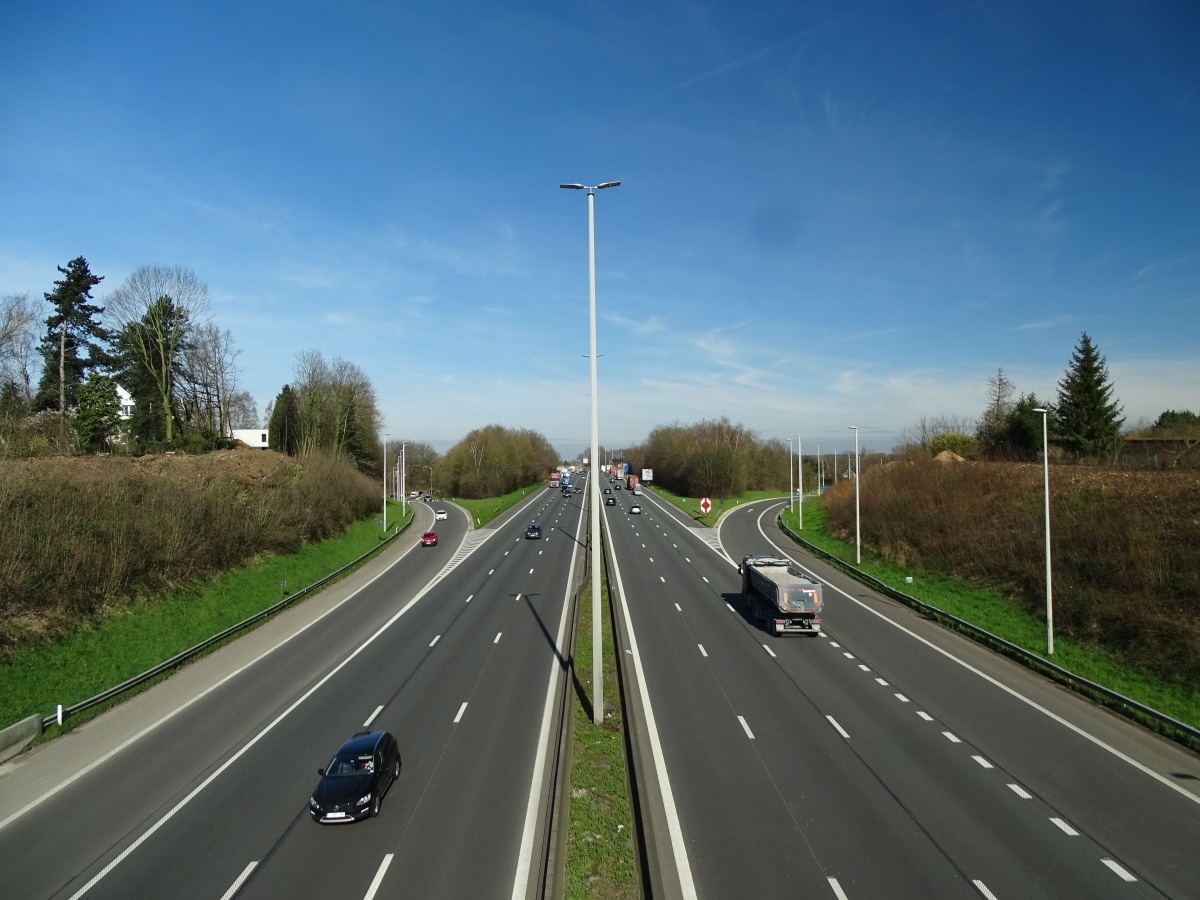
The European Commission and EU transport ministers have set themselves ambitious targets for road safety for the coming decade: to halve the number of fatalities and the number of serious injuries on European roads by 2030.
A crucial factor in the road safety equation is speed. About one third of crashes are at least partly caused by excessive or inappropriate speed. The risk to be involved in a crash when speeding well above the limit or driving too fast for the conditions is 12.8 times higher than for non-speeders. And higher speed crashes cause far more damage than lower speed ones.
Rules and regulations on speed differ between EU Member States. But as driver assistance technology like Intelligent Speed Assistance is becoming commonplace thanks to EU regulation and as many European cities are learning from their peers across the EU about lowering speed limits and accompanying infrastructure measures, it is time for a closer look at speed at European level.
This seminar will bring together academics and practitioners from across the EU to discuss all aspects of the “factor speed”: vehicles and technology, infrastructure design, speed limits and enforcement, as well as links with sustainable mobility (emissions, air quality, noise).
Please kindly note that this event is by invitation only.
Don’t miss any update on our events
Sign up for free and access the latest events from our community.


Workshop on Air Traffic Management (ATM) Data Services

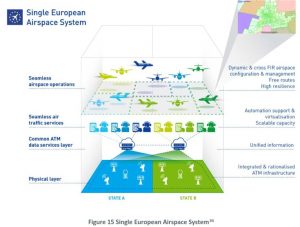
The Airspace Architecture Study (AAS), published in March 2019, set out a proposal for a future Single European Airspace System (SEAS) underpinned by optimised airspace organisation, progressively higher levels of automation and the establishment of common ATM data services, enabling seamless cross border air traffic service provision. The vision outlined in the AAS report (pictured in the figure below and proposed to be implemented by 2035) requires operational, technological, organisational and regulatory changes to the existing SES architecture.
Whilst the AAS focused on the operational and technical dimensions of the proposed future ATM architecture, a number of questions remain open in terms of regulatory aspects and service delivery arrangements (‘framework dimensions’).
The framework dimension, including the regulatory framework and the service delivery models, constitute the enablers without which the proposed future vision cannot be realised. Hence, the Commission has taken further action to explore and address the related aspects critical for the future SEAS, by launching a study in October 2019 on the legal, economic and regulatory aspects of ATM data services provision and capacity on demand as part of the future European air space architecture.
In March 2020 the first virtual expert workshop was organised together by the Florence School of Regulation Transport Area and DG MOVE. This workshop gave an overview of the first findings and results of the study, as well as generated valuable discussions regarding the most important aspects of ATM data services.
The second workshop would seek to explore the following topics:
-Service delivery models for ATM data services
-Interoperability and interfaces
-Certification and oversight of ATM data services
-Insurance and liability
-Impacts of ATM data services
Please note that this event is an online workshop and by invitation only.
Don’t miss any update on our events
Sign up for free and access the latest events from our community.
Enabling ATM data services: a workshop on the legal, regulatory and economic aspects, benefits and impacts

The Airspace Architecture Study (AAS), published in March 2019, set out a proposal for a future Single European Airspace System (SEAS) underpinned by optimised airspace organisation, progressively higher levels of automation and the establishment of common ATM data services, enabling seamless cross border air traffic service provision. The vision outlined in the AAS report (pictured in the figure below and proposed to be implemented by 2035) requires operational, technological, organisational and regulatory changes to the existing SES architecture.
Whilst the AAS focused on the operational and technical dimensions of the proposed future ATM architecture, a number of questions remain open in terms of regulatory aspects and service delivery arrangements (‘framework dimensions’).
The framework dimension, including the regulatory framework and the service delivery models, constitute the enablers without which the proposed future vision cannot be realised. Hence, the Commission has taken further action to explore and address the related aspects critical for the future SEAS, by launching a study in October 2019 on the legal, economic and regulatory aspects of ATM data services provision and capacity on demand as part of the future European air space architecture. Subsequently, a major stakeholder engagement workshop was held in Brussels in November 2019, to inform all stakeholders about the scope and timing of the study, and to allow for key stakeholder groups to provide initial inputs to the study. In addition to this, a dedicated civil-military workshop was also organised by the European Defense Agency, in involve military and defense dimensions from early on.
With the study work now well underway, this workshop aims at providing the experts from different stakeholder groups with an overview of the first findings and results, as well as generating valuable discussions regarding the most important aspects of ATM data services.
More specifically, the workshop would seek to explore the following topics:
- Scoping and definitions of ATM data services;
- Costs and benefits associated with ATM data services;
- Future strategies of potential players of an ATM data services market;
- Economic regulation and other regulatory aspects.
Please note that this event is an online workshop and by invitation only.
Don’t miss any update on our events
Sign up for free and access the latest events from our community.
FSR Research Seminar

The research team of the FSR Energy & Climate is pleased to invite you to a seminar day in Villa Schifanoia, Florence. On this day, we will host two different presentations followed by Q&A sessions.
Seminar Agenda:
2-2.30pm:
Which way is the transition in the Brazilian electricity sector going? Does it matter?
Speaker:
Alex Feil
Abstract: The Brazilian electricity sector has very interesting characteristics, including a predominantly clean and renewablegeneration matrix, a centrally operated transmission system of continental dimensions, active participation of numerous international investors and well-structured institutional actors. This environment is not immune to the disruptive processes underway globally but may react unexpectedly depending on the action of local drivers. This might complicate the design of reliable future scenarios, but the effort to do it may offer interesting results. The presentation aims to share some of the experience about the Brazilian Electricity Sector and discuss the ongoing research that seeks to identify, in the context of the current energy transition, the main drivers that will shape its future in the long term.
20′ Q&A session
* * * Break * * *
3-3.30pm
Peer to Peer Energy Trading, Community self Consumption & Transactive Energy – Blocks and Missing blocks in legal research
Speakers:
Nikolas Klausmann & Lucila de Almeida
Abstract: Peer-to-peer trade (P2P), community self-consumption (CSC), and transactive energy (TE) are notions that have been recently introduced into the debate over energy regulation and rapidly become fashionable among scholars and policy markets. This development goes hand in hand with the new pro(con)sumer centric energy policy by the push towards digitalization.P2P and CSC are notions that often refer to new models of doing business, exchange energy, or a collective sharing of self-production. TE, instead, is a more generic expression that encompasses both P2P and CSC as a means to a more decentral and reactive approach to managing power exchanging.
There is growing research regarding P2P energy trading, CSC, and TE within fields of economics, engineering, management, and law. Within the first part of the fifth sub-task of the International Energy Agency Global Observatory, the presentation will introduce the preliminary findings of the literature review on the subjects mentioned above in the fields of law and regulation. Literature review, in this context, means the task of systematizing what the scholars and organizations (e.g., policymakers, think tanks, and international organizations) have focused most while making descriptive or normative propositions regarding P2P, CSC, and TE. This is the part of the literature we refer to as blocks. But even though there is quite an amount of research done already, we identify that almost nothing has been said about the intersection of P2P, CSC, and TE and general fields of law. Except for consumer law and data protection, this topic seems untouched so far by the literature. The literature review therefore will outline these missing blocks, namely the expected legal issues that might arise with the implementation of P2P, CSC, and TE but are not represented in legal research so far sufficiently.
20′ Q&A session
Don’t miss any update on our events
Sign up for free and access the latest events from our community.
Speakers
More on the topic



Gas in the “European Green Deal”

- Gas in transition: the future role of gas in the EU and the European Green Deal
- Future Gas Target Model
- Article 101(3) and sustainability
- Could gas infrastructures become stranded assets?
- Sector Coupling
- The future role of Gas TSOs under sector coupling
Participation in this workshop is open subject to availability. Priority will be given to FSR Energy Union Law Donors and invited guests.
Don’t miss any update on our events
Sign up for free and access the latest events from our community.
Speakers

Protecting Foreign Investment After Brexit

This seminar, set up in collaboration with Sir Alan Dashwood and Dechert LLP, will focus on investment protections after Brexit. Bringing together leading authorities in EU law and arbitration practitioners, we will address the impact of Brexit on intra-EU disputes and the investment protection regime governing EU investments in the UK and UK investments abroad. Among the issues, we will debate:
- The major economic and political risks to investors in the UK and to UK investors abroad.
- Potential recourses for investors against the UK based on possible regulatory changes implemented as a result of Brexit.
- The UK’s relationship with the EU after Brexit
- The future of investment protection in the EU
- Organising investor protection in the UK and for UK investors abroad in the post-exit world.
Confirmed speakers include:
- Former EU Court of Justice Judge Alan Rosas
- Former EU Commission Director-General Sir Jonathan Faull
- Sir Alan Dashwood QC – former Head of the EU Council Legal Service, barrister at Henderson Chambers
- Sir David Edward KCMG PC QC – former judge, EU Court of Justice, international arbitrator and mediator at Blackstone Chambers
- Arif Ali – Head of International Arbitration, Dechert
- Leigh Hancher – Director, Energy Union Law, Florence School of Regulation, European University Institute
- Michelle Bradfield – Partner, International Arbitration, Dechert
- Dániel Dózsa – Counsel, International Arbitration, Dechert
17.00 – 17.15: Registration
17.15 – 19.30: Seminar
19.30 – 20.30: Cocktail Reception
Please note, this is an open workshop and there is no fee to participate. However, given the limited availability of places, priority will be given to the FSR Energy Union Law Donors and invited guests.
Don’t miss any update on our events
Sign up for free and access the latest events from our community.