
Type of event: Online Event
COVID-19, global climate policy and carbon markets

COVID-19, global climate policy and carbon markets: expected impacts and possible solutions
The COVID-19 pandemic is having a dramatic impact on economic activities worldwide. This has both direct and indirect effects on greenhouse gas emissions and global warming. On the one hand, the fall in production and traffic volumes drastically reduces emissions, as it has already been observed after a few weeks of lockdown in a growing number of countries. On the other hand, the deep economic recession which might affect the world economy in the next years is likely to slow down the technological progress that is needed to progress along a low-carbon economic path. Moreover, the economic depression obviously has a large impact also on carbon markets: the fall in production brings about a sharp decrease in the demand of emission allowances, which causes a reduction in the allowance prices and thus also -ceteris paribus- in the incentive to invest in clean technologies.
For these reasons, it appears particularly important to identify in advance a suitable economic-climate package which may relaunch clean investments when economic activities will resume and avoid that the economic downturn may be followed by a sharp growth in emissions when the pandemic will be gone.
This raises some of the questions that we would like to address in this online debate, namely:
- What economic and climate policy package will be needed to deal with the economic consequences of COVID-19?
- How will the current emergency affect the European Green Deal?
- What consequences the ongoing pandemic may have on the EU ETS? What are its expected effects on the other Emission Trading Systems worldwide?
- What impact COVID-19 might have on international cooperation among Emission Trading Systems?
- What lessons can be learnt from the current pandemic for cooperation among countries in the international climate policy?
FSR Climate, in collaboration with the Policy Outreach Committee of EAERE (European Association of Environmental and Resource Economists), organises this online event to promote a more integrated dialogue between academia and policy world, providing advice and support to EU policy makers and institutions in designing policy interventions, which is particularly needed and urgent in these difficult times.
The event builds upon the successful experience of policy debates organized by FSR Climate at State of the Union since 2018 and intends to continue the policy dialogue carried out by FSR Climate under the ongoing LIFE DICET (Deepening International Cooperation on Emissions Trading) project. The project, co-funded by the LIFE Programme of the European Union, focuses on the international carbon market cooperation between the EC and the regulators of other major Emission Trading Systems, namely, California-Quebec, China, Switzerland and New Zealand and intends to support EU and Member State policymakers in deepening international cooperation for the development and possible integration of carbon markets at the world level.
Watch the recording!
Format
Short presentations from the invited speakers followed by questions from the audience.
Chair
Simone Borghesi, Director, FSR Climate, EUI
Jos Delbeke, School of Transnational Governance, EUI
Invited speakers
Christian Gollier, Director of Toulouse School of Economics, President European Association of Environmental and Resource Economists
Phoebe Koundouri, Professor, School of Economics, Athens University of Economics and Business; President-Elect EAERE; Chair, UN SDSN Greece; Director EIT Climate KIC Hub Greece; Chair ICRE8
Eswaran Somanathan, Economics and Planning Unit of the Indian Statistical Institute, Delhi, India, and Program Director of CECFEE (Centre for research on the Economics of Climate, Food, Energy and Environment)
Harald Winkler, University of Cape Town and Academy of Science of South Africa

Presentations
Don’t miss any update on our events
Sign up for free and access the latest events from our community.
Speakers
More on the topic










Wholesale energy markets: Gas & Electricity shaken by the virus

IAEE-FSR online event
Watch the recording:
The Covid-19 crisis has become a major economic crisis, in which the gas & electricity industries are facing unprecedented challenges with a deep fall in consumption and wholesale prices. We will look at the facts and the foreseeable consequences for the major stakeholders; be they consumers, producers or intermediaries, as seen from the wholesale markets, in the US and in the EU.
Panelists: Jeff Makholm, Managing Director at NERA; Walter Bolz, former ‘Gas’ Vice President of European energy regulators; Emmanuel Clair, former Managing Director at Goldman Sachs; Max Luke, Consultant at NERA
Moderated by: Jean-Michel Glachant, Director Florence School of Regulation & Loyola de Palacio Chair Holder

Don’t miss any update on our events
Sign up for free and access the latest events from our community.
Speakers
More on the topic



The role of guarantees of origin in pursuing energy sector decarbonisation

FSR Regulatory Policy Workshop Series 2019-2020
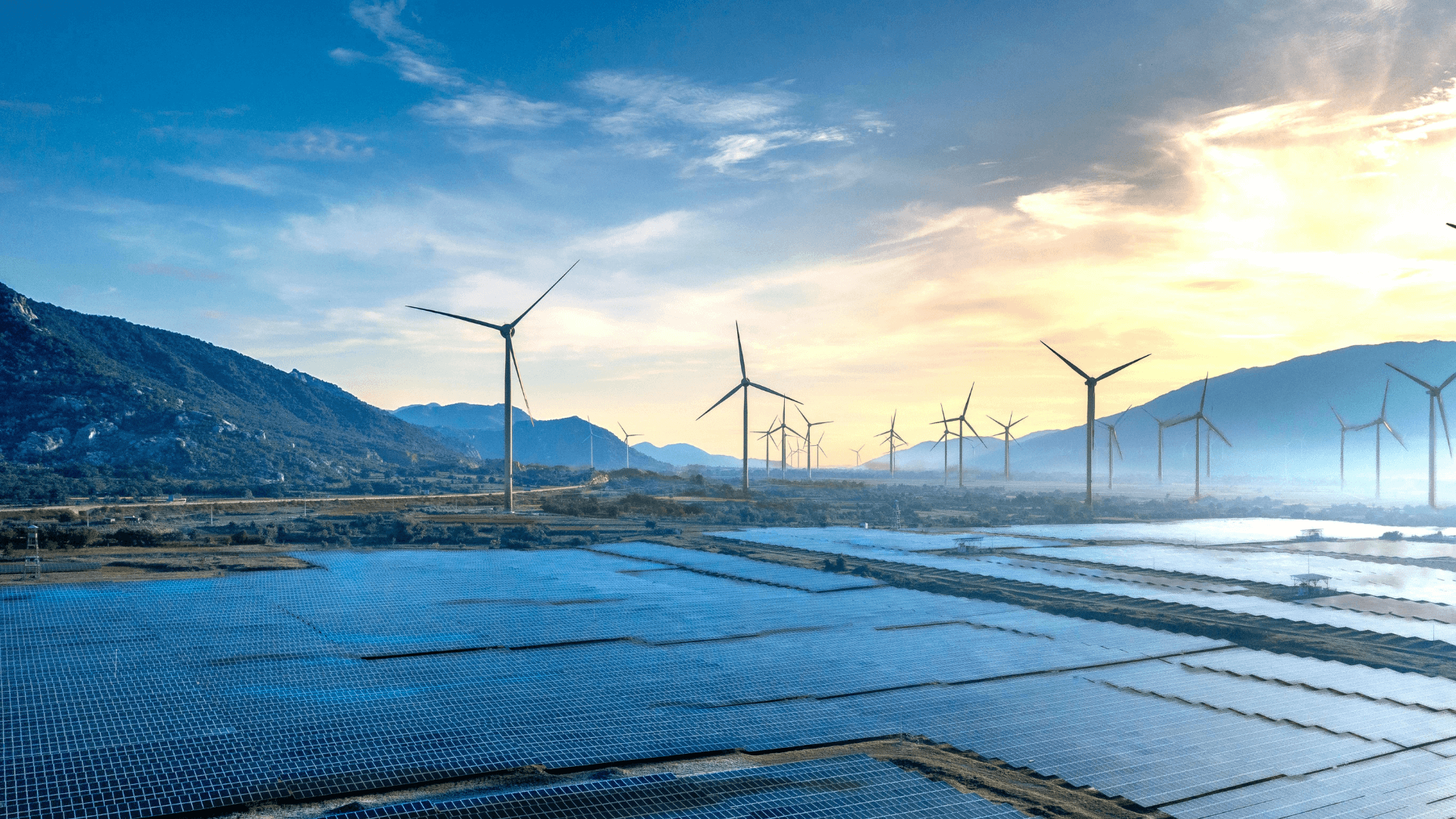
The Online Workshop will consider which role the Guarantees of Origin (GOs) might play in promoting the development of decarbonised/renewable gases and, more generally, decarbonised/renewable energy vectors within a framework aimed at achieving the renewable penetration policy goal at least costs. It will also consider the relationship between GOs, Green Certificates (GCs) and other support schemes and whether the current governance of the GOs is fit for any new role that they might be called to play in the future.
To explore these issues, the Workshop will be structured in two sessions:
- Session I on Renewables in the EU Green Deal and Guarantees of Origin will consider what approach might deliver the renewable penetration goal at least costs and what role tradable quota instruments (GCs and GOs) can play in such an approach
-
- 09.30-10.50: Online Part 1
- 10.50-11.20: Break
- 11.20-12.50: Online Part 2
- 12.50-14.00: Break
- Session II on Guarantees of Origin: Format and Governance will focus on how the format and governance of the GOs might need to adapt for them to play the role which will emerge from the considerations developed in Session I.
-
- 14.00-15.20: Online Part 3
This workshop is exclusively open to national regulators, representatives from public bodies and associate & major donors of the FSR Energy area. Special registration requests must be submitted to the coordinator of the workshop Mara Radulescu.
Background
The European Union has committed itself to ambitious sustainability targets for 2030, including a 32% minimum share of renewables in final energy consumption, likely soon to be increased. The achievement of these targets requires a change of pace in many sectors of the economy. The energy sector is called to contribute with a massive increase in electricity and gas generation from renewable energy sources.
The EU policy approach to decarbonisation will be based on the reformed Emission Trading Scheme (ETS), which should provide a consistent pricing of carbon and, therefore, promote decarbonised/low carbon energy vectors. However, while being a very useful instrument, the EU ETS alone will not likely be able to promote the penetration of renewable energies to the extent needed to meet the policy targets and renewable support schemes will be required to provide the additional stimulus for the deployment of renewable energies.
There is a long tradition and significant experience in support schemes for renewables-based electricity. In the gas sector, support for renewable gases has been much more limited, and so has been the penetration of these gases. The question therefore arises regarding the most effective instrument(s) to promote the development of decarbonised gases. More generally, as the renewable penetration target could be achieved with different mixes of technologies and renewable energy vectors (renewable electricity, renewable gases, biomass, etc.), an approach is needed which promotes the achievement of the target at least cost. And the need for least-cost solutions will be greater the more ambitious the renewable target becomes.
A holistic approach to deliver overall efficiency in achieving the renewables penetration target requires a “common currency” which provides a consistent (price) signal against which the cost of different technologies and renewable vectors can be assessed. In the electricity sector, GCs could play such a role (even though their use in the EU has so far been quite limited). Beyond the electricity sector, and therefore also in the gas sector, GOs might play a similar role. In fact, they may also be interlinked to GCs to provide consistent “common currencies” for overall efficiency in achieving the policy objectives. Such interlinkage will be even more important in the face of the increasing integration of these two sectors through “sector coupling”. Similarly, GOs might be used to promote renewable energy vectors in other sectors as well.
Deadline for registration: 15 May 2020
Don’t miss any update on our events
Sign up for free and access the latest events from our community.
Speakers
More on the topic






The European Energy Transition: an agenda for the twenties

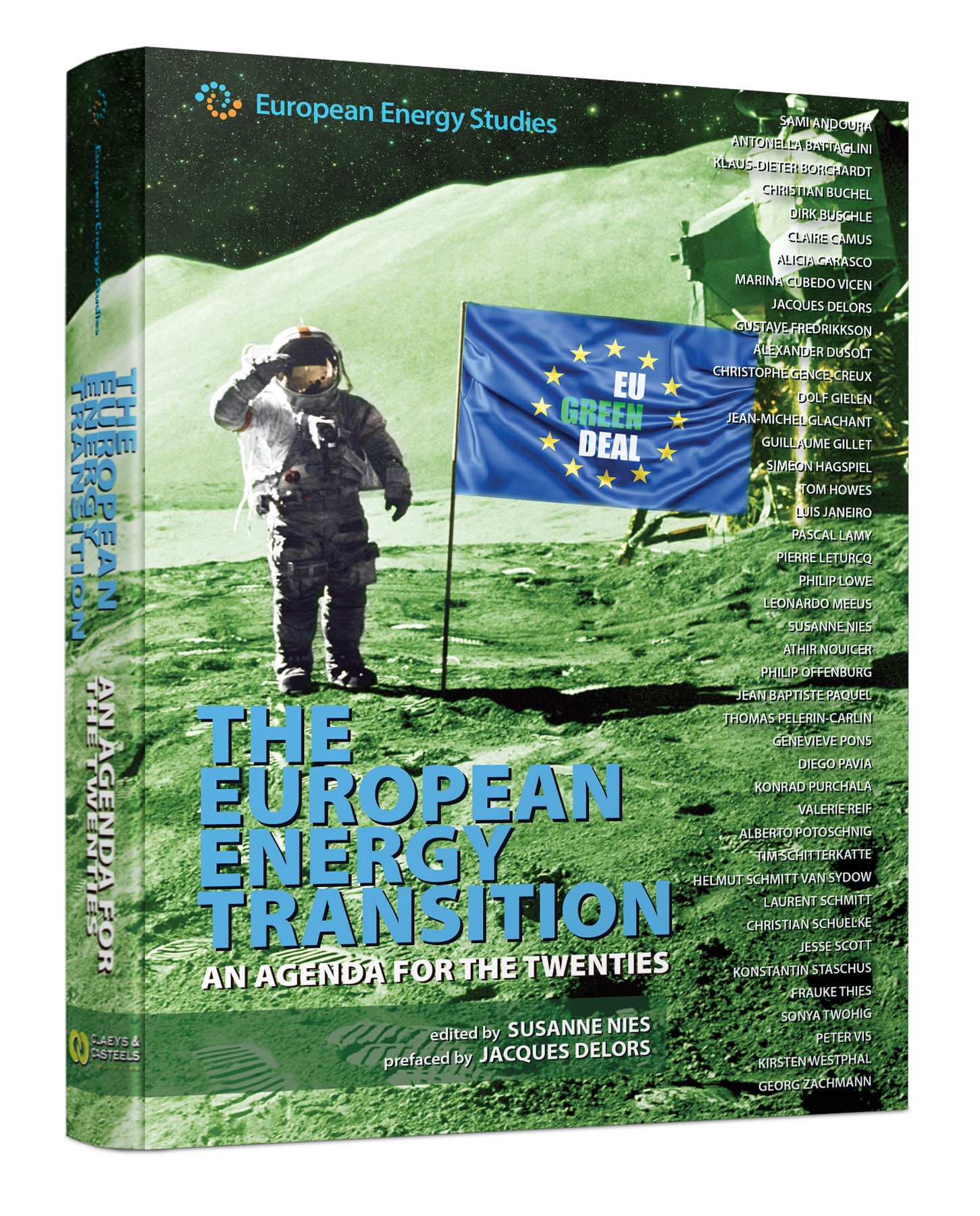 Book launch of the “European Energy Transition: an agenda for the Twenties”
The Twenties have started. A Green Deal has been conceived, just some months after the ink dried on the Clean Energy Package for all Europeans. An unprecedented and global pandemic is haunting billions of people and has altered our lives in a few weeks.
The launch of the 2nd revised and updated edition of the ‘European Energy Transition: an agenda for the Twenties’ could not come more timely.
Will the ambitious overarching Green Deal project be affected by the sudden health crisis and its imperatives? Where are we on the Clean Energy package implementation, on regionalization, but also on the climate agenda with a proposed new cross border carbon mechanism? How to take technology to the next level of large scale deployment as to ensure that the flexible Energy system works at the lowest possible cost and the high level of security of supply that Europe benefits from?
Watch the Recording
Programme
Introduction by Susanne Nies
The Green Deal: where are we?
Overview on CEP implementation state of play, forthcoming Green Deal and relation to CEP, the intended, cross border carbon mechanism; the potential impact of pandemia also with respect to energy poverty, public budgets etc.
Moderated and introduced by Jean-Michel Glachant
- Klaus-Dieter Borchardt
- Christian Zinglersen
- Genevieve Pons
- Peter Vis
- Georg Zachmann
How to speed up technology uptake in power networks
The Copenhagen Infrastructure Forum 2019 has been discussing a thorough report on the role regulation plays on innovation in energy networks and is set to receive recommendations on this in 2020, autumn. Where are we on innovation in energy networks, and which factors drive change? What is needed from a regulatory, or market design perspective? What can be expected from Horizon Europe?
Moderated and introduced by Michael Walsh
- Alicia Carasco
- Thomas Pellerin Carlin
- Konrad Purchala
- Olivier Corradi
- Pierre Serkin
Outlook on Brexit
How could there be a win win on the EU and UK side, also with a specific view on Ireland, through the agreement yet to be developed?
Philip Lowe
Closing remarks by Susanne Nies
Don’t miss any update on our events
Sign up for free and access the latest events from our community.
Speakers
More on the topic



How can aerial measurements aid methane emissions reduction?

Webinar series on Methane Emissions
First webinar:
Can satellite and other aerial measurements make a difference in reducing methane emissions?
This online event introduces the potential of satellites and other aerial measurement methods in detection, measurement, and abatement of methane emissions with a focus on technical potential, cost-effectiveness and the potential for widespread use.
Participants
The event moderated by Andris Piebalgs (FSR) will aim to achieve a wide representation of interested parties. The invited speakers and participants will include actors from regulatory bodies, industry, national and international organisations.
Now Live!
Programme
Monday 1 June
15.00- 15.05 Welcome
Andris Piebalgs | Florence School of Regulation/RSCAS/EUI
15.05 – 15.20 Introductory remarks:
Jonathan Banks | Clean Air Task Force
15.20 – 15.50 Roundtable 1: The Technology perspective
Stephen Conley | Scientific Aviation
Steven Hamburg | Environmental Defense Fund
Ilse Aben | SRON Netherlands Institute for Space Research, Vrije Universiteit Amsterdam
Guiding questions:
- How could aerial and other emerging measurement technologies contribute to the reduction of methane emissions?
- What is the best way to use the gathered data?
- What are the current and future capabilities of satellite measurements? What are their limitations?
15.50 – 16.05 Q&A with the audience
16.05 – 16.35 Roundtable 2: The Cost-efficiency and opportunities for a broad use
Antoine Rostand | Kayrros
Francisco del la Flor | Enagas
Paul Balcombe | Queen Mary University of London
Guiding questions
- What are the opportunities for a broad use of those technologies?
- How can aerial and satellite measurements interact with other methane data streams (e.g. company reporting) and methods (e.g. tower measurements, cameras, etc.)?
- Can third-party tracking of emissions incentivise action from oil and gas companies?
16.35 – 16.45 Q&A with the audience
16.45 – 17.00 Concluding remarks
Stephanie Saunier | Carbon Limits
Andris Piebalgs | Florence School of Regulation/RSCAS/EUI
Watch with us:
Background
On 15th of January 2020 the International Energy Agency (IEA), in collaboration with Florence School of Regulation (FSR), the United Nations Environment Program (UNEP) and Methane Guiding Principles partners, organized a workshop in Paris dedicated to overcoming the challenge of addressing methane emissions from the oil and gas sector through sound methane policies and regulations. The meeting was instrumental in gathering around one table a global network of methane policy and regulatory experts to share experiences and best practices for driving methane emissions reductions.
One of the major topics that emerged during the Paris workshop was the role of new technologies, especially satellite and aircraft-based instruments, in methane emissions mitigation. These technologies provide top-down emissions data that can supplement and reinforce measurements on the ground. Remote measurement can spot super-emitters, provide accurate and continuously updated data and show plumes of methane in higher resolution than ever before.
A growing number of satellite projects have recently been set in motion. In October 2017, the European Space Agency (ESA) launched the Tropospheric Monitoring Instrument (TROPOMI), GHGSat Inc., and Environmental Defense Fund will launch MethaneSAT in 2022, both of which will measure methane emissions globally. Furthermore, the accuracy and coverage of those readings is expected to ameliorate with the ESA preparing the launch of the Sentinel 5 satellite, and GHGSat planning to set in motion additional satellites.
With this influx of new aerial and satellite data, stakeholders must consider how to use this data in the most efficient way to drive meaningful methane reductions, including how best to integrate this top-down data with existing bottom-up measurement technology.
Join the discussion on Twitter
@FSR_Energy #FSRGas #reducemethane
Learn More
Watch the recording:
Online debate: How important should methane emissions be in the Green Deal Strategy?
Listen to the podcast:
US Methane emissions regulations | Interview with Robert L. Kleinberg
Read the FSR Policy Brief:
Presentations
Don’t miss any update on our events
Sign up for free and access the latest events from our community.
More on the topic



Innovation through regulatory experimentation

#FSR_CSEI online debate
Registrations are now closed. For any urgent matter, please contact the event coordinator, Chiara Canestrini.
Please note: The event will also be live-streamed on this page.
At the 2019 Copenhagen Energy Infrastructure Forum, the European Commission invited the Copenhagen School of Energy Infrastructure (CSEI) and the Florence School of Regulation (FSR) to organise roundtables on the uptake of innovative technologies for transmission and distribution and report to the next Forum.
Given the exceptional coronavirus circumstances, we decided to organise the roundtables as two complementary online debates that each conclude an interactive online consultation. Please find more information on the consultation below.
This second online debate focusses on regulatory experimentation that allows regulators to become more proactive, dynamic, and responsive and find the right balance between enabling innovation and responsible risk management. Experiences with regulatory experimentation in the Netherlands, Great-Britain and Italy will be discussed.
Regulation cannot move as fast as innovation. A trending practice to do regulatory experimentation is a regulatory sandbox. A regulatory sandbox refers to a structured context for experimentation in a real-world environment without some of the usual rules applying. Regulatory sandboxes are not unique to the highly regulated energy sector but are also used in other sectors such as banking and healthcare. Two frontrunner countries with experiences in the implementation of regulatory sandboxes for energy are the Netherlands and Great-Britain. However, there are also other possibilities to allow for regulatory experimentation; examples are pilots, exemption procedures and waivers. Italy is an example of a country that experimented with energy regulation in such other ways.
Live Now!
Panellists:
- Luuk Spee (ACM)
- Kevin Baillie (OFGEM)
- Luca Lo Schiavo (ARERA)
- Henriette Nesheim (European Commission)
- Tim Schittekatte (FSR) – also delivers the academic introduction
Moderator: Leonardo Meeus (FSR)
Background paper and discussion – give us your input!
You can provide your input in two ways:
1. Comment on the discussion note. You can leave comments addressing specific paragraphs. For example, you believe some points need to be highlighted more, a point is not raised, or you have an opinion you want to voice.
- We will revise our discussion note based on your feedback and the online debate. Your contribution will be acknowledged in the final publication that is addressed to the Copenhagen Energy Infrastructure Forum 2020.
2. Answer our polling question and elaborate on your answer. You can find more background to the polling question in the discussion note. This polling and your response will be discussed during this online debate.
This event is in collaboration with the Copenhagen School of Energy Infrastructure


Don’t miss any update on our events
Sign up for free and access the latest events from our community.
Speakers
More on the topic




Energy Network Innovation for Green Transition

#FSR_CSEI online debate
At the 2019 Copenhagen Energy Infrastructure Forum, the European Commission invited the Copenhagen School of Energy Infrastructure (CSEI) and the Florence School of Regulation (FSR) to organise roundtables on the uptake of innovative technologies for transmission and distribution and report to the next Forum.
Given the exceptional coronavirus circumstances, we decided to organise the roundtables as two complementary online debates that each conclude an interactive online consultation. Please find more information on the consultation below.
This first online debate discusses whether this age of low-cost capital and stimulus packages is the best time to heavily invest in tomorrow’s energy networks and research infrastructure and how to enable such investment by energy network companies.
In the academic literature, it is widely acknowledged that innovation is key to foster sustainable development and decarbonise the energy sector. However, post-liberalisation it has been difficult to promote R&D and innovation. Is this a case of business, regulatory, or policy failure or whether there are other factors involved? Main solutions to address this shortcoming will be discussed, such as incentive-based regulatory solutions, the establishment of competitive funding models like Ofgem’s Low Carbon Network Fund or a European collaborative super research hub.
Watch the recording!
Panellists:
- Signe Horn Rosted (Energinet)
- Benoit Esnault (CRE)
- Joe Perkins (Ofgem)
- Mark Van Stiphout (European Commission)
- Tooraj Jamasb (CSEI)
- Riccardo Vailati (ARERA)
Moderator: Leonardo Meeus (FSR)
Background paper and discussion – give us your input!
You can provide your input in two ways:
1. Comment on the discussion note. You can leave comments addressing specific paragraphs. For example, you believe some points need to be highlighted more, a point is not raised, or you have an opinion you want to voice.
- We will revise our discussion note based on your feedback and the online debate. Your contribution will be acknowledged in the final publication that is addressed to the Copenhagen Energy Infrastructure Forum 2020.
2. Answer our polling question and elaborate on your answer. You can find more background to the polling question in the discussion note. This polling and your response will be discussed during this online debate.
What’s next
The second online debate, taking place on the 30th of April at 12noon, discusses regulatory experimentation to enable innovation.
This event is in collaboration with the Copenhagen School of Energy Infrastructure

Don’t miss any update on our events
Sign up for free and access the latest events from our community.
Speakers
More on the topic
Communities dealing with renewable energy
FSR online debate
Communities dealing with renewable energy.
What’s their future in Europe?
Watch the recording:
Energy communities are spreading across Europe and beyond, gaining a growing role in the transition towards a decarbonised and more decentralised energy system. Citizens, possibly supported by local authorities and companies, are taking the initiative, investing collectively in generation assets or collectively purchasing electricity from renewable energy resources.
With the adoption of the Clean Energy Package, the EU has finally got a legal framework formally recognising the possibility for citizens to act together in the field of energy. Nonetheless, it is not yet clear how the future of community energy will look like in Europe over the next decade. Accurate and comparable statistics are limited and only a few studies that estimate the quantitative uptake of energy communities have been conducted so far.
This online debate is going to address the issue by investigating, on the one hand, what energy communities do and offer to citizens and, on the other hand, how the EU and its member states treat energy communities. By combining these two elements, it should then be possible to generate some educated guess or reasonable scenario over the development of community energy in the coming years.
Moderator:
Nicolò Rossetto (FSR)
Speakers:
- Jan Steinkohl (European Commission – DG Ener)
- Yvonne Finger (BNetzA)
- Albert Banal (Som Energia)
- Patrick Devine-Wright (University of Exeter)
During the online debate, experts from academia, public institutions and the field of practice will provide their view and will answer to the questions of the audience during a Q&A session.
Acknowledgments:
this online debate is part of the FRESCO project, which is generously supported by Fondation Tuck.
Don’t miss any update on our events
Sign up for free and access the latest events from our community.
Speakers
More on the topic
Online workshop on Renewable Hydrogen

Registrations have been closed. The recording will be available on this page.
For any urgent matter, please contact the event coordinator, Chiara Canestrini.
Workshop Series on Hydrogen Technology
Two-hour online workshop to learn more about renewable hydrogen, in a new interactive format.
Following the first online workshop on Blue Hydrogen, the second online workshop moderated by Andris Piebalgs (FSR) will examine the potential for producing “green” hydrogen; the state of technology and industrial demonstration; current cost projections; what needs to be done to bring the technology to maturity.
Watch the recording:
Download the presentation
Wednesday 22nd April, 10.00 – 12.20
Moderated by Andris Piebalgs, Part-time Professor, EUI, and Christopher Jones, Part-time Professor, EUI
Pre-event poll: Which sector is the most perspective for the uptake of the renewable hydrogen?
10.00-10.05: Opening comments: Andris Piebalgs, Part-time Professor, EUI
10.05-10.25: Introductory Presentations
Patrick Child, Deputy Director General and acting Director, DG Research, European Commission
Klaus-Dieter Borchardt, Deputy Director-General, DG Energy, European Commission
10.25-10.40: Audience questions/discussion
10.40-10.50: Jorgo Chatzimarkakis, Secretary General, Hydrogen Europe
10.50-11.00: Dolf Gielen, Director, IRENA Innovation and Technology Centre
11.00-11.10: Daan Peters, Associate Director, Guidehouse
11.10-11.20: Oksana Dembitska, VP for Green Hydrogen, BP
11.20-11.45: Audience questions/discussion
Respondents
11.45- 11.55: Catrinus Jepma, Professor, University of Groningen
11.55-12.05: Ronnie Belmans, Professor, KU Leuven
12.05-12.20 Concluding remarks
Christopher Jones, Part-time Professor, EUI
Tudor Constantinescu, Principal Advisor, DG Energy, European Commission
Watch more:
Smart Sector Integration
It is widely accepted that renewable and decarbonised hydrogen will need to play a major role in the EU’s future decarbonised energy market. This understanding is at the very heart of the European Commission’s Smart Sector Integration initiative.
This initiative will cover a wide range of issues, including how to ‘kick-start’ the renewable and decarbonised gas market (in order to drive down costs and catalyze sufficient capacity in time for the 2050 decarbonisation deadline), how to link the RES and nuclear electricity and gas markets with one-another and the ETS (including notably through Guarantees of Origin), and how to ensure that the principles of the Internal Gas Market are retained, to mention but a few.
An evidenced-based approach is vital if the EU is to find a cost-effective and efficient answer to these issues. Fully understanding the costs (and future cost curves) and potential of the different emerging hydrogen technologies will be essential in order to enable the Commission to design such a proposal.
For example, unless we have a clear view on inter alia the following issues, it is not possible to determine how and when to support the development of an H2 industry, or how to ensure that any public support during the first years of development is best targeted:
- the likely costs of renewable and decarbonised H2, what needs to be done to get costs down, how mature are these technologies, how robust are future price curves?
- the ETS price at which consumers of ‘grey’ hydrogen today (such as fertilizer manufacturers) and high heat energy intensive industry (cement, steel, chemicals) as well as transport would be likely to switch to renewable or decarbonised hydrogen
- the potential for the different hydrogen technologies in terms of energy production, taking into account, for example, CCS availability, or the ability of the EU to actually produce the RES electricity necessary to meet its (future increased) electricity demand and also be used to produce renewable hydrogen.
- Decarbonised H2 from natural gas can be produced from stream methane reforming combined with CCs, or pyrolysis (where the CO2 is ‘compressed’ into solid carbon and stored or used by industry).
The Florence School of Regulation proposes two Online Workshops to examine and discuss these issues in depth.
Presentations
Don’t miss any update on our events
Sign up for free and access the latest events from our community.
Speakers
More on the topic



Very-low / decarbonised hydrogen from natural gas

Decarbonised hydrogen from natural gas
FSR online workshop series on Hydrogen Technology
2-hour online workshop
Watch the recording:
It is widely accepted that renewable and decarbonised hydrogen will need to play a major role in the EU’s future decarbonised energy market.
The first FSR online workshop will focus on decarbonised hydrogen produced from natural gas, or ‘blue’ hydrogen. In this special live event, we will analyse:
- the potential of producing ‘blue’ hydrogen
- the state of technology and industrial demonstration, and the current cost projections
- what needs to be done to bring the technology to maturity
This online workshop seeks to identify the bottlenecks of blue hydrogen production and discusses policy options for resolving them.
Download the Presentation
Programme
Wednesday 15th April, 10.00-12.20
Moderated by Andris Piebalgs and Christopher Jones, Part-time Professors, EUI
Pre-event poll: Which of the technologies is the most likely to play a major role in the EU’s energy system in 2050?
10.00-10.05: Opening comments: Christopher Jones, Part-time Professor, EUI
10.05-10.35 The role of renewable and decarbonised hydrogen in the EU’s future energy mix; policy options, funding priorities, their potential, and bottlenecks that need to be
Klaus-Dieter Borchardt, Deputy Director-General, DG Energy, European Commission.
Hélène Chraye, Head of Unit, Clean Energy Transition, DG Research and Innovation, European Commission.
Stefaan Vergote, Adviser for Emission Reduction Strategies, Research & Innovation, DG Clima, European Commission
10.35-10.45 Audience questions/discussion
The case for Pyrolysis
10.45-10.55 Alex Barnes, Director, A. Barnes & Associates LTD
10.55-11.05: Stefan Petters / Dr. Klaus-Dieter Mauthner, GOU / CARBOTOPIA
11.05-11.15: Christopher Brandon, EH Group,
11.15-11.35: Audience questions/discussion
The case for Steam Methane Reforming and CCS
11.35-11.45: Henrik Solgaard Andersen, Equinor
11.45-11.55: Chris Gibson, Engineering Manager – CCUS & Hydrogen Group, Environmental Technology, BP
11.55-12.05 Audience questions/discussion
12.05-12.20: Concluding remarks:
Hélène Chraye, Head of Unit, Clean Energy Transition, DG Research and Innovation, European Commission.
Tudor Constantinescu; Principal Advisor, DG Energy
Workshop 2: Renewable Hydrogen
The potential for producing ‘green’ hydrogen; the state of technology and industrial demonstration, current cost projections; what needs to be done to bring the technology to maturity.
Wednesday 22nd April, 10.00 – 12.20
Moderated by Andris Piebalgs, Part-time Professor, EUI, and Christopher Jones, Part-time Professor, EUI
Pre-event poll: Which sector is the most perspective for the uptake of the renewable hydrogen? (Refining, chemicals, transport, buildings, power)
10.00-10.05: Opening comments: Andris Piebalgs, Part-time Professor, EUI
10.05-10.25: Introductory Presentations
Patrick Child, Deputy Director General and acting Director, DG Research, European Commission
Klaus-Dieter Borchardt, Deputy Director-General, DG Energy, European Commission
10.25-10.40: Audience questions/discussion
10.40-10.50: Jorgo Chatzimarkakis, Secretary General, Hydrogen Europe
10.50-11.00: Dolf Gielen, Director, IRENA Innovation and Technology Centre
11.00-11.10: Daan Peters, Associate Director, Guidehouse
11.10-11.20: Oksana Dembitska, VP for Green Hydrogen, BP
11.20-11.45: Audience questions/discussion
Respondents
11.45- 11.55: Catrinus Jepma, Professor, University of Groningen
11.55-12.05: Ronnie Belmans, Professor, KU Leuven
12.05-12.20 Concluding remarks
Christopher Jones, Part-time Professor, EUI
Tudor Constantinescu, Principal Advisor, DG Energy, European Commission
Watch more
Background
The European Commission’s Smart Sector Integration initiative
This initiative will cover a wide range of issues, including how to ‘kick-start’ the renewable and decarbonised gas market (in order to drive down costs and catalyze sufficient capacity in time for the 2050 decarbonisation deadline), how to link the RES and nuclear electricity and gas markets with one-another and the ETS (including notably through Guarantees of Origin), and how to ensure that the principles of the Internal Gas Market are retained, to mention but a few.
An evidenced-based approach is vital if the EU is to find a cost-effective and efficient answer to these issues. Fully understanding the costs (and future cost curves) and potential of the different emerging hydrogen technologies will be essential in order to enable the Commission to design such a proposal.
For example, unless we have a clear view on inter alia the following issues, it is not possible to determine how and when to support the development of an H2 industry, or how to ensure that any public support during the first years of development is best targeted:
- the likely costs of renewable and decarbonised H2, what needs to be done to get costs down, how mature are these technologies, how robust are future price curves?
- the ETS price at which consumers of ‘grey’ hydrogen today (such as fertilizer manufacturers) and high heat energy intensive industry (cement, steel, chemicals) as well as transport would be likely to switch to renewable or decarbonised hydrogen
- the potential for the different hydrogen technologies in terms of energy production, taking into account, for example, CCS availability, or the ability of the EU to actually produce the RES electricity necessary to meet its (future increased) electricity demand and also be used to produce renewable hydrogen.
- Decarbonised H2 from natural gas can be produced from stream methane reforming combined with CCs, or pyrolysis (where the CO2 is ‘compressed’ into solid carbon and stored or used by industry).
The Florence School of Regulation proposes two Online Workshops to examine and discuss these issues in depth. The first will focus on decarbonised hydrogen produced from natural gas, or ‘blue’ hydrogen. The second will examine the potential regarding renewable hydrogen.
Presentations
Don’t miss any update on our events
Sign up for free and access the latest events from our community.
Speakers
More on the topic


The EU Energy Sector: An Update on ECJ Case Law

The EU Energy Sector
A webinar on the European Courts of Justice Case Law
In this online event, Professor Leigh Hancher (FSR; Tilburg; Baker Botts LLP) and Dr Francesco Salerno (GOP LLP) will discuss the latest decisions from the European Courts of Justice relating to the EU energy sector. They will walk us through a selection of key cases, weigh the reasoning of the courts and reflect on how this new case law may rewire the interpretation of energy law and policy in the EU.
Watch the recording:
Presentations
-
The EU Energy Sector: An Update on ECJ Case Law
Leigh Hancher and Francesco Salerno
Don’t miss any update on our events
Sign up for free and access the latest events from our community.
Speakers




What outlook for the EU gas infrastructure?

Prospects for gas infrastructure
Online debate with IEA, ARERA, and GRTgaz
The 2019 edition of the World Energy Outlook examined, among other things, the prospects for gas infrastructure. This flagship IEA’s publication concludes that: “the next decade is a critical one for gas infrastructure. Short-term decisions on whether to invest in gas grids will have major long-term implications. Questions about the relative importance, and respective roles, of electricity and gas networks are central to the design of energy transitions to a low emissions future”.
Despite the rising agreement over the need to use both electrons and molecules in the decarbonised energy system, the future of gas infrastructure in Europe is far from certain. Some EU Member States continue to invest in traditional natural gas pipelines and interconnectors, while others such as the Netherlands announce ambitious plans for developing a ‘hydrogen economy’.
Watch the recording:
Download the presentation
This online debate aims to address the following questions:
- How could the recent European Investment Bank decision to stop financing the gas infrastructure after 2021 and the announcement of the European Green Deal influence the development of the new gas infrastructure in Europe? What are the trends in non-European countries concerning new infrastructure development?
- How to ensure that the levels of investment in the new gas infrastructure is compatible with both environmental and energy security objectives at an affordable price for EU citizens? How could the regulatory framework serve this purpose?
- How are infrastructure companies accommodating the uncertainties in investment decisions? Do they consider biomethane, hydrogen and other low-carbon gases as a promising investment opportunity?
This online event constitutes a part of the online block of the “Regulation of Gas markets” training, which will take place between 16 and 20 March 2020 in Florence. You can still register!
For more information, visit the course page.
Don’t miss any update on our events
Sign up for free and access the latest events from our community.
Speakers
More on the topic