




Archives: Events
The Future EU Airport Package: Access, Resilience and Investment
24th Florence Air Forum

During this forum, experts will examine how EU rules on airport slots, ground handling and airport charges can evolve into a more coherent framework for a competitive, resilient and investment-capable European airport system.
The EU airport framework is entering a new phase. Following the liberalisation of European air transport, EU rules on airport slots, ground handling and airport charges have played an important role in supporting market access, competition, non-discrimination and the efficient use of airport infrastructure. These instruments were designed at different moments and take different legal forms, but together they shape how airport capacity is allocated, delivered, priced and governed across the European aviation system. Slots determine who can access scarce airport capacity and when. Ground handling determines whether that capacity can be delivered reliably in practice. Airport charges determine how the infrastructure underpinning that capacity is priced, financed and supervised.
In the meantime, the aviation market has changed. European airports and airlines now operate in an environment marked by renewed traffic growth, capacity constraints, airline consolidation, pressure on regional connectivity, operational disruption, labour and service-quality challenges, decarbonisation requirements and intensified competition with major hubs outside the EU.
Building on the European Commission’s fitness check of the airport acquis, covering the Slot Regulation, the Groundhandling Directive and the Airport Charges Directive, the 24th Florence Aviation Forum offers an opportunity to discuss how the framework can better support a competitive, resilient and investment-capable European airport system.
Moving beyond a ‘siloed’ discussion of three separate legal acts, the debate focuses on how the future airport package can create a coherent governance framework for scarce airport capacity. This means asking how access rights, operational performance, infrastructure funding, service quality, sustainability incentives and supervision interact in practice. It also means avoiding predictable institutional positions, for example, treating slots as an airline issue, charges as an airport issue, and ground handling as an operational ‘extra’, and instead examining how the three instruments together affect the functioning of the airport system.
Against this backdrop, the Forum will structure discussion around three cross-cutting sessions and their underlying questions:
• Capacity as a system: allocation, delivery and accountability – When airport capacity is scarce, how should the regulatory framework ensure that allocated capacity is not only protected by historic rights, but also used efficiently, delivered reliably and supported by adequate infrastructure? What obligations should be attached to scarce airport capacity – for airlines, airports, handlers and coordinators – in relation to transparency, timely slot returns, operational performance and disruption management?
How can the framework better accommodate new entry, regional connectivity, innovation and sustainability without undermining the legal certainty needed by existing users and investors?
• From liberalisation to resilience: competition, quality and service delivery – Has the airport framework placed too much emphasis on market opening without sufficiently defining the conditions for resilient service delivery, including staffing, training, service quality, access to centralised infrastructure and crisis preparedness? How should competition between airlines, handlers and airports be reconciled with shared responsibility for passengers and operations? What information, performance indicators or supervisory tools are needed to identify whether problems arise from capacity allocation, ground handling failures, airport infrastructure, airline scheduling or public authority constraints?
• Incentives and governance for the next airport system – How can airport charges, slot rules and ground handling obligations be aligned so that they reward efficient use of capacity, timely investment, operational resilience and lower emissions rather than simply shifting costs between airports and airlines? What role should independent supervision, data sharing and transparency play in preventing airport market-power pricing and airline hoarding or inefficient use of scarce capacity? Would a more integrated airport package (potentially a single regulation with dedicated chapters) improve coherence across access, operations and investment, or would it risk reducing the flexibility needed for different airport models and national circumstances?
Participation to the 24th Florence Air Forum is by invitation only.
At the EUI and the Robert Schuman Centre, we are dedicated to removing barriers and providing equal opportunities for everyone. Please indicate in the registration form your accessibility needs, if any. Alternatively, you can contact the logistics organiser of the event.
At FSR, we actively work to achieve gender-balanced representation at all our events. As a platform that connects diverse voices and perspectives in the sector, we strongly value inclusive and gender-balanced panel debates and training courses.
Don’t miss any update on our events
Sign up for free and access the latest events from our community.


12th Annual Conference on the Economic Assessment of European Climate Policies

Join the conference as experts cover some of the main climate policies at the EU, national, and subnational levels.
The Climate Area of the Florence School of Regulation (FSR) is pleased to announce its 12th Annual Conference on the Economic Assessment of European Climate Policies to take place at the European University Institute in Florence from 30 November to 2 December 2026.
The event consists of a two-day academic conference followed by a half-day workshop dedicated to the LIFE NETS project. While the conference will showcase current research through paper presentations and guest lectures, the workshop will provide an interactive forum to discuss preliminary results from the project. This will include presentations and discussion on Financial Carbon Market Data and Trading Behaviours, EU ETS Data in Review, and Experimental Evidence on Communication Strategies to Increase Support for ETS2. All conference participants are invited to attend the workshop as an integral part of the event.
The Conference
The programme of the academic conference will cover some of the main climate policies at the EU, national, and subnational levels. It will include five plenary speeches and academic sessions focusing on carbon pricing and energy transition.
Simone Borghesi, Director of the FSR Climate, Professor and Deputy Rector for International Relationships at the University of Siena, will chair the conference.
The guest speakers include:
· Estelle Cantillon (Université Libre de Bruxelles)
· Stefano Carattini (Georgia State University)
· Mireille Chiroleu-Assouline (Paris School of Economics, University of Paris 1 Panthéon-Sorbonne)
· Philippe Delacote (INRAE and the Climate Economics Chair)
· Andreas Lange (University of Hamburg)
Participation fees
· Student (presenting a paper): 280 EUR
· Speaker (presenting a paper): 430 EUR
· Participant (not presenting): 520 EUR
The fee includes catering during the conference and a social event. Registration and logistics details will be available on this page closer to the date.
Organisers and funding
The Conference is organised by the Florence School of Regulation – Climate with the support of EAERE.
This year’s conference is co-financed by the EU-funded LIFE NETS project, which aims to strengthen knowledge, transparency, and cooperation around carbon pricing and emissions trading in Europe and beyond.
Important Dates
28 September 2026: Deadline for submissions
16 October 2026: Notification of acceptance
30 October 2026: Registration deadline
30 November – 2 December 2026: FSR Climate Annual Conference
Further information
For further information, please contact FSRClimate@eui.eu
At the EUI and the Robert Schuman Centre, we are dedicated to removing barriers and providing equal opportunities for everyone. Please indicate in the registration form your accessibility needs, if any. Alternatively, you can contact the logistics organiser of the event.
At FSR, we actively work to achieve gender-balanced representation at all our events. As a platform that connects diverse voices and perspectives in the sector, we strongly value inclusive and gender-balanced panel debates and training courses.
Don’t miss any update on our events
Sign up for free and access the latest events from our community.
More on the topic











Integrating energy system planning and regulation to decarbonise the energy sector
Regulatory Policy Workshop

This workshop examines how more integrated planning and regulation of electricity, gas, hydrogen and CO₂ infrastructure can support Europe’s energy and climate objectives.
Achieving the European Union’s climate and energy objectives requires the coordinated development and operation of electricity, gas, hydrogen, carbon dioxide and, increasingly, district heating and cooling infrastructure. Electrification, renewable and low-carbon gases, hydrogen, carbon capture and storage, energy storage and demand-side flexibility are no longer separate policy agendas, but complementary elements of an integrated energy system.
This workshop will examine the extent to which electricity, gas and hydrogen infrastructure in the EU is currently planned and regulated in an integrated manner, whether greater integration is desirable and in which areas, and what barriers might stand in its way. It will also explore regulatory reforms that could improve coordination across energy sectors.
The workshop will provide an opportunity to consider how similar challenges are being addressed in the United States, with the participation of Norman C. Bay, former Chair of the U.S. Federal Energy Regulatory Commission.
The workshop will consist of an opening discussion followed by three sessions.
Session I: Integrated infrastructure planning
The first session will examine how electricity, gas, hydrogen and CO₂ infrastructure is currently planned in the EU. It will review existing planning processes, including the roles of Member States’ National Energy and Climate Plans (NECPs), network development plans, integrated energy scenarios and cost-benefit methodologies, and assess the extent to which they support coordinated infrastructure development. The discussion will identify remaining gaps between planning processes and explore opportunities for more integrated system planning.
Session II: Regulation and investment across energy networks
The second session will consider the regulatory dimension, recognising that planning alone will not deliver an integrated energy system. It will analyse how existing regulation influences investment decisions across electricity, gas and hydrogen networks, considering the regulatory treatment of sector coupling, anticipatory investments, tariff design, cross-sector cost allocation and the valuation of flexibility as an alternative to traditional network expansion.
Session III: Priorities for future EU regulation
The final session will look ahead and discuss how EU legislation and regulatory practice could further support integrated energy system development. It will explore governance arrangements, the respective roles of regulators, system operators and policymakers, and priorities for future reforms that could enable infrastructure planning and regulation to contribute more effectively to a secure, affordable and climate-neutral European energy system.
This workshop is reserved for FSR donors and form part of FSR’s broader engagement with its donor community. For information on donor programmes, benefits and contact details, please visit this link
At the EUI and the Robert Schuman Centre, we are dedicated to removing barriers and providing equal opportunities for everyone. Please indicate in the registration form your accessibility needs, if any. Alternatively, you can contact the logistics organiser of the event.
At FSR, we actively work to achieve gender-balanced representation at all our events. As a platform that connects diverse voices and perspectives in the sector, we strongly value inclusive and gender-balanced panel debates and training courses.
Don’t miss any update on our events
Sign up for free and access the latest events from our community.

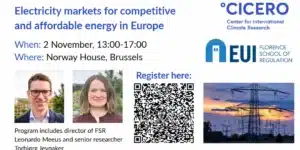
Electricity markets for competitive and affordable energy in Europe
The EU’s emerging 2040 climate and energy architecture, including the electrification target and a prospective renewable or clean energy target, will have significant implications for the future development of the internal electricity market. Growing demand and intermittency in production make cross-border trade, system flexibility, and efficient market integration more important than ever. Thus, a resilient design and governance of electricity markets is crucial. Key questions include whether additional measures are needed to secure adequate non-fossil flexibility, whether a rethink of the balance between public action and market signals is warranted in light of the growing role of state support measures and the disparities in Member States’ fiscal capacity to provide such support, and what lessons can be drawn from experience with cross-border capacity allocation and market coupling. This seminar will explore how the internal electricity market may need to evolve to support competitiveness, security, affordability and decarbonisation in the EU in the decade ahead.
Please indicate your attendance here within 27 October.
You are welcome to share the invitation with relevant colleagues and contacts.
Confirmed Program (to be expanded):
13:00-14:00 Lunch & mingle
14.00: Welcome by Anders Eide, Norway’s ambassador to the EU
Presentations by:
- Torbjørg Jevnaker, Senior Researcher, CICERO Center for International Climate Research and EVOLVE project manager
- Leonardo Meeus, Director, Florence School of Regulation (FSR)
- Per Ove Eikeland, Fridtjof Nansen Institute
Roundtable discussion:
- Leigh Hancher, Florence School of Regulation (chair)
- Andreas Tirez, IFIEC and Febeliec
- Manus Pandey, Statkraft
- Sean Hegarty, Permanent representation of Ireland to the EU
16.30-17.00 Light reception & mingle
Don’t miss any update on our events
Sign up for free and access the latest events from our community.






Fostering grid data exchange and reuse for AI models: yes, but how?

This online debate will offer the opportunity to look into the legislative proposal and to discuss with representatives of the involved actors the possible options that can be adopted to address the above-mentioned implementing aspects.
The introduction of a new Article 18a in the Electricity Market Regulation, as recently proposed by the European Commission, aims to foster the digitalisation of the electricity system and to limit the potential cost escalation due to the massive infrastructure build-up associated with the integration of renewable energy sources and the electrification of final uses.
Watch the recording:
The new article foresees, among other measures, the establishment of a voluntary and secure framework for grid data exchange and the reuse of those data for the development, testing, integration and deployment of state-of-the-art technologies that support the efficient and safe operation of the grid. Artificial Intelligence Foundation Models (AI FMs) for electricity grids, which are at the centre of initiatives such as AI.grids, are an example of those technologies.
The new article proposed by the Commission further specifies a series of obligations for the involved transmission and distribution system operators; it also assigns to the ENTSO for Electricity and the EU DSO Entity the duty to define several implementation aspects. Finally, the Commission is empowered by another provision introduced by the legislative proposal – paragraph 5b in Article 61 – to establish, by means of implementing acts, detailed requirements to enable the lawful, secure and controlled reuse of the exchanged energy grid data.
Provided that the legislative proposal is adopted, several implementing aspects will have to be addressed and properly clarified. Among them, there are fundamental questions such as:
1) Who participates in the establishment of the grid data exchange framework?
2) Who pays for the costs associated with the framework and the development of the AI FMs?
3) Who owns the resulting AI FMs and their output?
4) Who bears responsibility when harm results from the use of those models? and
5) Which elements are to be considered when designing the implementing acts under Article 61(5b)?
The FSR has recently looked into these implementing aspects and published a Policy Paper where they are explored, and initial answers to those questions are provided.
This online debate offered the opportunity to look into the legislative proposal and to discuss the various options available, together with the actors that will be expected to develop them and the regulators that will have to supervise the actions of electricity system operators.
Programme
Introduction
Alberto Pototschnig and Nicolò Rossetto (FSR)
Presentations
Legislative proposal: Andries de Brouwer (EC)
Implementing aspects: Sofia Nicolai and Alessandra Porcari (FSR)
Panel debate
Chair: Lucila de Almeida (FSR)
Speakers:
· Antony Zegers (ENTSO-E)
· EU DSO Entity (TBC)
· Christine Materazzi-Wagner (e-Control)
· Representative of the tech sector (TBC)
Discussion with the panellists
Q&A and closing remarks: Mark van Stiphout (EC)
Presentations
-
Reflections on Five Implementation Aspects
Sofia Nicolai, Alessandra Porcari
-
Fostering Grid Data Exchange
Christine Materazzi-Wagner
-
Data exchange in the energy sector
Andries De Brouwer
Don’t miss any update on our events
Sign up for free and access the latest events from our community.


‘Buy European’ and the energy transition: policy and trade-offs
FSR Policy Exchange Series

The FSR Policy Exchange Series brings FSR Energy donors and senior faculty together to discuss emerging EU energy policy and regulatory developments.
‘Buy European’ is becoming an increasingly prominent feature of EU policy, reflecting efforts to strengthen domestic manufacturing, reduce strategic dependencies, and secure the economic benefits of the energy transition.
This FSR Policy Exchange will examine the evolving EU framework, including the Net-Zero Industry Act and the proposed Industrial Accelerator Act, alongside plans to revise EU public procurement rules. Faculty members will discuss how these measures could interact and what they may mean for sourcing decisions, investment, and competition in the energy industry.
The discussion will consider how support for Europe’s industrial base can be balanced with supply chain resilience, affordability, rapid clean energy deployment, and the EU’s international trade commitments.
This workshop is reserved for FSR donors
The FSR Policy Exchange Series form part of FSR’s broader engagement with its donor community. For information on donor programmes, benefits and contact details, please visit this link
At FSR, we actively work to achieve gender-balanced representation at all our events. As a platform that connects diverse voices and perspectives in the sector, we strongly value inclusive and gender-balanced panel debates and training courses.
Don’t miss any update on our events
Sign up for free and access the latest events from our community.

Reforming the Market Stability Reserve of the EU ETS
EUI Climate Workshop

The EU’s carbon market is entering new territory. As the cap tightens toward 2030 and beyond, the market is shifting from one characterised by a surplus to one of structural scarcity. This is a market environment that the Market Stability Reserve (MSR), the system’s supply adjustment mechanism, was never designed to manage.
Since its establishment, the MSR has helped absorb oversupply and rebuild confidence in the carbon price. But that task is now largely completed, and the mechanism is about to operate in a tighter and less liquid market. In such a situation, is the MSR still needed? If yes, how should it evolve to manage price volatility? Should it remain free from political intervention, or transition toward greater political discretion?
These are among the key questions raised by the European Commission's MSR reform, now moving through Parliament and Council ahead of a targeted agreement in early 2027. This workshop brings together leading EUI experts in EU climate policy to discuss the key design choices for the MSR, including revised triggers, the role of the MSR as market buffer , its rule-based nature, and the trade-offs between responsiveness and environmental integrity that any redesign will need to navigate.
Speakers will discuss how the MSR can continue to support a predictable, stable and credible carbon price signal as the EU ETS moves into a period of structural scarcity.
Chairs:
- Jos Delbeke, EIB Chair on Climate Policy and International Carbon Markets, Florence School of Transnational Governance
- Simone Borghesi, Director, Florence School of Regulation – Climate
Speakers:
- Julia Michalak, Senior Research Associate, Florence School of Transnational Governance
- Marie Missao Raude, Research Associate, Florence School of Regulation – Climate
This session is part of the EUI Climate Workshop, a forum that brings together members of the EUI community from all departments working on climate-related issues across the institution. Find out more about the workshop and the upcoming sessions here.
Don’t miss any update on our events
Sign up for free and access the latest events from our community.



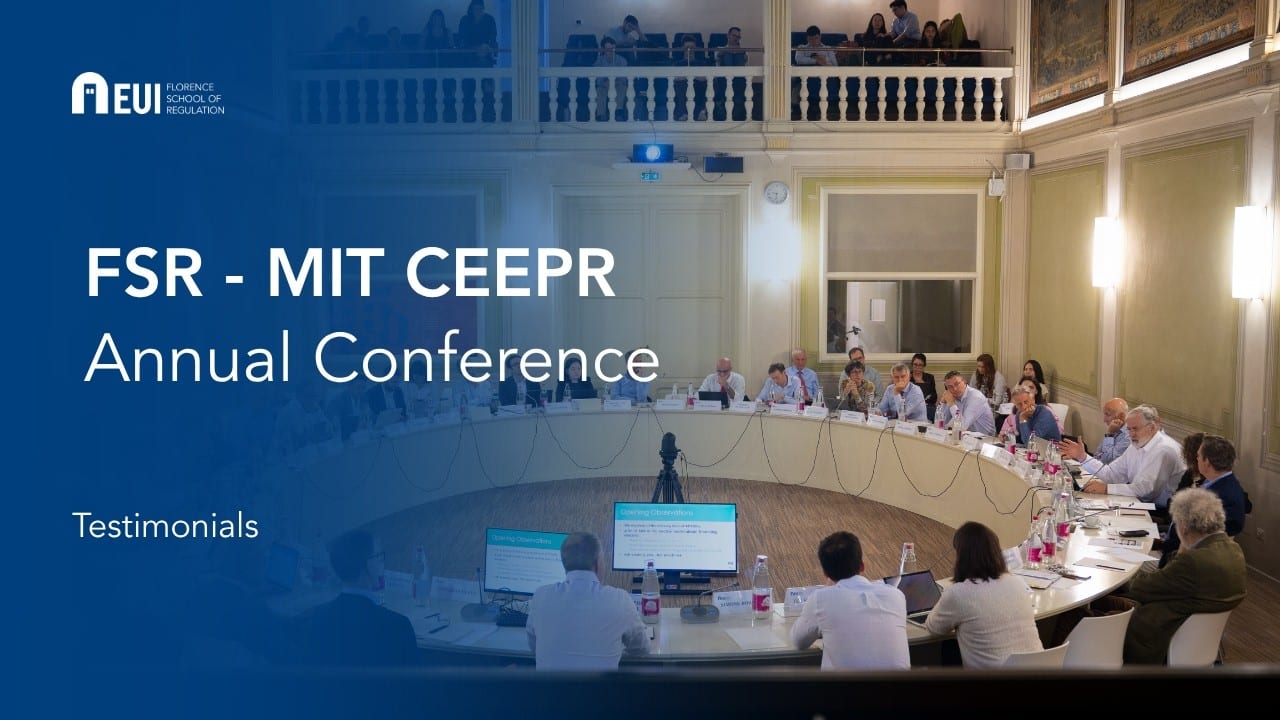
FSR – MIT CEEPR Annual Conference on energy and climate policy
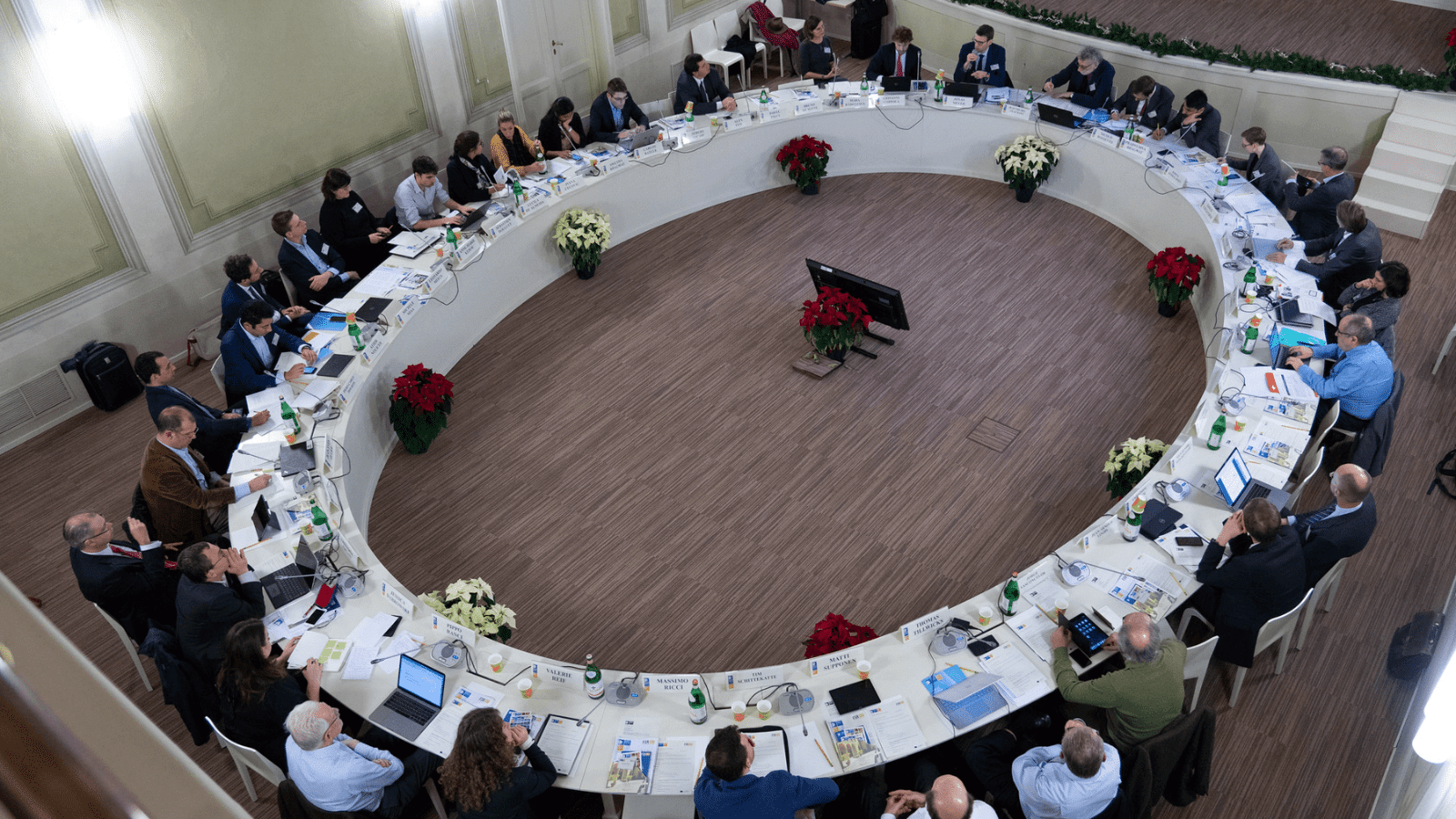
The first edition of the conference will take place in Florence in October 2026, bringing together leading scholars, policymakers, regulators, and industry experts from both sides of the Atlantic.
The European University Institute (EUI)’s Florence School of Regulation (FSR) and the Massachusetts Institute of Technology (MIT)’s Center for Energy and Environmental Policy Research (CEEPR) team up on the organisation of a high-level academic conference, addressing the most pressing energy and climate issues.
As the first instalment of an annual joint event, the 2026 CEEPR-FSR Conference on the Future of Energy and Climate Policy will take place in Florence at EUI premises in October 2026 to engage with public and private decision makers as well as global thought leaders.
Building on the well-established network around the Florence School of Regulation, the CEEPR-FSR conference will include high-level policy makers and regulators from European and national institutions, senior representatives of companies supporting the work of CEEPR or donors at FSR, as well as leading scholars from the two academic institutions and intellectual partners around the world. The conference will focus on the latest developments in energy and climate policy.
As a lead-up to the first edition of the conference in 2026, over the next year, FSR and CEEPR will intensify the cooperation on a number of initiatives, including joint online debates, interviews, newsletters and blogs.
This initiative builds on both institutions’ longstanding commitment to thought leadership and policy impact in the energy and climate field.
Don’t miss any update on our events
Sign up for free and access the latest events from our community.
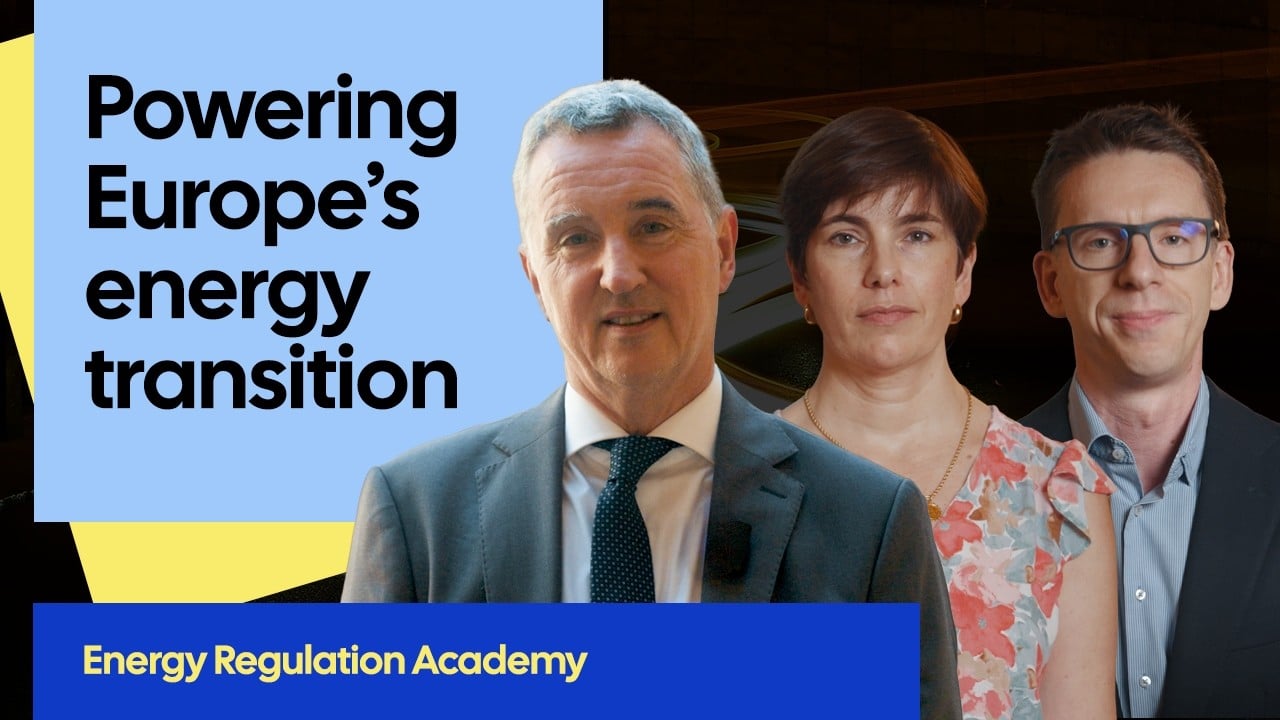
Energy Regulation Academy
Launch event
This is the launch event of the Energy Regulation Academy (EnRA), a new EU-funded initiative supporting national authorities across EU Member States in the implementation of electricity sector reforms.
The Energy Regulation Academy (EnRA) is a three-year initiative funded by the European Union through the Technical Support Instrument and implemented by the European University Institute’s Florence School of Regulation in cooperation with the European Commission’s Reform and Investment Task Force (SG REFORM).
EnRA supports professionals from regulatory authorities, ministries and other public bodies in translating EU electricity sector reforms into practice. Through specialised training, peer exchange, regional workshops and tailored support, the Academy aims to strengthen the knowledge and capacity needed to implement reforms effectively across Member States.
The Academy also creates opportunities for professionals from across Europe to exchange experience, compare approaches and learn from the implementation of reforms in different national contexts, contributing to stronger cooperation and more coherent implementation of EU electricity reforms.
Don’t miss any update on our events
Sign up for free and access the latest events from our community.
Implementing Single Ticketing
17th Florence Multimodal Forum

The forum aims to foster an evidence-based exchange of views that can inform the ongoing policy debate and support the effective implementation of the proposed regulatory framework.
The proposed targeted revision of the Regulation on rail passenger rights regarding the protection of passengers with single tickets (COM(2026) 233) represents a significant step in the European Union’s efforts to facilitate seamless, integrated and passenger-centred mobility. By clarifying the rights and protections applicable when a journey is purchased as a single ticket covering multiple rail operators, the proposal seeks to strengthen consumer confidence while supporting the broader objectives of the Single European Transport Area. While the proposal places liability on the rail operator whose cancelled or delayed service caused a missed connection, the proposal does not exclude cooperation between rail operators whose services are part of the single ticket. Neither does the proposal prevent rail operators from enhancing their cooperation in the form of through-tickets.
Against this backdrop, the Florence School of Regulation and DG MOVE have convened this academic forum to examine the opportunities and challenges associated with the development of well-integrated, multimodal and passenger-centric mobility across Europe. Bringing together policymakers, academics, industry representatives and consumer stakeholders, the discussion will explore how regulatory frameworks, market practices and technological innovations can contribute to more connected and efficient mobility services while ensuring a high level of passenger protection. It will tackle the following topics:
Lessons from other transport modes:
- How do airlines manage single ticketing for several services provided by different airlines?
- What is the role of other ticket vendors, tour operators, and OTAs? Any relevant innovations?
- How are passenger rights managed in this framework?
- How are connection times managed?
How to develop single ticketing in railways?
From through ticketing to single ticketing:
- How can railway undertakings collaborate?
- What is the role of traditional ticket vendors and tour operators?
- What are the innovations developed by digital platforms?
- What are the priorities for passengers to make sure they benefit as much as possible from the railway network?
- What is the impact in terms of liability and assistance?
- What’s the role of real-time data sharing?
How to improve the offer of multimodal tickets?
- Can single ticketing improve multimodal rail-aviation, rail-coach, and other?
- What are the obstacles?
- Are passenger rights protected?
- What is needed for the market to start offering multimodal transport contracts at a scale?
Don’t miss any update on our events
Sign up for free and access the latest events from our community.
Autumn Policy Dialogues
Over three days in Florence, the Autumn Policy Dialogues will bring together FSR donors and renowned experts from across the sector.
Wednesday 7 – Thursday 8 October 2026
📌 FSR – MIT CEEPR Annual Conference on energy and climate policy
The European University Institute (EUI)’s Florence School of Regulation (FSR) and the Massachusetts Institute of Technology (MIT)’s Center for Energy and Environmental Policy Research (CEEPR) team up on the organisation of a high-level academic conference, addressing the most pressing energy and climate issues.
The first edition of the conference will take place in Florence as part of the Autumn Policy Dialogues, bringing together leading scholars, policymakers, regulators, and industry experts from both sides of the Atlantic.
Please note that this event is reserved for FSR Star ad Major Donors, and MIT-CEEPR Donors.
Friday, 9 October 2026
📌 Regulatory Policy Workshop
Electrifying European Energy Demand
A full-day workshop directed by Alberto Pototschnig, FSR Executive Deputy Director. The programme will feature a series of expert-led sessions with opportunities for intervention from participant.
This workshop is reserved for FSR donors
The Autumn Policy Dialogues form part of FSR’s broader engagement with its donor community. For information on donor programmes, benefits and contact details, please visit this link
Don’t miss any update on our events
Sign up for free and access the latest events from our community.
Electrifying European Energy Demand
FSR Regulatory Policy Workshop Series 2026-2027

The Workshop will take stock of current progress towards the electrification of energy demand in the EU, identify the main barriers that have so far hampered this process, and examine the policies and measures most likely to accelerate electrification.
The 2020 Energy System Integration Strategy identified electrification, based on renewable electricity, as one of the three complementary and mutually reinforcing approaches to delivering low-carbon, reliable and resource-efficient energy services at the lowest possible cost to society. In July 2026, the European Commission published its Electrification Action Plan, proposing 14 sets of actions, including an indicative electrification target of 46% by 2040.
The Worksop will first take stock of the current developments towards the electrification of energy demand in the EU, identifying the main barriers which have so far hampered such a process, including among those highlights by the Commission in the Plan. The Workshop will then seek to recognise, including from among the measures proposed in the Plan, the ones likely to have the greatest impact in speeding electrification up.
Correspondingly, the Workshop will be structured in an opening part followed by three sessions:
– Session I, in the morning, will review the recent and current trends in electrification, assessing its potentials in the different sectors;
– Session II, also in the morning, will aim at identifying the barriers slowing the electrification process down;
– Session III, in the afternoon, will discuss which actions, including among those proposed by the Commission in the Plan, are likely to have the greatest impact in speeding electrification of energy demand up.
Please note that this event is by invitation only and exclusively reserved for donors of the Florence School of Regulation.
At the EUI and the Robert Schuman Centre, we are dedicated to removing barriers and providing equal opportunities for everyone. Please indicate in the registration form your accessibility needs, if any. Alternatively, you can contact the logistics organiser of the event.
At FSR, we actively work to achieve gender-balanced representation at all our events. As a platform that connects diverse voices and perspectives in the sector, we strongly value inclusive and gender-balanced panel debates and training courses.
Don’t miss any update on our events
Sign up for free and access the latest events from our community.