


What is the age of the hydropower captain?

Written by Vincent Rious
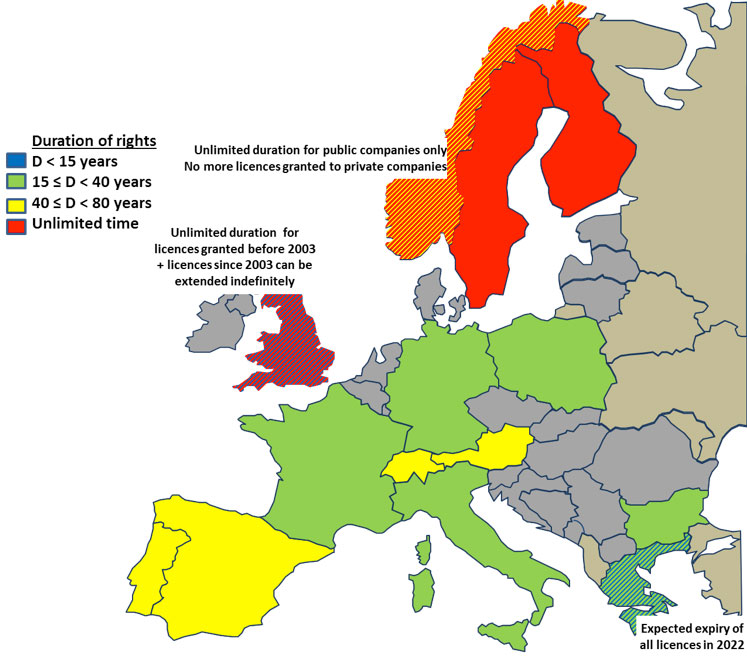
The duration of rights to use hydropower is different from one country to the other. In Great Britain It’s 12 years (with, nevertheless, the possibility of infinite renewal – an immortal captain?). In Germany, France, Greece, Italy, Norway (for private leasing), Poland and Romania it’s between 15 and 40 years. Meanwhile, in Austria, Norway (for public companies), Portugal, Spain, and Switzerland the figure is between 40 and 80 years. The most extreme cases are Sweden and Finland, with no time limit whatsoever (an immortal captain again?).
In economic theory -other things being equal – one would expect that the duration of the right to use hydropower would be aligned with investment lifetime or at least until major refurbishment, these durations themselves induced by physical investment conditions (for instance, the type of turbine that can be installed, needed ground and dams engineering). How strange is it then to deduce the variety of physical investment conditions in Europe from the wide variety of duration of rights to use hydropower… read that previous sentence again but with an ironic tone. Surely, a common methodology to set this duration would help toward a level playing field for hydropower in Europe.
Don’t miss any update on this topic
Sign up for free and access the latest publications and insights
More on the topic