



Research

The School carries out applied research with the purpose of developing economically, legally, and socially-sound regulation and policy, using a multidisciplinary approach.

Reflections on climate resilient tourism : evidence for the EU ETS-2 and voluntary carbon markets

The chapter discusses transition risk for tourism, addressing its relation with the Environmental Kuznets Curve and overtourism. Transition risk emerges when an economic model...

Authors
Matteo Mazzarano Simone Borghesi GG
Article
Research on the impact of urban rail transit on the financing constraints of enterprises from the perspective of sustainability
Discover more
Article
SPS and TBT measures through the lens of bilateral and GVC-related regulatory distance
Discover more

Executive Education

We offer different types of training: Online, Residential, Blended and Tailor-made courses in all levels of knowledge.

Policy Events

A wide range of events for open discussion and knowledge exchange. In Florence, Brussels, worldwide and online.

More

Discover more initiatives, broader research, and featured reports.

Lights on Women

The Lights on Women initiative promotes, trains and advocates for women in energy, climate and sustainability, boosting their visibility, representation and careers.

Discover more

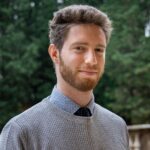
Gerwald Lichtenberg

Professor of Physics and Control Engineering at the Faculty of Life Sciences at the HAW Hamburg and scientific director of the Fraunhofer application center for Integration of Local Energy Systems ILES

English
English

Biography

Gerwald Lichtenberg is Professor of Physics and Control Engineering at the Faculty of Life Sciences at the HAW Hamburg and scientific director of the Fraunhofer application center for Integration of Local Energy Systems ILES. His research areas are in the fields of model-based and learning control as well as fault diagnosis of complex systems such as local energy networks, building systems, or particle accelerators. The methodological focus of his work is on tensor decomposition methods and multilinear models.

Back to top