




Type of event: Seminar
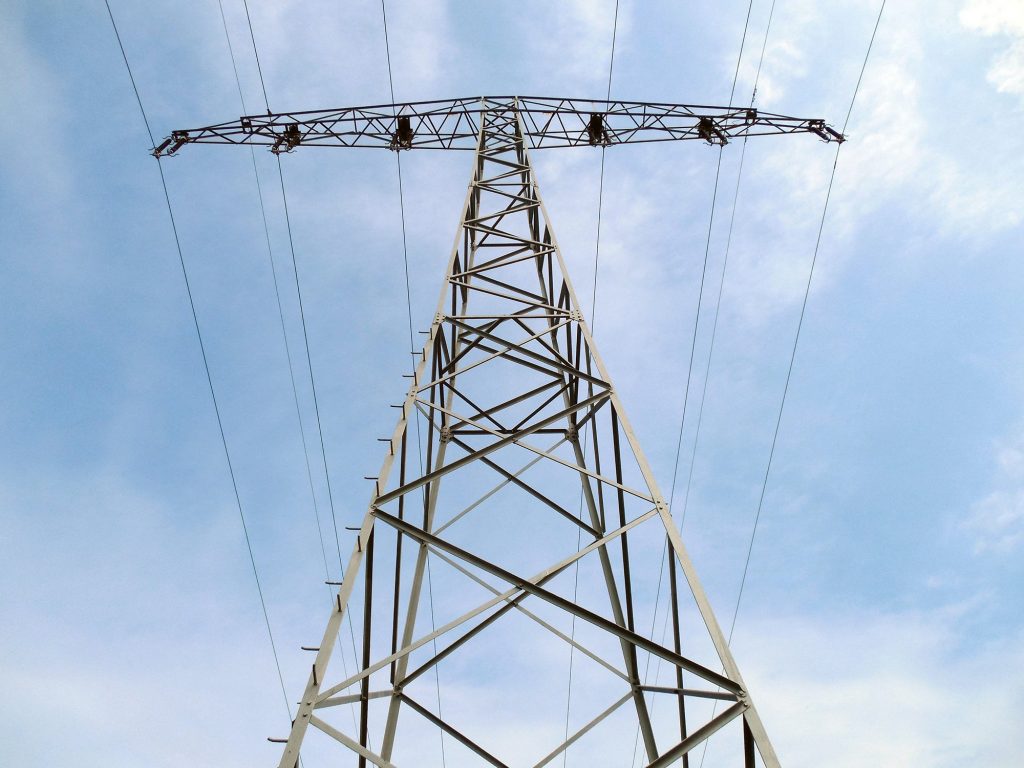
The Nordic Electricity Market in the EU’s Energy Union

The Norwegian Parliament is currently considering whether the EU’s Third Energy Package should be implemented in the EEA Agreement and incorporated in Norwegian law. The parliamentary process has contributed to a broad public debate on what consequences an affiliation with the EU’s energy union and the energy agency ACER may have for Norwegian resource management.The seminar on the Nordic Electricity Market in the EU’s Energy Union will addess the following questions:
- What exactly is ACER’s function and responsibility?
- What does it mean in practice that the national regulatory authorities shall act independently of the national government?
- What particular challenges arise for non-EU Member States, such as Norway? And what challenges and opportunities arise from the EU legislation for the Norwegian power sector?
These questions and more will be addressed through in-depth discussions at this free-of-charge seminar.


Don’t miss any update on our events
Sign up for free and access the latest events from our community.





European Regulation of Airport Charges

Organised jointly by the European Commission Directorate General for Mobility and Transport (DG MOVE) and the Transport Area of the Florence School of Regulation at the European University Institute (FSR Transport), the Seminar explores the challenges for the regulation of airport charges in the EU.
The Airport Charges Directive was introduced in 2009 to establish a common European framework for regulating the essential features of airport charges. Its aim was to provide a coherent framework for regulating airport charges at EU level, to enhance competition between EU airports, and by providing a regulatory level playing field to prevent possible distortions of competition.
On 7 December 2015 the Commission adopted an Aviation Strategy which aimed at strengthening the competitiveness and sustainability of the entire EU air transport value network, including airports. The Strategy provided for an evaluation of the Directive in order to assess whether there is a need to revise it.
Evaluation of the Directive
The Commission started the evaluation of the Airport Charges Directive in 2016. An external study commissioned to support the evaluation was published on 21 December 2017.
The Commission intends to publish the evaluation staff working document containing its conclusions on the evaluation in September 2018. This document will draw on the external study but also on the Commission’s experience of monitoring the implementation of the Directive as well as input provided by stakeholders at different occasions. The evaluation will also draw on the work done by the Thessaloniki Forum of national independent supervisory authorities.
The evaluation is a backward looking exercise to assess if, and to what extent, the Directive has achieved the objectives it was set out to achieve. The evaluation will have to examine the following issues with respect to the Directive: its relevance, effectiveness, efficiency, coherence and EU value added. It will also assess to what extent the original objectives address all of the issues that may be relevant today in view of market and regulatory developments.
The Commission will present the emerging conclusions of its evaluation and expects from the seminar to get a feedback which will feed into the final conclusions of the Commission’s evaluation.
The impact assessment in view of a possible revision of the Directive
The Commission initiated in 2017 an impact assessment in view of a possible revision of the Directive.
Consumers and citizens are at the heart of any EU initiative. The overarching aim of the present initiative is to ensure efficiency in the provision of airport services at EU airports, and thereby support EU connectivity, improve the competitiveness of EU airports and their users, and ultimately benefit consumers and citizens.
Two possible problems have been identified which this initiative seeks to address.
The first possible problem is the risk that airports with significant market power may misuse their market power. Competition is a dynamic process. Although evidence indicates that most airports within the EU are subject to effective competitive constraints, thereby removing the risk of market power and a fortiori of misuse of such power, there is evidence that some airports may still hold market power, for all or part of their activities. Where an airport may not be subject to effective competitive constraints, there is a risk that it may misuse its power.
The second possible problem is the risk that in certain cases (e.g. where there is an airline with significant buyer power at an airport) the airport charges setting process might impose additional barriers to entry for airlines wishing to launch new services at an airport, for example by hampering investment in airport capacity or skewing the charges schedule in favour of the incumbent.
The following preliminary options have been defined for consideration to address these possible problems.
Option 1: The baseline scenario is “no change”.
Option 2: Adopt Interpretative Guidelines for the existing Directive as well as a Recommendation as how to best apply certain provisions of the existing Directive. The Interpretative Guidelines would clarify questions of interpretation (for example on Articles 6, 7, 11 and 1(5)). The Recommendation would concern areas in which the Directive leaves the Member States certain margins of manoeuvre (for example Articles 4, 6(5)(b), 8, 1(5).
Option 3: Replace the Directive with new legislation. The new legislation would on the one hand amend and strengthen the existing provisions, in particular as regards the consultation and transparency requirements and clarify the independence and accountability of the independent supervisory authorities (ISAs).
In addition, the new legislation would expand and strengthen the role of the ISAs as follows:
-The new legislation would require ISAs to identify, in a two-stage process, airports in their jurisdiction that have market power. To this end, the ISA would be required in the first stage to identify airports that are unlikely to have significant market power on the basis of screening criteria. For each remaining airport, the ISA would then, in the second stage, be required to undertake a market power assessment.
-Where significant market power is found, the ISA would be required to assess the need to intervene at the airport and if necessary, introduce remedial measures that it judges to best replicate the outcome in a competitive market. The ISAs would also be required to ensure that any remedial action is proportionate to the airport’s market power.
– ISAs would be given sufficient powers to choose between a range of different remedial measures, including, but not limited to, price monitoring, rate-of-return regulation, price cap regulation.
Option 4: Replace the Directive with new legislation as in Option 3, but it would use a simpler approach to identifying airports likely to have significant market power and go further in prescribing the form of regulation to be applied, as follows:
o Instead of the two stage process to identify airports likely to have market power and the introduction of remedial action for airports found to have market power as described in Option 3, the ISAs would be required to identify airports as being likely to have significant market power on the basis of screening criteria. For all airports identified as likely to have significant market power following the screening process, the ISAs would determine the (maximum) level of airport charges which would allow airports to cover efficient levels of investment and operating costs, based on the single till approach.
Option 5: Repeal of the existing Directive and reliance on general competition law (Articles 101 and 102 TFEU) to address the possible problems identified.
The Commission expects from this seminar to get a better understanding of the pros and cons of the different options and to what extent the different options would be likely to effectively address the possible problems identified.
For information on the agenda and registration please contact us at fsr.transport@eui.eu
This event is by invite only.
DOWNLOAD
A comment by Professor Matthias Finger, part-time professor European University Institute, Director Florence School of Regulation Transport Area
A comment by Professor Juan Montero, Part-time Professor, European University Institute, Florence School of Regulation
Don’t miss any update on our events
Sign up for free and access the latest events from our community.
More on the topic




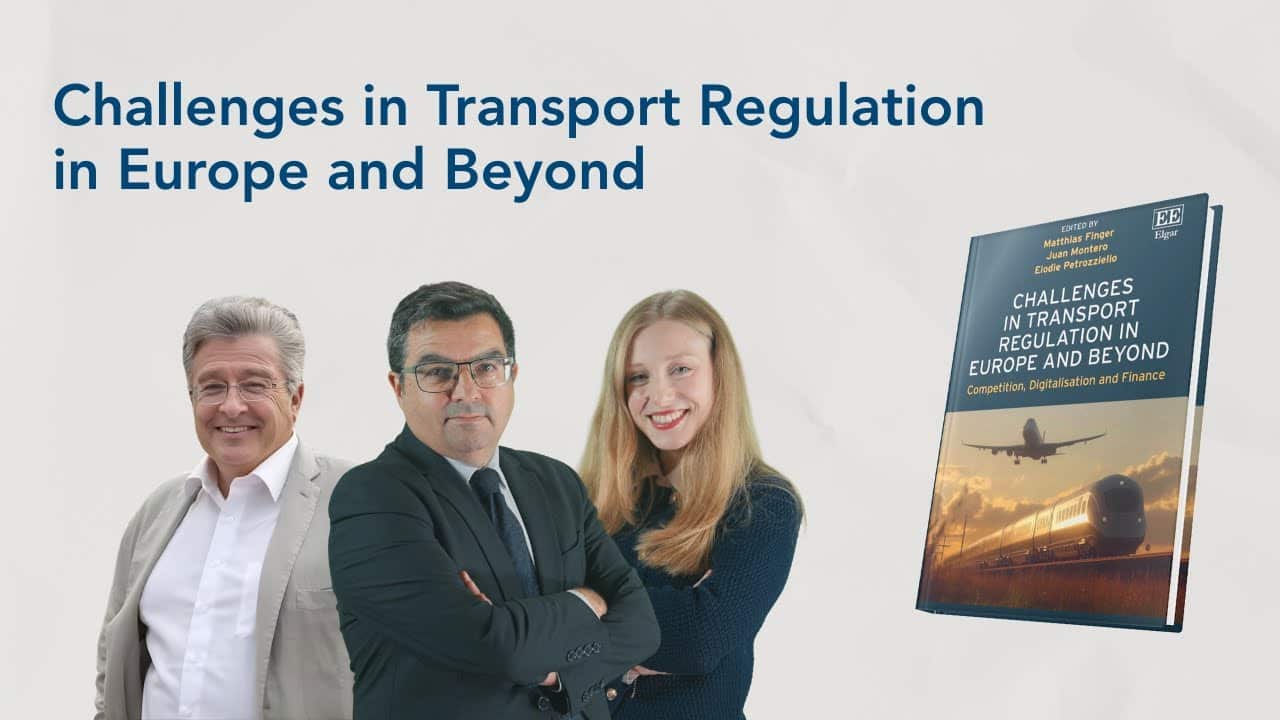


State Aid in the Energy Sector

The seminar will mark the publication of our latest research project, a multi-authored volume, State Aid in the Energy Sector, from Hart Publishing edited by Leigh Hancher, Adrien de Hauteclocque, and Francesco Salerno.
The book provides a comprehensive, detailed analysis of the increasingly complex issues surrounding the definition and application of State aid law and policy in the energy sector, from both a legal and economic perspective. It delves into issues such as price regulation and taxation, before considering the criteria for compatibility with capacity mechanisms, RES, projects of common interest, and services of general economic interest.
The research then turns to procedure by looking into State aid recovery, arbitration, and enforcement, and, finally, examining its application across key jurisdictions within the EU, the EEA, and the Energy Community. Pre-order the publication
Join the seminar to debate all issues related to State aid in energy, with speakers:
- Guido Bortoni (ARERA – Italian Energy Regulatory Authority)
- Anna Jarosz-Friis (DG COMP, European Commission)
- Simone Mori (ENEL)
Download the programme
Don’t miss any update on our events
Sign up for free and access the latest events from our community.

Executive Symposium: Road Safety

Organised jointly by the Cabinet of Commissioner Violeta Bulc, the European Commission Directorate-General for Mobility and Transport (DG MOVE) and the Transport Area of the Florence School of Regulation at the European University Institute (FSR Transport), this Executive Symposium is part of the extensive consultation process that the European Commission is undertaking to prepare a strategic EU framework to guide road safety regulation for the period 2020-2030.
This event is by invite only.
Full engagement from diversified stakeholders on #roadsafety. Session still in progress to transform ideas into concrete actions. pic.twitter.com/WWEGPQaTtg
— Violeta Bulc (@Bulc_EU) 22 gennaio 2018
DOWNLOAD:
ORGANIZED WITH:

Don’t miss any update on our events
Sign up for free and access the latest events from our community.
More on the topic


Executive Seminar: Competition in Passenger Railways in Europe

Jointly organized by FSR Transport and the Florence Competition Programme in Law and Economics
Following the usual approach of the Florence School of Regulation, this Executive Seminar will bring together stakeholders and academics to discuss competition in the passenger railway market in Europe.
With the adoption of the 4th Railway Package Europe is moving closer to a more competitive railway system.
The European Commission has been driving the change towards a Single European Railway Area in which European railway companies should be able to compete on largely interoperable infrastructure. But liberalization and market opening are means to an end: the competitive pressure should make the system more efficient and thereby improve the railway business and modal share overall. However, the merits of competition can only play out in the sector if undesired effects are prevented by competent regulatory authorities. In the railway sector, more competitive pressure can improve efficiency, but there is also need for cooperation and coordination in areas such as investment, research, innovation and capacity planning. After all, in spite of underdeveloped competition within the railway sector, significant competition for the railways comes from other transport modes, namely road.
Tendering subsidised lines will become mandatory by 2024. Open access operators will be able to offer competing commercial services on domestic long-distance routes throughout the EU beginning December 2020. Both railway companies and competent authorities need to prepare for this. Open access competition is currently limited to a few lines and a small set of competitors. Competitive tendering for Public Service Obligation (PSO) lines has brought down costs for some lines but the necessary institutions are not yet in place everywhere. There is currently a patchwork of different national approaches and past experiences. Yet, given the national character of the railway system, regulation needs to account for different national situations avoiding the downsides of a one-size-fits-all approach. Against this background, the European Commission is determined to set a level playing field and to improve enforcement of antitrust, State aid and regulatory rules in the sector.
This Executive Seminar will bring together sector representatives, railway regulators, competition regulators, and academics to discuss the state of play and future of competition in the passenger railway market.
Discussions will be structured along three questions and a concluding session:
- Challenges ahead in a competitive market – how to ensure the necessary coordination?
- Which way forward for open access competition and competitive PSO tendering? How to implement the new EU legal framework?
- How can competition policy (antitrust, State aid) contribute to a better functioning of railway markets?
- Concluding Session: Which way forward for competition in Passenger Railways in Europe?
DOWNLOAD
European Transport Regulation Observer
RELATED PRESENTATIONS
Introduction to Competition in Passenger Railways in Europe – MATTHIAS FINGER, Part-time Professor & Director of the Transport Area, Florence School of Regulation/EUI; and Professor, Ecole Polytechnique Fédérale de Lausanne
Introduction to Competition in Passenger Railways in Europe – HENRIK MØRCH, DG COMP, European Commission
Challenges Ahead in a Competitive Market: How to Ensure Necessary Coordination – ERIC STAEBE, Deutsche Bahn AG
The Success Factors for Market Opening of Rail Services in France – PATRICIA PERENNES, FATMA RAHIL, SNCF
More Competition, More Coordination? – AIMÉE VERHULSDONCK, Ministry of Infrastructure and the Environment Netherlands
UK Rail Passenger Services: Creating a Framework for Greater Competition – JOE QUILL, Office of Rail and Road UK
Competition in Passenger Railways in Europe – ALBERTO MAZZOLA, Ferrovie dello Stato
Introducing Competition in the Passenger Railway Sector: Open Access and Competitive PSO Tendering – CHRISTIAN JAAG, Swiss Economics
Competition in Passenger Railways in Europe – BARBORA MIČKOVÁ, LEO Express
Which Way Forward for Open Access Competition and Competitive PSO Tendering? – OLIVIER SALESSE, Rail and Road Regulatory Authority France
Good Theory and Practical Implementation – FRANCESCO LO PASSO, Brattle Group
Challenges in Opening Spanish Passenger Railways to Competition – PEDRO HINOJO, National Commission on Markets and Competition Spain
Competition Law in Railway Markets? A Swiss Perspective – MICHAEL SCHMIDT, SBB
Which way forward for competition in Passenger Railways in Europe? – GUNNAR ALEXANDERSSON, Stockholm School of Economics
Open Access Passenger Rail Competition in the Czech Republic – TOMÁŠ PALETA, Masaryk University
A big thank you to everyone discussing Railway Competition with us!@EU_Competition @Transport_EU #railways https://t.co/gQ1ummHmgz pic.twitter.com/5w3Z7y2Vso
— FSR Transport (@FSR_Transport) 19 giugno 2017
PICTURES OF THE DAY

Don’t miss any update on our events
Sign up for free and access the latest events from our community.


Executive Symposium: European Regulation of Airport Charges
Organised jointly by the Cabinet of Commissioner Violeta Bulc, the European Commission Directorate General for Mobility and Transport (DG MOVE) and the Transport Area of the Florence School of Regulation at the European University Institute (FSR Transport), this executive symposium explores the challenges for the regulation of airport charges in the EU.
This event is by invite only.
Stakeholder symposium on future of #EU airport charges common solutions for stronger aviation sector benefiting pax pic.twitter.com/ZnBIYefiT2
— Violeta Bulc (@Bulc_EU) 17 giugno 2017
ORGANIZED WITH:
Don’t miss any update on our events
Sign up for free and access the latest events from our community.
More on the topic
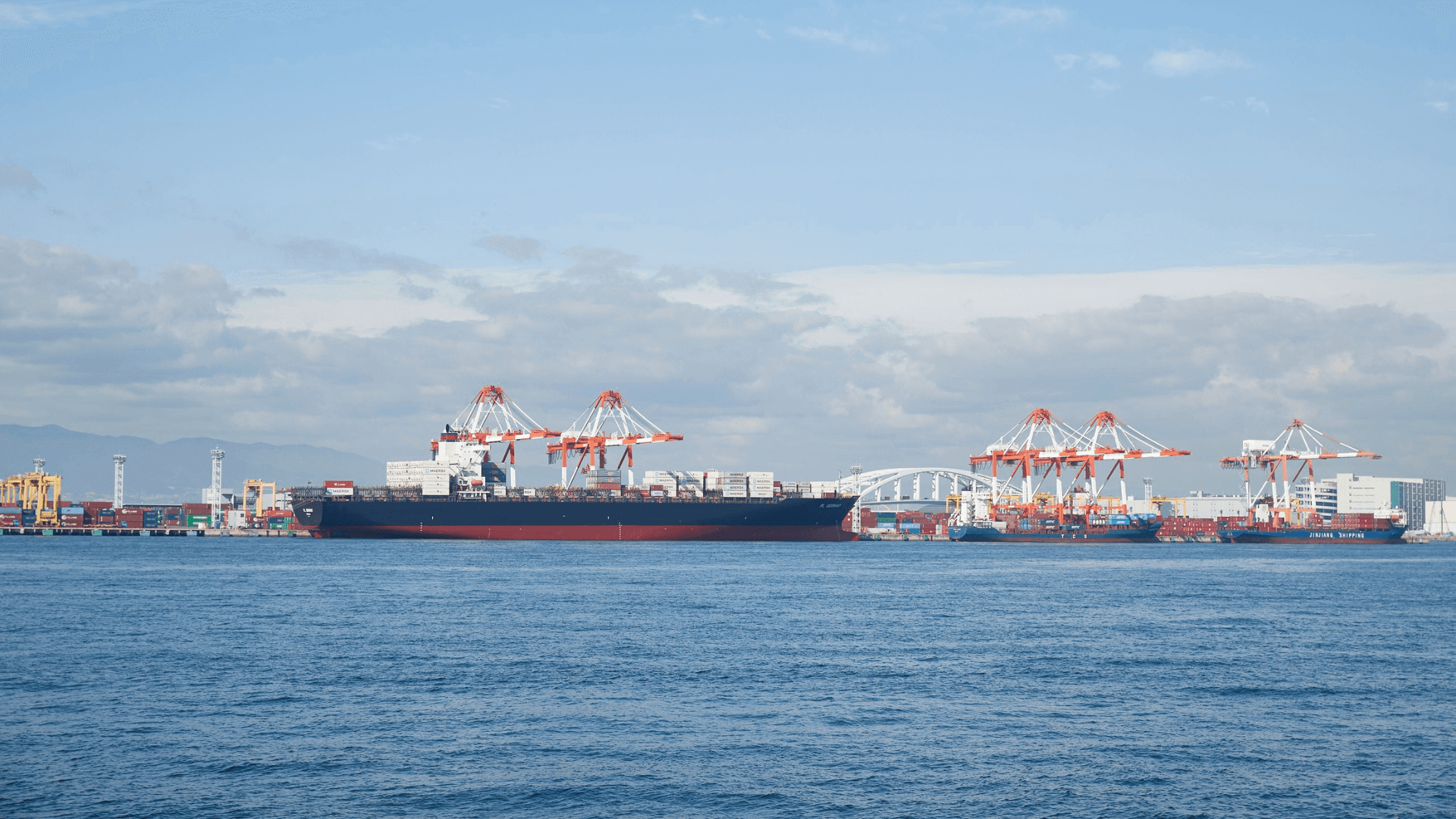
Executive Symposium: Shaping the future of the EU Maritime Transport Cluster
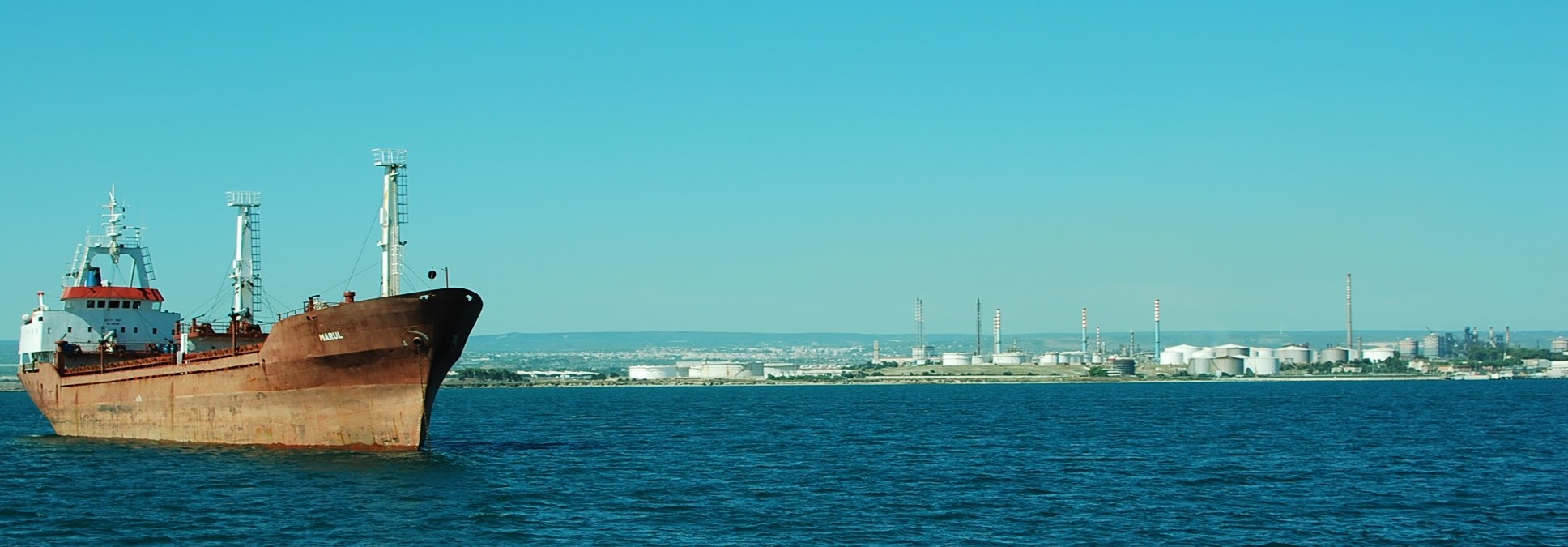
Organised jointly by the Cabinet of Commissioner Violeta Bulc, the European Commission Directorate-General for Mobility and Transport (DG MOVE) and the Transport Area of the Florence School of Regulation at the European University Institute (FSR Transport), this executive symposium explores the challenges for EU maritime transport in the current regulatory context.
This event is by invite only.
Everybody on board to sustain EU Maritime global leadership #EUmaritimeYear ⚓️ pic.twitter.com/pSPzavOvSA
— Violeta Bulc (@Bulc_EU) 5 maggio 2017
DOWNLOAD
ORGANIZED WITH:
Don’t miss any update on our events
Sign up for free and access the latest events from our community.
Executive Symposium – EU Road Transport: Driving change for business and people
Organised jointly by the Cabinet of Commissioner Violeta Bulc, the European Commission Directorate General for Mobility and Transport (DG MOVE) and the Transport Area of the Florence School of Regulation at the European University Insitute (FSR Transport), this executive symposium explores the challenges for EU road transport in the current regulatory context with the purpose to prepare for a series of EU Road Transport Initiatives, which are already under discussion.
A selected group of participants, including representatives of Academia, Ministries, Local Authorities, Regulators, Toll Service Providers, Car Manufacturers, System Providers, Workers and Associations will join this Executive Symposium.
Continue reading “Executive Symposium – EU Road Transport: Driving change for business and people”
Don’t miss any update on our events
Sign up for free and access the latest events from our community.
More on the topic
Executive Seminar – ERA and the Digitalisation of Railways. Creating a lean and efficient regulatory framework for customer-friendly digital railways
Organised jointly by the European Railway Agency (ERA) and the European University Insitute (EUI), this conference explores the regulatory context of the digitalisation of railways, which bears a lot of promise to make railways more customer-friendly, comfortable, affordable, and competitive.
By removing regulatory barriers, better access to operational data and rules shall be granted, thus creating new business opportunities.
A selected group of participants, including railway operators, infrastructure managers, lessors, manufacturers, IT specialists, National Safety Authorities, academia and passengers’ associations will debate on business needs, regulatory issues, societal trends and financial aspects linked to railway digitalisation.
Don’t miss any update on our events
Sign up for free and access the latest events from our community.
More on the topic
Executive Seminar – The Future of Air Traffic Management: what can we learn from each other?
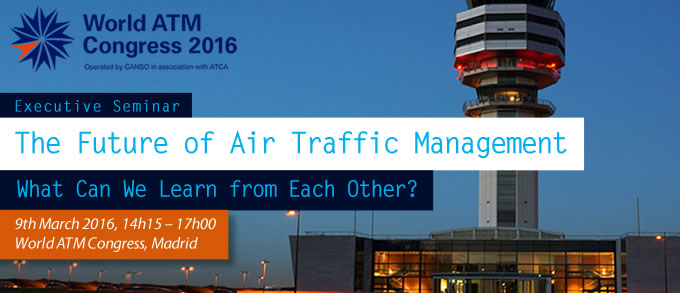
This Florence School of Regulation Executive Seminar will take advantage of the World ATM Congress in Madrid to assess and compare the different current regional Air Traffic Management (ATM) initiatives around the world. It will bring together stakeholders from industry, regulators and manufacturers from around the world to discuss the future of Air Traffic Management and compare different regulatory approaches.
Don’t miss any update on our events
Sign up for free and access the latest events from our community.
More on the topic
Executive Seminar – Next Steps in Achieving the Single European Sky
The creation of a European Single European Sky (SES) is progressing slowly; worse, it is in gridlock. This Executive Seminar aims at bringing the discussions to a next level and gathering high-level decision-makers in the aviation sector to find the way forward on a number of key issues, such as SES 2+, performance, the 5th Pillar and Centralised Services.
Continue reading “Executive Seminar – Next Steps in Achieving the Single European Sky”
Don’t miss any update on our events
Sign up for free and access the latest events from our community.
Executive Symposium on the Future of European Aviation
Aviation is a key driver of economic growth, jobs and trade with a key impact on the EU’s economy and the life and mobility of its citizens. As such, aviation plays a crucial role for delivering on the priorities of the Juncker Commission in particular “Jobs, growth and Investment”, and “A deeper and fairer internal market with a strengthened Industrial Base”. Aviation is an important employment sector, with high value-added jobs, contributing € 88 bn to the EU GDP. It is vital for tourism, people-to-people contacts, business, as well as for the regional and social cohesion of the Union. It is also essential for connecting Europe with the rest of the world. The about 27,000 flights passing through Europe every day represent 26% of world market.
Continue reading “Executive Symposium on the Future of European Aviation”
Don’t miss any update on our events
Sign up for free and access the latest events from our community.