




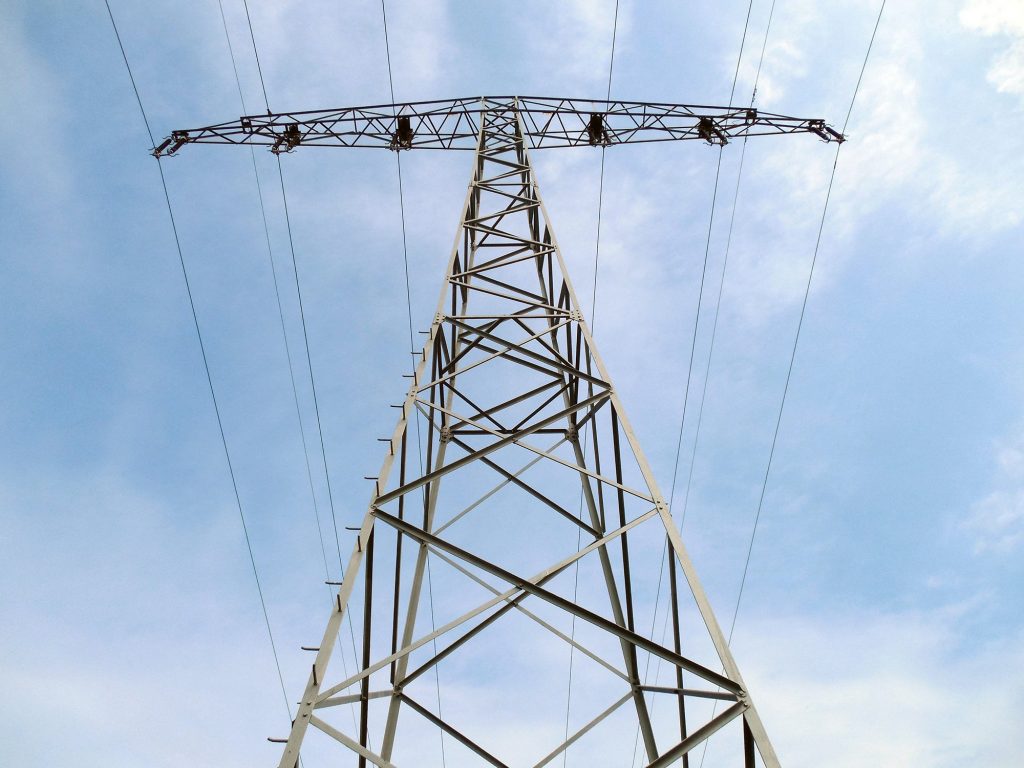


Type of event: Online Debate
How to establish a right baseline for rigid methane mitigation policies

The next episode of FSR debates in collaboration with Environment Defense Fund Europe will look at methodological issues on baseline methane emissions in the EU and globally. There is a high level of uncertainty today for tracking progress in the mitigation of methane emissions, which means that emissions are still underestimated. It could also hamper further efforts to reduce methane emissions.
The debate will start with the discussion on the current state of methane science with the presentation on methane in the recently published findings of the Working Group I (WGI) contribution to the IPCC Sixth Assessment Report (AR6). Subsequently, the webinar will use two case studies from Romania and Australia to give insight into the issues experienced by the researchers who worked on these projects. In both countries, potential inconsistencies in existing inventories were encountered, and the scientists will discuss their experiences on how measurements can help to improve emission baselines.
In the second session, the discussion will focus on possible solutions. In particular, the key areas for further efforts needed to help underpin this important building block of an effective Measurement, Reporting, and Verification (MRV) regime will be discussed.
Guiding questions:
- What is the current state of methane science?
- What can we learn from the measurement campaigns undertaken in Romania and Australia?
- What are the key areas for further research?
- How to ensure that the improved company reporting translates into more robust national GHG inventories?
Host: Andris Piebalgs, Florence School of Regulation
14.00 – 14.05 Welcome
Andris Piebalgs
14.05 – 15.00 Session 1 The current state of methane science
Keynote address: Vaishali Naik | National Oceanic and Atmospheric Administration
Thomas Röckmann | Utrecht University
Bryce Kelly | University of New South Wales (UNSW Sydney) (pre-recorded video)
15.00 – 15.55 Session 2 Key areas for further research
Steven Hamburg | Environment Defense Fund Europe/IMEO Scientific Committee
Manon Simon | Carbon Limits
Ricardo Bolado-Lavin | Joint Research Center
Keynote remarks: K.C. Michaels | International Energy Agency
15.55 – 16.00 | Conclusion
Dagmar Droogsma | Environment Defense Fund Europe
Read more on measurement campaigns in Australia
Coal seam gas industry methane emissions in theSurat Basin, Australia
#FSRDebates
The focus of the debate series hosted by Andris Piebalgs and Christopher Jones is on policy issues to be discussed by a panel of experts. Learn more about the FSR series.
Presentations
Don’t miss any update on our events
Sign up for free and access the latest events from our community.
More on the topic










Competitive Decarbonised Gas Markets – What should be in the future Hydrogen Legislative Package
In December the European Commission will table the long-awaited legislative package that will provide the regulatory and legal framework for the future regulation and support of the EU’s emerging hydrogen market. This will cover issues such as:
- Which regulatory model – unbundling, TPA, tariff principles, should apply to the future hydrogen grid, and when?
- What is the appropriate definition for low-carbon hydrogen – which should qualify for inclusion in the EU’s future low and zero-carbon market?
- How should guarantees of origin and certification apply to low-carbon hydrogen?
- How to finance a hydrogen grid that will need to be built to excess capacity in the beginning?
- Should gas TSOs be the sole operators of the future hydrogen grid?
- How to regulate the gas and hydrogen RABs – joint? separate?
Join the next FSR debate to discuss these issues with our panel.
Agenda
Keynote address Catharina Sikow-Magny, Director, DG ENER, EC
Round table discussion with:
François-Régis Mouton, Director IOGP Europe
Jan Ingwersen, Director-General ENTSOG
Jorgo Chatzimarkakis, CEO Hydrogen Europe
Nicola Rega, Energy director, CEFIC
#FSRDebates
The focus of this debate series is on policy issues to be discussed by a panel of experts. Learn more about the FSR series.
Don’t miss any update on our events
Sign up for free and access the latest events from our community.
More on the topic



Electricity prices and market design
While not trying to pre-empt or anticipate the conclusions which ACER will reach in its assessment of the existing electricity market design, this Debate will aim at discussing the dimensions of the current market design which might need to be enhanced or supplemented to improve its performance in the context of the energy transition.
Background
“EU gas and electricity prices have increased rapidly and reached unprecedented levels. Gas prices in early October were 400% more expensive than in April 2021, driven significantly by global supply and demand dynamics. Electricity prices have increased by 200% over the same period, driven mainly by the gas prices”[1].
There seem to be many causes for the sharp increase in world gas prices, but the main ones appear to be a faster economic recovery after the pandemic, boosting a strong growth in demand in many regions, and a tight global LNG market.
While being the largest buyer of internationally traded gas (accounting for almost half of the volumes), Europe has little leverage on the global LNG market, where it is often a price taker.
Instead, electricity prices in Europe reflect demand and supply conditions in the Continent. These are clearly affected by international fuel prices, but also by other, more local factors, such as weather conditions and renewables-based electricity generation, as well as the market design.
A number of EU Member States have taken or are considering taking national uncoordinated actions to mitigate the impact of higher energy prices on consumers. Some of these measures are likely to affect – and possibly distort – cross-border trading. To tackle rising energy prices, while preventing damage to the Internal Energy Market, the European Commission has proposed a “toolbox for action and support”[2], outlining a set of measures which the Commission itself and Member States could adopt to deal with the current high-price situation. Many of these measures are aimed at mitigating the impact of higher energy prices on industry, businesses and households, especially the vulnerable ones. However, and interestingly, the Commission also intends to “task ACER to study the benefits and drawbacks of the existing electricity market design and propose recommendations for assessment by the Commission by April 2022”[3].
At the same time, ACER has already shared some considerations on the current electricity market design, including on the evergreen debate on pay-as-bid vs. pay-as-clear market models: “any future market design needs to be able to (a) remunerate technologies above their marginal costs, sometimes quite significantly so, and (b) incentivise the alleviation or smoothing of volatility in the market. The ‘pay-as-clear’ model allows for both of these elements”[4].
Join us to discuss energy prices and market design in the context of the energy transition.
A Q&A with the audience will follow.
Draft Programme
Introduction to the Debate and Opening Presentations
14.00 – 14.05 Introduction to the Debate
Alberto Pototschnig | Florence School of Regulation
14.05 – 14.15 The academic perspective
Carlos Batlle | Florence School of Regulation
14.15 – 14.25 ACER initial assessment of the causes of the recent increases in electricity prices
Rafael Muruais-Garcia | ACER
Panel Discussion: Introductory Remarks, Polls and Comments
Moderator: Alberto Pototschnig | Florence School of Regulation
14.25 – 14.50 Introductory remarks from the panellists
Yvan Hachez |Vice-Chair of Market & Investment Committee, Eurelectric
Inger Kristin Holm | Electricity Working Party, IFIEC
Verónica Sabau | Secretary General, Spanish Association of Independent Retailers (TBC)
14.50 – 14.55 Polls
14.55 – 15.15 Comments on the outcome of the poll and Q&A from the audience
Panellists
15.20 – 15.30 Concluding remarks
Leigh Hancher | Florence School of Regulation and Tilburg University
Alberto Pototschnig | Florence School of Regulation
[1] ACER, High Energy Prices, October 2021.
[2] Communication from the Commission to the European Parliament, the European Council, the Council, the European Economic and Social Committee and the Committee of the Regions, Tackling rising energy prices: a toolbox for action and support, Brussels 13.10.2021, COM(2021) 660 final.
[3] Ibid, Section 3.2.1, page 15.
[4] ACER, High Energy Prices, October 2021, page 12.
Don’t miss any update on our events
Sign up for free and access the latest events from our community.





Regulatory responsibility and the duty of care in realising the energy transition
FSR Debates series
Based on an unwritten duty of care in Dutch tort law, a Dutch Court has in May 2021 recognized that the oil and gas company Shell has an “obligation of result” to reduce CO2 emissions resulting from the Shell group’s activities, and a “best-efforts obligation” to reduce emissions generated by its business relations, including suppliers and end-users. While Shell was not yet found to be in violation of its reduction obligation, the Court held there was danger of “imminent breach” because it considered Shell’s climate policies insufficient. The court clarified that Shell’s responsibility exists independently of states’ abilities and/or willingness to fulfil their own human rights obligations. Therefore, state action – or here the lack thereof did not detract from Shell’s standalone obligations. Relying on IPCC reports and the Paris Agreement, the Dutch court observed a “widely endorsed consensus” that emissions must be reduced by net 45% by 2030 and to net zero by 2050, and this consensus applies globally and also to non-state actors. Therefore, Shell – while not solely responsible – may be expected to do its part to achieve these so-called “reduction pathways”.
In the wake of recent rulings across Europe and globally, requiring governments to lower emissions, this latest decision marks the first time any court in the world has imposed a duty on an energy company to do its share to prevent dangerous climate change. The Dutch Court’s decision against Shell effectively extends to a private entity the principles established by the same court in 2015 in Urgenda – the first ever ruling ordering a government to set more ambitious climate target. Urgenda reverberated in significant climate rulings around the world, including Ireland, France, Germany and Belgium. On the same day as the decision against Shell, the Australian Federal Court recognized a governmental obligation to ensure children are not harmed by future coal projects. This decision was the first in the world to impose a direct duty of care on a government official to protect young people from the future impact of climate change.
The Shell decision’s wider implications within the broader momentum for climate change litigation and increasing judicial scrutiny over corporate behavior have already attracted commentary. But what are the implications for this type of ‘duty of care’ or ‘do no harm’ approach by the courts for energy regulators – should they too share a duty to prevent dangerous climate change? Do regulators too have standalone obligations – irrespective of what national governmental authorities do or do not do? How can energy regulators balance potentially competing concerns – for example to ensure climate change targets are reached while at the same time guaranteeing security of supply?
Draft Programme
Introduction to the Debate and Opening Presentations
14.00 – 14.05 Introduction to the Debate
14.05 – 14.15 The Dutch ruling in the Shell case and its potential implications for regulatory authorities | Leigh Hancher, Florence School of Regulation
14.15 – 14.25 The Norwegian Supreme Court ruling on Norwegian oil and gas drilling and the ECHR follow up: Prof dr Henrik Bjornebye, University of Oslo and BAHR
Panel Discussion: Introductory Remarks, Polls and Comments
Moderator: Alberto Pototschnig | Florence School of Regulation
14.25 – 14.50 Introductory remarks from the panellists
Zsuzsanna Pató, RAP;
Jorge Vasconcelos, FSR;
Wil Webster, OGUK.
14.50 – 14.55 Polls
14.55 – 15.15 Comments on the outcome of the polls and Q&A from the audience
Panellists
15.20 – 15.30 Concluding remarks
Leigh Hancher | Florence School of Regulation and Tilburg University
Alberto Pototschnig | Florence School of Regulation
Don’t miss any update on our events
Sign up for free and access the latest events from our community.

What are the consequences of the ‘Fit for 55’ package for citizens and industry ?
FSR Policy Debate
The European Commission’s ‘Fit for 55’ package probably represents the most ambitious set of legislative proposals ever tabled in the energy and climate change space.
They include the revision of the ETS Directive, the Effort-Sharing Regulation, a new Carbon-Border Tax, a review of the Renewable Energy, Energy Efficiency and Energy Tax Directives, and new initiatives on maritime and air transport.
Industry, as well as the co-legislators, need to understand not only the details of each individual proposal, but equally how they interact – what will be the cumulative effect of the different measures tabled on citizens and industry.
This is far from a simple task. This event seeks to cast some light on this question, and identify where will be the key points of discussion and disagreement in negotiating the package. Together with our panel, we will try to address the question: ‘what do we expect to be the final compromise?’
To stimulate debate Christopher Jones and Andris Piebalgs have drafted an article. Download here
Watch:
#FSRDebates
The focus of this debate series is on policy issues to be discussed by a panel of experts. Learn more about the FSR series.
Don’t miss any update on our events
Sign up for free and access the latest events from our community.
More on the topic


Gender equality and diversity in the energy transition
This Debate will aim at reviewing the current situation with gender participation in the energy sector and at identifying which policies and measures should be pursued to ensure equal opportunities in this sector. It will also address the extent to which affirmative actions could be used to address the current gender imbalance, and how these actions could be compatible with a merit-based approach to entry into the sector.
Background
The energy transition, with the penetration of new processes and technologies, will provide a unique opportunity also to address the current gender imbalance in the energy sector. While gender is increasingly a multi-dimensional notion, the main focus in the energy sector is currently on the male-female composition of the workforce.
Because of the multi-disciplinary dimension, renewable energies and other developments associated with the energy transition (e.g. decentralised energy systems) seem to exert an appeal on women, and provide greater opportunities to them, than the more traditional fossil fuel industry. According to the results of a recent survey carried out by IRENA1, women represent 32% of the full-time employees in the renewable energy sector – substantially higher than the 22% average in the global oil and gas industry. Still, in renewables, women’s participation is much lower in science, technology, engineering, and mathematics (STEM) jobs than in administration.
Despite the appeal of the new technologies at the basis of the energy transition, women still face persistent barriers to entry, to remain in the workforce, and to advance. Removing these barriers is essential to meet the growing demand for skills in an expanding industry.
Draft Programme
Introduction to the Debate and Opening Presentations
14.00 – 14.05 Introduction to the Debate
Alberto Pototschnig | Florence School of Regulation
14.05 – 14.15 Opening address
Paula Abreu Marques | Head of Unit, Interinstitutional and Member States, European Commission
14.15 – 14.25 The energy transition: a gender perspective
Rabia Ferroukhi| Director, Knowledge, Policy and Finance Centre, IRENA
Panel Discussion: Introductory Remarks, Polls and Comments
Moderators:
Ilaria Conti | Florence School of Regulation
Alberto Pototschnig | Florence School of Regulation
14.25 – 14.50 Introductory remarks from the panellists
Silvia Manessi |Head of HR, ACER
Jennie Stephens | Director of the School of Public Policy and Urban Affair, Northeastern University
14.50 – 14.55 Polls
14.55 – 15.15 Comments on the polls outcome and Q&A from the audience
Panellists
15.20 – 15.30 The FSR Energybase project and Concluding remarks
Elena Iorio | Florence School of Regulation
Alberto Pototschnig | Florence School of Regulation
#FSRDebates
Hosts: Leigh Hancher and Alberto Pototschnig (FSR)
The focus of this series is on recent court cases, regulatory decisions, EU legislation, or public consultations to be discussed by a panel of experts.
This event will be live-streamed and recorded. Highlights and presentations will be made available online.
Don’t miss any update on our events
Sign up for free and access the latest events from our community.
Prioritising renewable electricity supply, electricity and sustainable fuels
FSR is pleased to invite you to the last episode of #FSRDebates of the season.
In a recent paper by Professor Belmans and Piero Carlo Dos Reis entitled “Electrification and sustainable fuels: competing for wind and sun“, the authors seek to answer a simple question: “will we have enough renewable electricity to meet all of the EU’s decarbonisation objectives, and, if not, what should be the priorities and how to address the remaining needs for energy towards carbon neutrality? ”
The findings are important food for thought for policy-makers and industry.
In this online debate, we seek to look into this issue in more depth; following the presentation of the study by Professor Belmans, a leading Panel will seek to draw conclusions from the findings – or indeed challenge them.
They will answer questions such as ‘what should the response of the EU be to these findings?’, ‘should Member States National Energy and Climate Plans be revised, if so when and how?’, and, as a matter of fact ‘will there be enough renewable electricity to meet electrification, transport, buildings, and industry needs – including from hydrogen- and if not, what to do?
Agenda
9.30 -9.40 Introduction Christopher Jones & Andris Piebalgs
9.40-10.00 Presentation of the study Ronnie Belmans, KU Leuven
10.00-10.30 Panel Debate
Giles Dickson, WindEurope
Aurélie Beauvais, SolarPower Europe (TBC)
Francisco Boshell, IRENA
10.30-10.45 Q&A with the audience
10.45-12.00 Concluding remarks Aleksandra Tomczak, European Commission
#FSRDebates
The focus of this debate series is on policy issues to be discussed by a panel of experts. Learn more about the FSR series.
Presentations
Don’t miss any update on our events
Sign up for free and access the latest events from our community.
More on the topic


REMIT and artificial prices: is guidance from the case law finally emerging?
Background
Pursuant to the EU Regulation on Wholesale Energy Market Integrity and Transparency (REMIT) of 2011, entering into any transaction or issuing any order to trade in wholesale energy products which secures, or attempts to secure, the price of one or more wholesale energy products at an artificial level, amounts to market manipulation. What is the notion of “artificial prices” under REMIT? Is guidance from the case law finally emerging?
This FSR Debate will look at some of the economic and legal issues involved in determining when prices may be set an artificial level – amounting to market manipulation.
In this context the debate will also look at a very recent NRA decision on artificial pricing. In late April 2021 the Spanish National Commission of Markets and Competition (CNMC) published a decision in which it holds that the company Rock Trading World, S.A. manipulated the Spanish gas wholesale market between 3 and 7 November 2018, breaching the EU Regulation on Wholesale Energy Market Integrity and Transparency (REMIT) of 2011. According to CNMC, Rock Trading World’s behaviour was likely to send false or misleading signals to the market as to the price of such gas wholesale energy products and secured the price formation process of the gas wholesale energy products at an artificial level, thus breaching REMIT, which prohibits market manipulation.
Draft Programme
Host: Alberto Pototschnig | Florence School of Regulation
Introduction to the Debate and Opening Presentations
14.00 – 14.05 Leigh Hancher| Florence School of Regulation and Tilburg University
14.05 – 14.15 Martin Godfried | ACER
14.15 – 14.25 Guillermo Pérez Almendral | Simmons & Simmons Madrid
Panel Discussion: Introductory Remarks and Comments
Moderator: Leigh Hancher | Florence School of Regulation and Tilburg University
14.25 – 14.45 Introductory remarks from the panellists
Panellists: Fabien Roques | FSR and Compass Lexicon
Camilla Berg | Nord Pool
Nils-Henrik von der Fehr | Oslo University
14.45 – 15.20 Q&A from the audience
15.20 – 15.30 Concluding remarks
Alberto Pototschnig | Florence School of Regulation
Leigh Hancher | Florence School of Regulation and Tilburg University
#FSRDebates
The focus of the debate series is on recent court cases, regulatory decisions, EU legislation, or public consultations to be discussed by a panel of experts. Learn more about the FSR series.
Presentations
Don’t miss any update on our events
Sign up for free and access the latest events from our community.
Taxonomy – what impact will it have
This Debate will aim at discussing the Commission’s initiatives on Sustainable Finance, Taxonomy, and their potential impact on the energy sector.
With the adoption of the Delegated Act specifying the detailed criteria for Taxonomy qualification, the EU’s Sustainable Finance Initiative is now live. ‘Green’ financial products will be limited to investing in Taxonomy compliant activities, and financial institutions and large EU companies will need to report the percentage of their activities that are taxonomy compliant. Institutional lenders will come under pressure to finance predominantly or exclusively Taxonomy compliant activities, as will investment funds.
Given that energy activities are a central pillar of the Taxonomy list, this will have a huge effect on the industry. Companies that focus on non-Taxonomy activities will find it more difficult to attract finance or need to pay more than their ‘green’ counterparts. Shareholders are likely to insist that management focus on compliant activities.
In addition, the Taxonomy list is likely to have wider importance than ‘just’ sustainable finance. It will become the EU (and possibly global) reference for what are ‘Paris compatible’ activities. This may become the starting point for other legal and regulatory actions; guarantees of origin for hydrogen, support schemes for renewable energy and hydrogen, and the revision of the Energy and Environment State aid guidelines, for example.
Most energy activities are already covered by the Taxonomy Delegated Act, they are in, or out. Understanding this is crucial. In relation to natural gas and nuclear energy, however, the issue remains open, and the Commission has committed to tabling draft measures on this issue in the near future.
This event seeks to examine these issues, considering the scope and application of the Delegated Act and adopted legislation, and discuss the question ‘what should be the position on natural gas and nuclear?’
Draft Programme:
Moderators: Christopher Jones and Andris Piebalgs | FSR
9.30 – 9.45 Introduction to the debate
Andrea Beltramello | European Commission
9.45 – 10.40 Panel debate
Fabio Marchetti | Generali Group
James Watson | Eurogas
Antoine Bizet | EDF
Kavita Ahluwalia | Uniper
10.40 – 10.55 Q&A
10.55 – 11.00 Concluding remarks
Ilaria Conti | FSR
Christopher Jones | FSR
Andris Piebalgs | FSR
#FSRDebates
The focus of this debate series is on policy issues to be discussed by a panel of experts. Learn more about the FSR series.
Don’t miss any update on our events
Sign up for free and access the latest events from our community.

Dynamic pricing in the electricity retail market
This Debate will aim at reviewing the experience with the implementation of dynamic price contracts and their ability to benefit both consumers and the system.
Dynamic electricity supply contracts are defined as electricity supply contracts between suppliers and final customers that reflect the price variation in the spot markets, including in the day-ahead and intraday markets, at intervals at least equal to the market settlement frequency [1].
The Clean Energy Package introduced provisions [2] entitling all final customers who have a smart meter installed to conclude a dynamic electricity price contract with at least one supplier in their market and with every supplier that has more than 200,000 final customers.
Dynamic prices benefit both the consumers and the electricity system. The former are able to reduce their electricity bills by managing and adjusting their consumption, in response to price signals. The latter will benefit from (implicit) demand response triggered by high prices, thus potentially reducing the need for additional investment in generation and networks.
At the beginning of 2019, dynamic pricing contracts were available in seven EU Member States [3], with other Member States expected to follow in introducing them to comply with the new requirements. In Spain, unique case in the EU, a regulated dynamic price contract is the default supply contract, in which only the margin charged on top of the wholesale prices is subject to regulation.
To support the implementation of dynamic prices, in March 2020 the Council of European Energy Regulators issued a set of recommendations.
In this context, the Debate will aim at discussing:
- To which extent consumers have taken up dynamic price contracts;
- The impact of dynamic price contracts on the consumption pattern of consumers;
- Which elements of the regulatory framework are key for supporting the penetration of dynamic price contracts.
[1] See article 2(15) of Directive (EU) 2019/944 of the European Parliament and of the Council of 5 June 2019 on common rules for the internal market for electricity and amending Directive 2012/27/EU (recast).
[2] Article 11 of Directive (EU) 2019/944.
[3] Commission Staff Working Document accompanying the document Report from the Commission to the European Parliament, the Council, the European Economic and Social Committee and the Committee of the Regions: Energy prices and costs in Europe {COM(2019) 1 final}, p. 262
Draft Programme
Introduction to the Debate and Opening Presentations
14.00 – 14.05 Introduction to the Debate
Alberto Pototschnig | Florence School of Regulation
14.05 – 14.15 Dynamic price contracts for the European Green Deal
Adela Tesarova | European Commission, DG Energy
14.15 – 14.25 The regulatory challenges to promote the take-up of dynamic electricity prices
Anne Vadasz Nilsson | CEER
Panel Discussion: Introductory Remarks, Polls, and Comments
Moderator: Alberto Pototschnig | Florence School of Regulation
14.25 – 14.45 Introductory remarks from the panellists
Gema Rico Rivas | CNMC
Jaume Loffredo | BEUC
Alain Taccoen | Eurelectric
Roberto Zangrandi | EDSO
14.45 – 14.50 Polls
14.50 – 15.20 Comments on the polls outcome and Q&A from the audience
Panellists
15.20 – 15.30 Concluding remarks
Alberto Pototschnig | Florence School of Regulation
Leigh Hancher | Florence School of Regulation and Tilburg University
#FSRDebates
The focus of the debate series is on recent court cases, regulatory decisions, EU legislation, or public consultations to be discussed by a panel of experts. Learn more about the FSR series.
Don’t miss any update on our events
Sign up for free and access the latest events from our community.
What should be in the Commission’s legislative proposal(s) on Hydrogen
The development of the EU’s future low and zero-carbon hydrogen market is moving ahead quickly; the need for a robust hydrogen regulation proposal is evident.
This online debate seeks to discuss which proposals should be included in the draft legislation that the Commission will table, for example on guarantees of origin, support schemes, and network regulation. The EU has rich experience in the regulation of gas sector. Which of these experiences are relevant to hydrogen regulation? What particularities apply to hydrogen? How to provide for fast and sustainable clean hydrogen demand and supply growth?
The drafting of legislative proposals for hydrogen is far from simple, but they are crucially important. Failure to get them right may limit the speed and scale of the market development and unnecessary costs on citizens and industry. Success could place the EU as technological leader of what promises to be a huge future global market.
The FSR debate will focus on the main challenges in this task.
The debate will be introduced and moderated by Prof. Christopher Jones and Prof. Andris Piebalgs.
Discussants:
J. Chatzimarkakis, Hydrogen Europe;
I. Conti, Head of FSR Gas.
J. Hansen, Fertilizers Europe;
J. Ingwersen, ENTSOG;
B. Nitzov, ACER
Background
The Agreement on the European Climate Law establishes the foundations for the Commission’s ‘Fit for 55’ proposals that will set out the concrete steps to put the EU on a path to carbon neutrality by 2050. Already in June, the Commission will table the revision of the RED II Directive; the first step in establishing Europe’s future Hydrogen Regulation. This will be completed in October with the proposed revision of the Gas Directive.
The European Commission has already published its Hydrogen Strategy in July 2020, establishing the objective of decarbonising existing ‘grey’ hydrogen demand, and progressively providing a low and zero-carbon energy source/vector to decarbonise a number of hard to electrify sectors that are currently using fossil fuels. The Council and Parliament have supported the broad lines of the Commission’s Strategy. Also in 2020, the European Clean Hydrogen Alliance was established, aimed at supporting the ambitious deployment of clean hydrogen technologies by 2030. On April 12th, the Commission launched an invitation to the members of Alliance to submit projects for renewable and low-carbon hydrogen technologies and solutions, which will give an indication of the scale and speed of projects under preparation.
Learn more
- A proposal for a regulatory framework for hydrogen guarantees of origin by Andris Piebalgs,Christopher Jones
- FSR Cost-effective decarbonisation study
- A snapshot of clean hydrogen costs in 2030 and 2050
#FSRDebates
The focus of this debate series is on timely policy issues discussed by a panel of experts.
Don’t miss any update on our events
Sign up for free and access the latest events from our community.
More on the topic
The stranding of gas infrastructure assets – an unavoidable consequence of the energy transition ?
In this debate, we will discuss some of the following questions:
Who should bear the costs of repurposing or retiring these stranded gas assets? And indeed how do we identify those costs? How if at all should this process be reflected in tariff methodologies? Should transition costs be borne by the taxpayer? Can we learn any useful lessons from the treatment of stranded electricity assets in Europe in the late 1990s?
Background
Stranded assets are physical assets recorded on a corporate balance sheet whose investment value cannot be recouped and must be written off. The EU Hydrogen Strategy indicates that repurposing and re-using parts of the existing natural gas infrastructure may provide an opportunity for a cost-effective energy transition in combination with (relatively limited) newly built hydrogen dedicated infrastructure. Repurposing of ‘redundant’ gas assets for the transport of hydrogen might be beneficial to both gas and hydrogen end-users where there is an identified need for hydrogen infrastructure. In their recent White Paper ACER/CEER advise that this could only become clear from a detailed and sophisticated cost-benefit analysis (CBA) approach, taking into account that repurposing of the gas infrastructure comes at a cost as well.
As for cost allocation through tariffs, ACER/CEER also recommend that repurposed gas network assets should be removed from the RAB of the gas network operators and that unbundling rules should be applied in order to avoid cross-subsidies between users of the gas network infrastructure and of the hydrogen network infrastructure by, at least, separating activities, RABs, and costs (accounting unbundling) between the entities that own and operate the hydrogen infrastructure and the entities that own and operate the gas infrastructure.
Cross- subsidisation between users of different networks should be avoided, since it is not likely that all gas network users will become hydrogen networks users, or at least not at the same time. This would mean that the users of today’s gas networks should not be paying towards a future hydrogen network. Some regulatory authorities may try to resolve this by prohibiting their gas TSOs from engaging in ancillary activities such as the roll out of a new hydrogen network, but this may not fully resolve the problem of how to deal with capital costs that gas TSOs already want to incur in order to cover the future process of network conversion to hydrogen, as the Dutch regulator has recognized in its recent gas tariff methodology decision.
Draft Programme
Introduction to the Debate and Opening Presentations
14.00 – 14.05 Introduction to the Debate
Leigh Hancher| Florence School of Regulation
14.05 – 14.15 Ilaria Conti (FSR)
14.15 – 14.25 Dennis Hesseling (ACER)
Panel Discussion: Introductory Remarks, Polls, and Comments
Moderator: Leigh Hancher: Florence School of Regulation
14.25 – 14.45 Introductory remarks from the panellists
Panellists:
Annegret Groebel (CEER) , Catherine Galano (Frontier Economics) ; Lisa Fischer, (E3G ); Jan Ingwersen (ENTSOG)
14.45 – 14.50 Polls
14.50 – 15.20 Comments on the polls outcome and Q&A from the audience
15.20 – 15.30 Concluding remarks
Alberto Pototschnig | Florence School of Regulation
Leigh Hancher | Florence School of Regulation and Tilburg University
#FSRDebates
The focus of the debate series is on recent court cases, regulatory decisions, EU legislation, or public consultations to be discussed by a panel of experts. Learn more about the FSR series.
Don’t miss any update on our events
Sign up for free and access the latest events from our community.