
Webinar: The Baltic Sea Pipelines and EU Law

FSR Webinar:
‘The Baltic Sea Pipelines and EU Law’ │ 23 May 10.30 – 11.30 (CEST)
Join Professor Kim Talus (University of Eastern Finland and University of Helsinki) for an Open Access Online Lecture and Open Discussion on the Baltic Sea pipelines and EU law organised by the FSR Energy Law & Policy Area
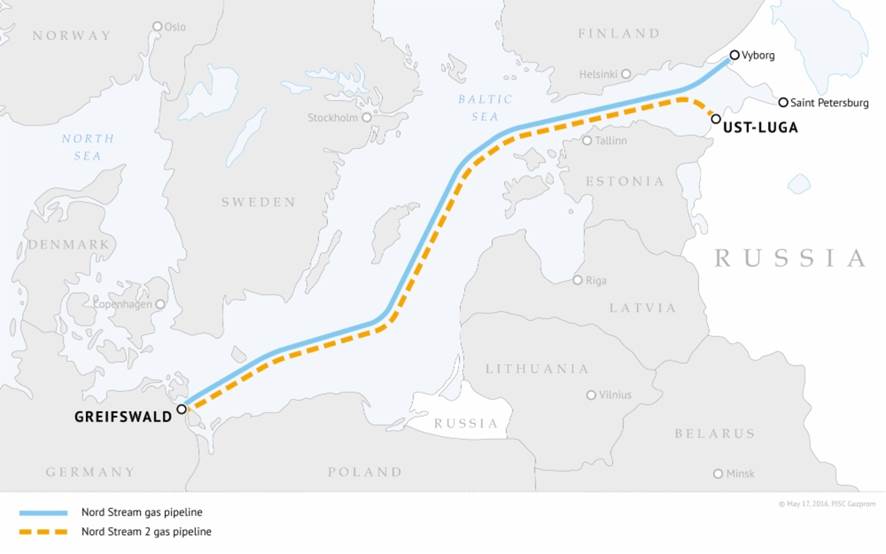
At present, Russia accounts for one third of the EU’s gas imports, a persistently troubling dependency for the EU. Since the announcement in 2015 of the Russian state-controlled energy group Gazprom’s $11 billion Nord Stream 2 project, intended to pipe natural gas from Russia across the Baltic Sea into Germany, it has been a contentious and deeply divisive issue among Member States.
Watch the Webinar Recording
Download the Presentation (PDF)
The EU has struggled to reach a consensus on the economic merits of the development versus the risks of strengthening Russia’s dominance in the European gas market and, in turn, being held captive to geopolitical manoeuvres. Multiple vying perspectives have drawn on EU law and EU internal energy market rules in arguments and counter arguments over the development of the pipeline.
- With both Russia and Germany having eschewed an intergovernmental agreement, what lies ahead for Nord Stream 2?
- Is Nord Stream 2 compatible with the principles of the Energy Union? With diversification and security of supply arguments against the project having already been rejected, to what extent, if at all, can EU law be applied to the project?
Don’t miss any update on our events
Sign up for free and access the latest events from our community.
More on the topic