


Decarbonizing the Wastewater Sector: A Path to Climate Neutrality
This is the third nd conclusive installment of the Topic of the Month 'Shaping a resilient and net zero water supply and sanitation sector: the dawn of a revolution?'

In the conclusive installment of this Topic of the Month exploring the fundamental transformation happening in the water supply and sanitation (WSS) sector in the context of increasing water risks, climate change impacts and EU legislation drivers, we focus on the shift from energy efficiency to climate neutrality on the way to decarbonizing the wastewater sector.
Although the wastewater treatment sector only accounts for about 0.8% of the EU’s total electricity use, it holds untapped energy potential that could well support energy neutrality and drive decarbonization of the sector. The revised Urban Wastewater Treatment Directive (UWWTD), adopted in April 2024, acknowledges this opportunity by setting ambitious targets to enhance energy efficiency and achieve energy neutrality by 2045 [1].
Wastewater: A Hidden Energy Source
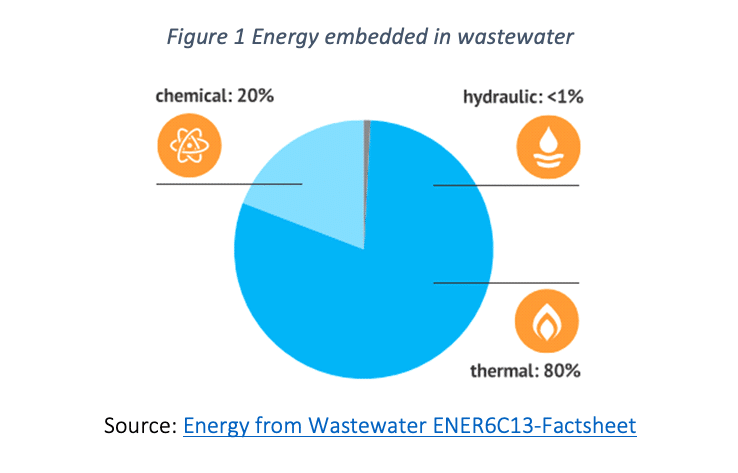
While wastewater treatment consumes energy, it also contains recoverable energy in chemical, thermal, and hydraulic forms (Figure 1). Studies show that wastewater holds five to ten times more energy than is required for treatment [2]. Yet, energy recovery remains underutilized. Large wastewater plants have the potential to be net energy producers, thus contributing to a circular and sustainable economy.
Reducing Greenhouse Gas Emissions
In addition to the water-energy nexus elements outlined above, the greenhouse gas (GHG) emissions of the wastewater sector are also important and could be reduced. Wastewater treatment plants (WWTPs) generate about 34.45 million tons of CO₂-equivalent emissions annually, including methane and nitrous oxide [3]. The recast UWWTD is paving the way for decarbonising the EU wastewater sector through a sequenced [1] approach:
- Enhancing energy efficiency through regular energy audits.
- Boosting energy recovery from wastewater sources like biogas and heat recovery.
- Increasing renewable energy adoption to achieve energy neutrality.
The Role of Utilities and Regulators
Several European utilities and regulators are already leading the way. In Germany, for instance, Hamburg Wasser WWTP is already energy-positive, while the Marselisborg WWTP in Aarhus (Denmark) produces excess energy for drinking water supply. In France, the private operator Veolia targets full energy neutrality by 2030 in the WWTPs it operates.
Challenges and Opportunities
Achieving energy neutrality requires collaboration between the water and energy sectors, alongside substantial investments. The EU estimates a need for €1.56 billion annually to achieve energy neutrality in the UWWT sector but expects savings of up to €2 billion per year [3]. The journey to decarbonization is underway, and with the adequate policies, the wastewater sector could become a key player in Europe’s green transition.
Learn more
Going from energy efficiency to climate neutrality on the way to decarbonizing the wastewater sector
References
1. European Parliament. (2024). Legislative resolution of 10 April 2024 on the proposal for a directive of the European Parliament and of the Council concerning urban wastewater treatment (recast) (COM(2022)0541 – C9-0363/2022 – 2022/0345(COD))
2. Riley, & alii. (2020). Techno-economic assessment of CHP systems in wastewater treatment plants. Environments.
3. European Commission. (2022). Proposal for a Directive of the European Parliamant and the Council concerning urban wastewater treatment.
Don’t miss any update on this topic
Sign up for free and access the latest publications and insights
More on the topic