

The African School of Regulation Partners appoint Prof. Ignacio J. Pérez-Arriaga as Interim Director
The renowned energy expert is tasked to lead Phase 1 of the establishment of the African School of Regulation
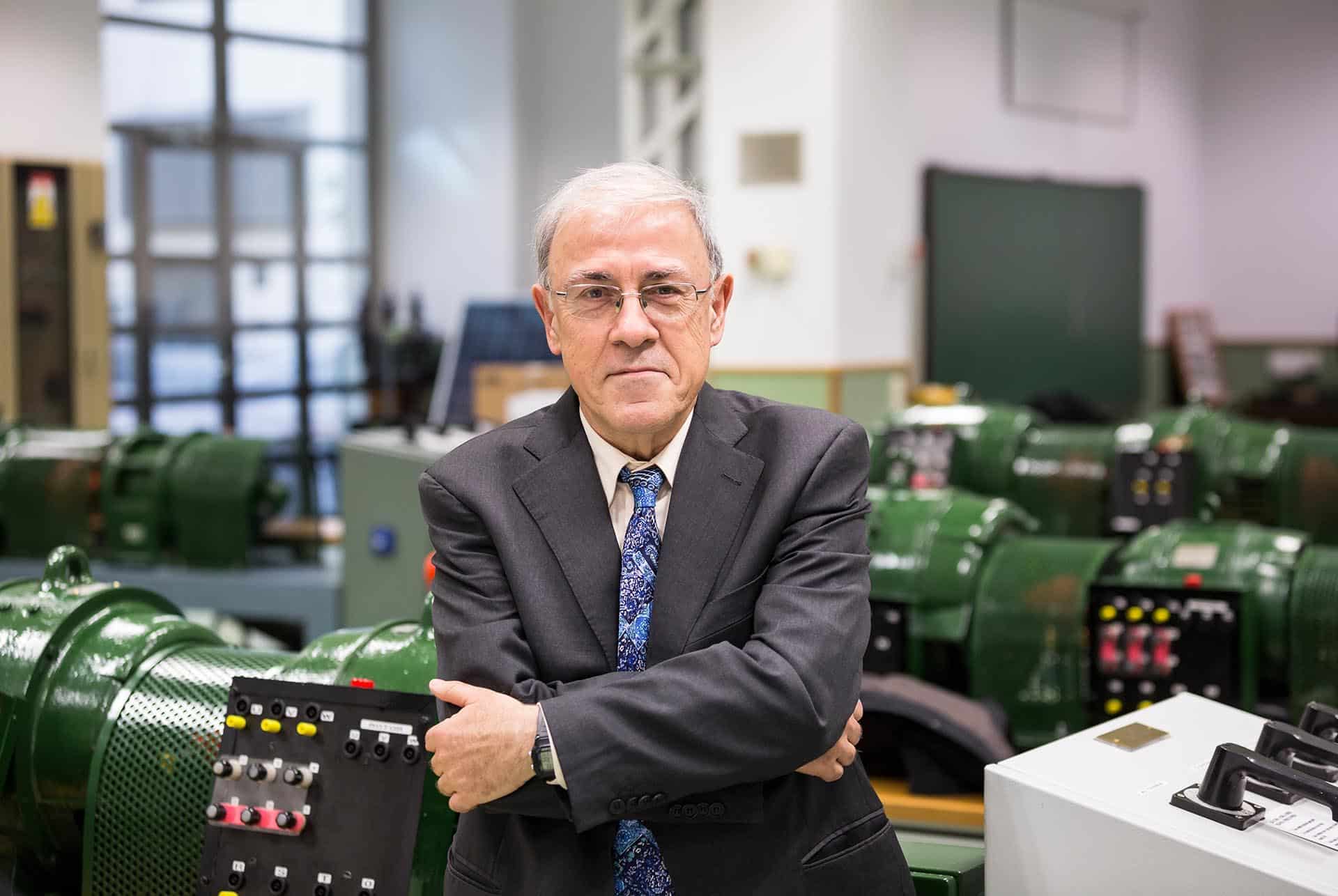
The Florence School of Regulation is proud to announce that the Parties of the African School of Regulation (ASR) Knowledge Partnership Agreement have appointed Ignacio J. Pérez-Arriaga as the Interim Director of the school.
Ignacio J. Pérez Arriaga is a renowned Spanish professor of Engineering, Economics and Regulation of the Electric Power Sector, currently working at the Massachusetts Institute of Technology (MIT) and the Florence School of Regulation (FSR) as professor and director of training courses. He is a life member of the Spanish Royal Academy of Engineering, a fellow and life member of IEEE.
Ignacio J. Pérez Arriaga is professor at Comillas University; where he is also the founder and director (1984-1994) of the Institute for Research in Technology (IIT). During his esteemed career he has served as commissioner at the Spanish Electricity Regulatory Commission (1995-2000), independent member of the Irish Single Electricity Market Committee (2007-2012), member of the Board of Appeal of the EU Agency for the Coordination of Energy Regulators (2011-2016), review editor of the 5th Assessment Report of the IPCC, and director of the research team of the Global Commission to End Energy poverty (GCEEP).
“We are happy to have Ignacio, a renowned and experienced professional taking the interim directorship position of the ASR,” said Carlo Papa, the Managing Director of Enel Foundation, one of the Parties supporting the African School of Regulation.
Ignacio J. Pérez Arriaga received his MS and PhD in Electrical Engineering from MIT, and Electrical Engineer from Comillas University in Madrid, Spain.
Ignacio J. Pérez-Arriaga, researcher at @IIT_Comillas @Comillas_ICAI @UCOMILLAS, has been appointed as Interim Director of the #African #School of #Regulation #ASR, a specialized school on #energy regulation created by the @FSR_Energy. Congratulations! pic.twitter.com/4MwYDwWKWS
— IIT Comillas (@IIT_Comillas) July 14, 2022
About the African School of Regulation
The transition to a sustainable energy model in Africa – including universal access and climate change, as well as the growing presence of decentralised energy resources – requires new approaches to policy, regulation, technology and innovation, and the skills to achieve this goal. Education in these matters is urgently needed to address these challenges in a wide range of fields across the electricity, clean cooking, and heating value chains.
The ASR is intended to be a training and knowledge sharing university-based establishment, run by Africans, in Africa, for Africans. The ASR will develop, teach, and disseminate sound energy regulation and policy in Africa.
The initiative to create the ASR is managed by the six Parties of the ASR Knowledge Partnership Agreement, which, in addition to the EUI by means of its Florence School of Regulation (FSR) are: the University of Cape Town (UCT), the Pan African University Institute of Water and Energy Sciences (PAUWES), the Enel Foundation, Rocky Mountain Institute (RMI), and the Energy Nexus Network (TENN).
The process of launching the ASR is presently in Phase 1, of two years duration, during which the logistics and key staff of the school will reside at the FSR. During the next phase, Phase 2, of a one-year duration maximum, the ASR will migrate to an African academic institution(s), where it will be established and grow to reach maturity, in principle following the model of the Florence School of Regulation in the range of activities, financing approach, and independence.
The ASR initiative is supported in different ways by a large number of institutions, with an initial funding being provided by grants from the Enel Foundation.
More information about the initiative and partner institutions can be found here.
Don’t miss any update on this topic
Sign up for free and access the latest publications and insights
More on the topic