


IGLUS Quarterly, Vol. 2, No. 1 – Multi-level Governance in the Urban Context
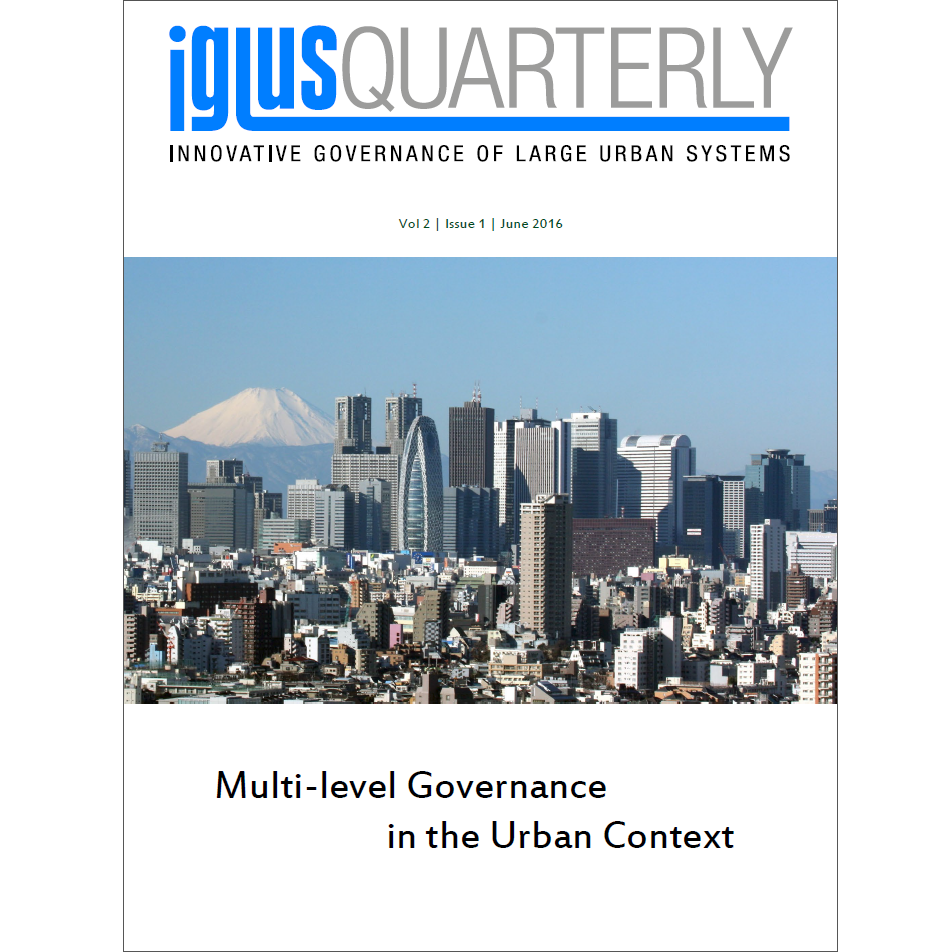
In this issue, we will be travelling to three different continents in order to explore the ever-pertinent topic of integrated planning in different urban infrastructures. Integrated infrastructure planning is one of the top priorities city authorities have when dealing with complex urban challenges. But successfully implementing such planning is a significant challenge that cannot be taken for granted, and throughout this process, governance plays a significant role.
This issue of the IGLUS Quarterly looks at the different actors who play a role in transforming this abstract ideal into a reality. The first contribution, by Ismael Aguilar-Barajas and his colleagues, discusses the complex and multi-level institutional framework that is behind water resource management in Mexico. The second article featured in this edition comes from Robin Chang who introduces us to CultNature, an innovative brownfield redevelopment project in the Ruhr region of Germany that is struggling to take root due to a lack of citizen-stakeholder involvement. In the third contribution in this issue, Fazil Rahiman and his colleagues take us to the Middle East to examine Dubai’s Carbon Abatement Strategy and to investigate the many sustainability initiatives underway as the Emirate races to become the global capital of the green economy. In the final article, Constanza Gómez Mont and her colleagues introduce us to PIDES: Social Innovation, an innovative “think-and-do-tank” in Mexico City. The authors present two compelling case studies from the organization where the coupling of citizen engagement, intersectorial collaboration and technological innovation result in exciting deliverables that have the potential to improve citizens’ quality of life.
Each of these contributions presents an entirely different perspective on urban governance. But based upon these articles one thing is certain- urban development cannot happen in isolation; collaboration between the different level actors and stakeholders is essential for strong governance in an urban context. We hope you find these articles interesting and invite you to join in on the discussion at www.iglus.org.
Download full pdf – IGLUS Quarterly – vol 2 – issue nr 1 – year 2016
Don’t miss any update on this topic
Sign up for free and access the latest publications and insights
More on the topic