

FSR to support Madrid Forum debate on sector coupling

At the 32nd meeting of the Madrid Forum, Klaus-Dieter Borchardt, deputy Director General of EU Commission’s DG Energy, announced the upcoming cooperation between the Florence School of Regulation (FSR) and the European Commission in the framework of the EU Gas Regulatory Forum (also known as Madrid Forum).
Ilaria Conti, FSR Head of Gas, and Andris Piebalgs, FSR part-time Professor and former Commissioner for Energy and for Development, joined Borchardt on stage to accept the appointment and to illustrate FSR new role to support and facilitate the debate about sector coupling within the Madrid Forum.
ABOUT THE MADRID FORUM
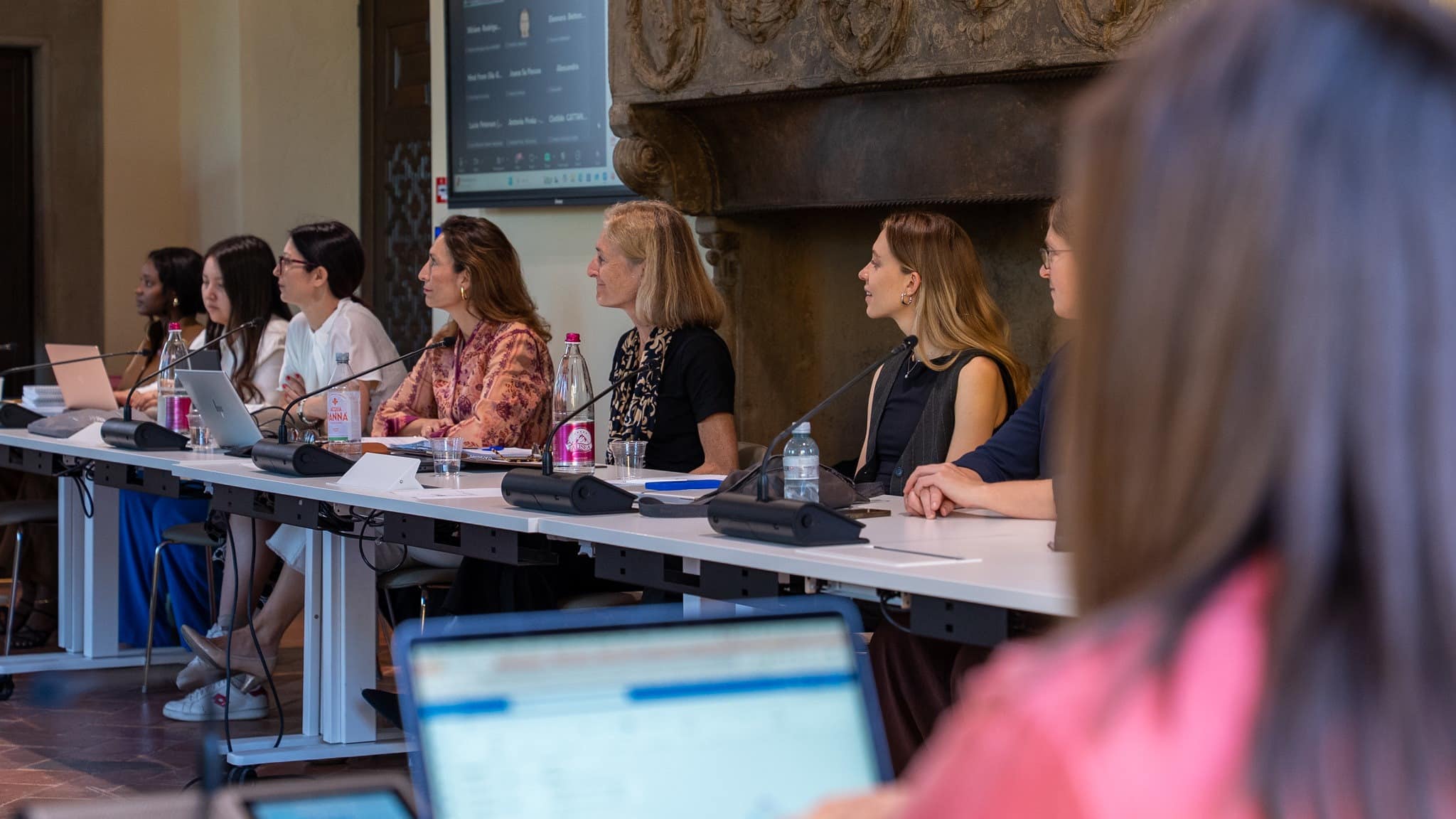
During the 2-day meeting, the discussions focused on sector coupling and the role of gases in the decarbonisation of the EU energy sector. The meeting started with two presentations on the role for gas in the decarbonised energy system by European Climate Foundation and Navigant. Then the discussions focused on sector coupling from regulatory, infrastructural and economic perspective.
Florence School of Regulation was following closely this debate by organising two events devoted entirely to the topic of sector coupling: in November 2018 and just a few weeks before the Madrid Forum, in May 2019:
- Coupling the Sectors
- Sector Coupling 2.0: Power-to-Gas in the EU decarbonisation strategy
- FSR Topic of the Month: Upgrading the EU gas market: the ultimate challenge?
- FSR Policy Brief: Sector Coupling: the New EU Climate and Energy Paradigm?
On the second day, the discussions revolved around gas quality standardisation, common terminology for gases and the reduction of fugitive methane emissions in the gas value chain.
On the latter, the FSR was invited to the peer-review panel. Fugitive methane emissions were a topic of a FSR policy Workshop, which took place last fall in Florence: “Towards “Net Zero” Methane Emissions in the Gas Sector – Challenges and Opportunities”
The topic was investigated further in the Topic of the Month series of 4 articles and a Policy Brief: “How far should the new EU Methane Strategy go?”
The 32nd Madrid Forum ended up with the discussion on Certification and Guarantees of Origin for renewable and low-carbon gases.
Don’t miss any update on this topic
Sign up for free and access the latest publications and insights