



Tariff Structures for the Internal Gas Market
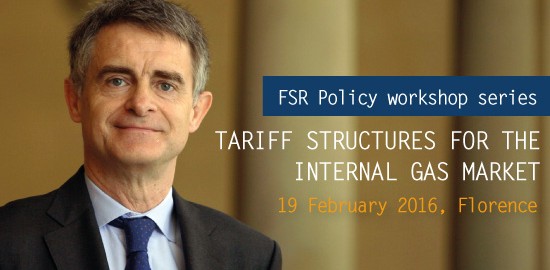
FSR Regulatory Policy Workshop Series 2015-2016
Watch the Highlights!
Appropriate gas transmission tariff structures are indispensable to stimulate competition in the Internal Gas Market (IGM). According to the EU Regulation No 715/2009, in order to encourage gas trade’s fluidity, network users should be given the freedom to book entry and exit capacity autonomously, instead of following contractual paths.
The revised and updated Gas Target Model (GTM) released by the Agency for the Cooperation of Energy Regulators (ACER) in January 2015 interprets these requirements for a well-functioning and transparent wholesale gas market as implying a liquid spot market and, crucially, a liquid wholesale forward and/or futures market, so that cost-effective wholesale market risk management is possible. In the GTM, Member States are also asked to assess whether their national gas markets will meet specific quality targets by 2017. If this is not likely to happen, some structural reforms are recommended, including the merger of two or more adjacent markets by unifying their virtual trading points, balancing zones and in some cases also the respective entry-exit system.
This would have at least two main repercussions on tariffs: several entry/exit points would disappear and consequently TSOs would lose part of their direct revenues. In both cases incomes will have to be redistributed and reallocated. The aim of this workshop is therefore to analyse in detail the implications of this merging and evaluate which transmission charging system would be the most appropriate if entry-exit areas were to become much larger than at present. The interrelation between gas transmission charging and congestion management will also be explored.
Session I will aim to find the most suitable approach to gas transmission tariffs in case of wider entry-exit areas; while Session II will investigate the charging and revenue recovery and the related implications.
This workshop is open exclusively to National Regulators, representatives from public bodies and FSR donors. Special registration requests must be submitted to the Coordinator of this workshop, Ilaria Conti, by e-mail or phone (+39 055 4685 961).
Don’t miss any update on our events
Sign up for free and access the latest events from our community.
More on the topic