


Sector Coupling 2.0
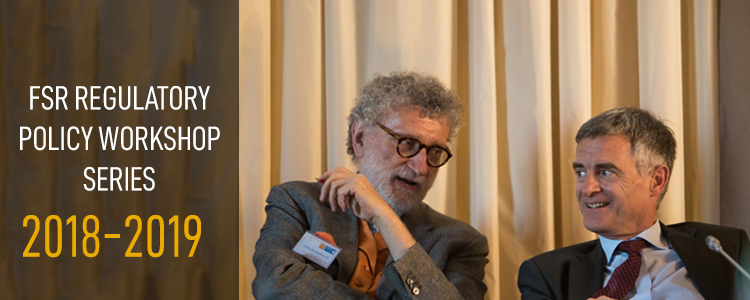
The “Sector Coupling 2.0” workshop of the 2018-2019 FSR Regulatory Policy Workshop Series will address Power to Gas in the EU Decarbonisation Strategy.
In October 2018, the Florence School of Regulation organised its first Workshop on “Coupling the Sectors”, as part of this Regulatory Policy Workshop Series. The discussion not only covered the coupling of the electricity and gas sectors and markets but also highlighted that power-to-gas could be a game changer in allowing sector coupling. However, the regulatory and market design implications of power-to-gas technologies at network scale were not explored.
This Workshop will continue the debate focusing on the implications of the deployment of power-to-gas technologies for sector coupling and the appropriate regulatory and market design responses.
The event will reflect on whether power-to-gas facilities should be considered as part of the gas or electricity networks (and therefore their ownership and operation reserved to transmission owners or transmission system operators), or if instead they can be considered as performing an activity open to competition or, thirdly, a combination of the two regimes.
It will consider to what extent the development of power-to-gas facilities might be promoted by the coordination of spot and forward markets in electricity and gas, so that such facilities (together with the gas networks and the gas-fired power stations) could be used for swaps (virtual electricity storage) and arbitrage (spark spread and “reversed” spark spread).
Power-to-gas technologies could also produce hydrogen and synthetic methane that can be used as energy for those processes which are not suitable for electrification or as chemical feedstock. If the electricity fed into the power-to-gas transformation is renewable-based, this process will also contribute to the decarbonisation of the gas sector.
The Workshop will be structured in two sessions:
- Session 1 will review the power-to-gas technological landscape, identifying the potentials for the different technologies and their future economic viability.
- Session 2 will discuss how power-to-gas could enable sector coupling, and deliver benefits in terms of greater temporal and geographical flexibility of the energy system. The regulatory and market design implications of such developments will also be explored.
This workshop is exclusively open to national regulators, representatives from public bodies and associate & major donors of the FSR Energy area.
Don’t miss any update on our events
Sign up for free and access the latest events from our community.