


Baumgart, M. “Does Digitalization Cost Our Privacy? Legal and Ethical Issues Concerning the Implementation of Smart Meters and Electromobility”

The paper “Does Digitalization Cost Our Privacy? Legal and Ethical Issues Concerning the Implementation of Smart Meters and Electromobility” (Baumgart, M.) will be presented at the 6th Florence Conference on the Regulation of Infrastructures (16 June 2017).
ABSTRACT
Innovation and new technology help us solve specific challenges and make our day-to-day lives easier. However, connected devices may constitute threats to privacy. The article analyses both the legal and ethical framework to solving privacy risks, at the same time referring to the examples of the implementation of smart meters and electromobility. The paper shows that the EU Charter of Fundamental Rights only protects consumers from the risks evolving from innovation and new technology if EU law also requires their implementation. Moreover, the article states that there is a necessity of ethical behaviour beyond legal obligations and that there is a benefit for businesses if they act accordingly. To avoid preventing innovation and new business models, the legal framework should consist of a moderate minimum protection standard, although this requires businesses to act in an ethical way.
ABOUT THE AUTHOR
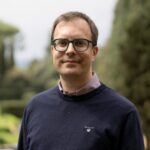
Max Baumgart. As a doctoral candidate at both the University of Cologne and the University of Basel, a lecturer at the University of Cologne and a fellow in energy law at the Institute of Public Financial Law, Fiscal Law and Law and Economics at the University of St. Gallen, I am working towards increased reliance on emerging technology and clean energy delivered through intelligent infrastructure. I studied German and European law at the Humboldt-University of Berlin, the University of Geneva, the Graduate Institute in Geneva and the University of Cologne and was a visiting scholar at the UC Berkeley Institute of European Studies. I obtained the Certificat de droit transnational in Geneva, was honored as the top student in the transnational law specialization during my studies in Berlin and received a Hanns Seidel Foundation scholarship for my doctoral studies. I have demonstrated experience directing a legal research institute, implementing projects, working internationally in Washington D.C. and Brussels, and presiding over several non-profit associations and I now aspire to work academically.
DOWNLOAD
Presentation by Max Baumgart
Don’t miss any update on this topic
Sign up for free and access the latest publications and insights
More on the topic