


Shaping the EU framework towards 2030 and beyond
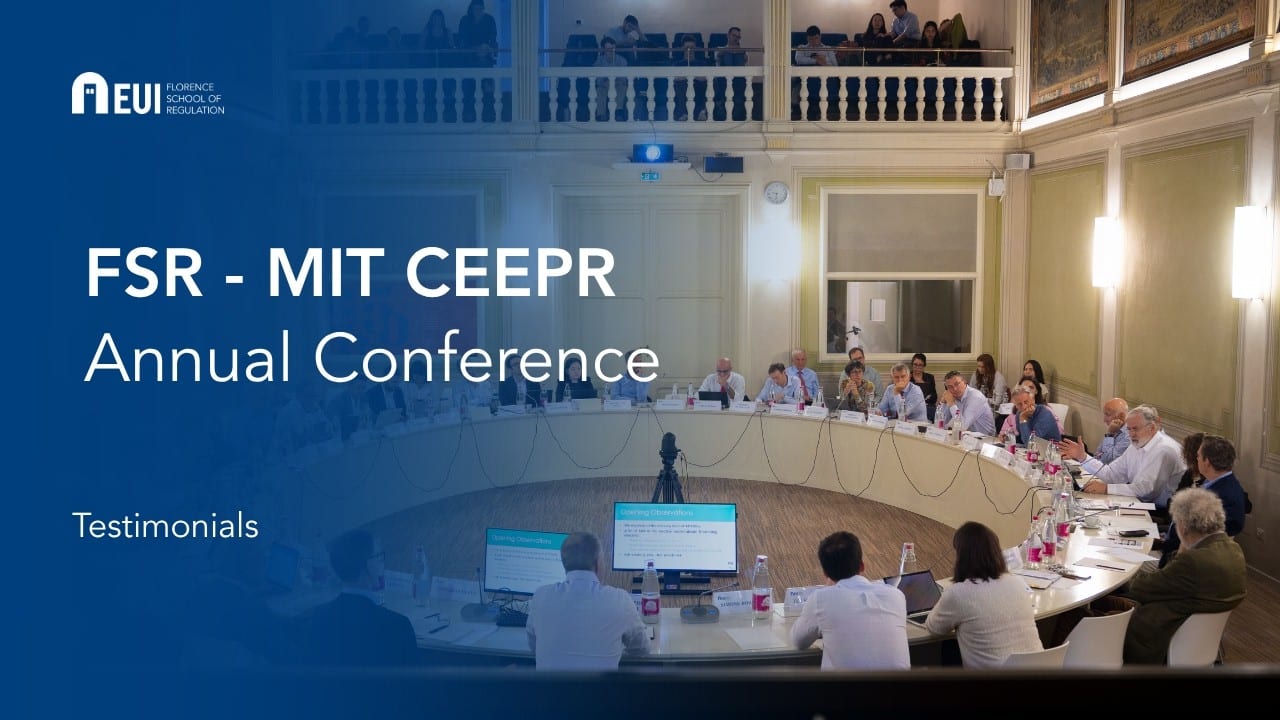
On Monday 1st July, the Florence School of Regulation hosted the Executive Workshop: ‘Shaping the EU framework towards 2030 and beyond’, co-organized in cooperation with Terna, the Italian electricity TSO.
The event brought together various stakeholders, including the European Commission, ACER, several National Regulatory Authorities and delegates from energy companies and associations, to discuss the most compelling challenges faced by the electricity sector in the current energy transition.
The first session of the event ‘Shaping the EU framework towards 2030 and beyond’ investigated the changes and challenges that Europe will have to cope with in the next 10 years. The recently adopted Clean Energy Package (CEP) foresees a set of targets for 2030 that the EU will have to achieve in terms of GHG emissions, renewables and energy efficiency. Meeting these targets while ensuring the security of supply, a market-based approach and low energy prices will be far from easy.
In this context, the discussion highlighted the increasing importance of effective communication and cooperation between the different stakeholders – including regulatory authorities and new market actors – as well as of an easier access to data and information. This is particularly important because a higher degree of regional coordination will be required to foster the integration of renewables in the European electricity system. Appropriate long-term price signals will be equally essential to induce market players to invest in generation capacity with the characteristics most required by the system.
The second session of the workshop looked at the 2050 horizon and recognised the need to accelerate the decarbonisation of our economies, if carbon neutrality has to be achieved in Europe by that date. Policy and regulatory frameworks will have to incorporate effectively new actors and business models, as well as new infrastructures and new ways of using the existing ones.
How to get there?
There is no one size fits all solution. The specificities of each country matter. However, in general terms we could say that the electricity systems of the future will probably be a combination of existing technology and tools as well as of new solutions, yet to be investigated. Regulatory sandboxes and pilot R&D projects with a creative, ‘start-up approach’ will most certainly play an important role and their implementation monitored with interest.
The workshop ended with one clear message: the way forward might be unknown, but to achieve our common objectives it is essential that all stakeholders play their role and keep an innovative, dynamic and cooperative approach.
[modula id=”22808″]
Don’t miss any update on this topic
Sign up for free and access the latest publications and insights