


Register now: 6th Conference on the Regulation of Infrastructures (16 June 2017)
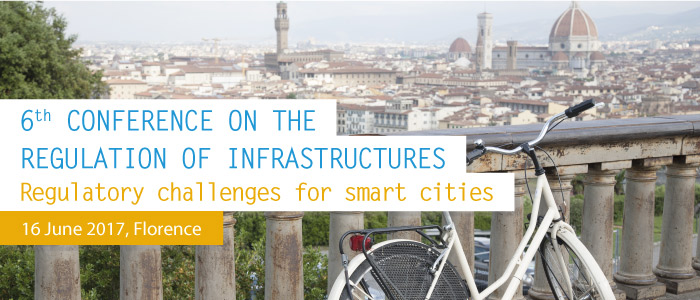
The de- and re-regulation of the different network industries is an ongoing process at national and global level. As this process unfolds, ever new phenomena emerge, which call for a constant reassessment of the content and objectives of regulation.
The question becomes even more challenging when looking at recent infrastructure development at the local level. Phenomena including (but not limited to) demographic changes, the rapidly evolving consequences of climate change and the evolution of Information and Communication Technologies (ICTs) have significantly challenged the traditionally stable landscape of urban infrastructure services provision. Providing traditional and new services in an innovative way is a growing trend among public authorities, traditional providers as well as new private prosumers and platforms for sharing economy. Both small and large agglomerations are seeking to become the so-called “smart cities”. However, together with great opportunities, disruptive innovations also give rise to new regulatory challenges, especially on infrastructure financing and management of future “smart cities”.
Register now!
The Conference on the Regulation of Infrastructures is the sole annual event that gathers together all the Areas of the Florence School of Regulation. It takes place in June every year, and this 6th edition on Friday, June 16th seeks to evaluate the major challenges infrastructure regulation is currently facing at the local level. The selection procedure of the authors that will present at the Conference is now complete, and the draft programme of the day is available on the dedicated website.
Registrations are now open for discussants and attendees: every participant will be invited to take the floor and comment in the different parallel sessions.
Follow the Conference
Don’t miss any update on this topic
Sign up for free and access the latest publications and insights
More on the topic