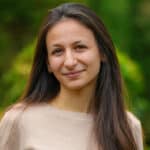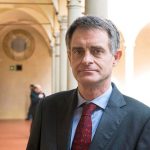




Molinos-Senante, M.*,Farias, R.”Economic Group´s Influence on the Efficiency and Quality of Service of Water Companies under Model-Firm Regulation”
The paper “Economic Group´s Influence on the Efficiency and Quality of Service of Water Companies under Model-Firm Regulation” (Molinos-Senante, M., Farias, R.) will be presented at the 7th Conference on the Regulation of Infrastructures (21-22June, 2018).
ABSTRACT
The privatization of water and sewerage services (WSS) has led to the foundation of water economic groups, which integrate several water companies and have gained notable importance at the global level. In the framework of benchmarking studies, there are no prior studies exploring the impact that economic groups have on the efficiency and quality of service provided by water companies. This study investigates, for the first time, whether the membership of water companies in an economic group influences their performance. Quantity- and quality-adjusted efficiency scores were computed using data envelopment analysis models. An empirical application was developed for the Chilean water industry since most of their water companies are private and belong to an economic group. The results show that independent water companies provide WSS with better quality than do water companies that belong to an economic group. From a statistical point of view, it was evident that membership in an economic group impacts both the quantity- and quality-adjusted efficiency scores of water companies. The results of this study illustrate that applying the model-firm regulation to the Chilean water industry has significant drawbacks that should be addressed by the water regulator to promote the long-term sustainability of the water industry.
The presentation is available here.
ABOUT THE AUTHORS
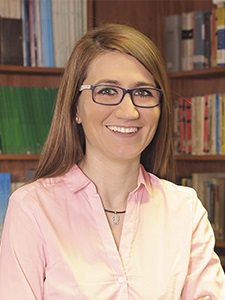
María Molinos-Senante* is PhD on Local Development and Territory at the University of Valencia (Spain). Currently, she is assistant professor at Engineering School and Institute of Urban Studies at the Pontifical Catholic University of Chile. She is a researcher in the Center for Sustainable Urban Development (CEDEUS) and Research Center for Integrated Disaster Risk Management (CIGIDEN). Her areas of interest include efficiency and productivity assessment of water utilities and facilities; sustainability and resilience evaluation through multi-criteria decision-making methods, nexus water-energy, water industry regulation and water tariffs.
*presenting author
Don’t miss any update on this topic
Sign up for free and access the latest publications and insights