




Market Abuse or Abuse of Market Power in Wholesale Energy Markets?

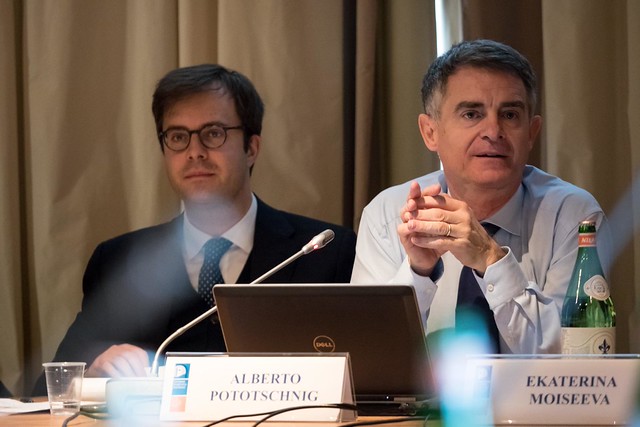
On 12 January 2018, the Florence School of Regulation held the second session of its 2017-18 Regulatory Policy Workshop Series on the topic ‘Market Abuse and Abuse of Market Power in Wholesale Energy Markets’.
Attended by academics, practitioners and representatives of European and national institutions, the seminar looked at two important pieces of European legislation on wholesale energy markets: the traditional pro-competition provisions of the Treaty on the Functioning of the EU (Articles 101 and 102) and the more recent EU Regulation No 1227/2011 on wholesale energy market integrity and transparency (REMIT).
The two pieces of legislation were fruitfully compared and contrasted as they address, among other things, behaviours that might look quite similar: abuse of market power on the one hand and market abuse on the other. Besides, the adoption of REMIT and its implementation are changing the duties and powers of national sector-specific regulatory authorities and the way they cooperate and coordinate with the national competition authorities.
The discussion highlighted the possibility of some overlaps between the concepts of market abuse in REMIT and abuse of market power in competition law. Nevertheless, the two pieces of legislation have different goals (transparent and non-manipulated price formation vs competitive prices), different approaches (focus on single trades vs focus on more structural and repeated behaviours), and different subjects (all decisive players acting on wholesale markets vs players with a dominant position on wholesale and/or retail markets).
Attendees agreed that the distinction between the ex-ante regulation carried out by sector-specific authorities and the ex-post remedies implemented by competition authorities is blurring. NRAs and competition authorities are improving their coordination and cooperation (the broader and more granular market monitoring allowed by the reporting obligations introduced by REMIT can, for instance, help competition authorities in the collection of evidence). However, additional efforts are needed to secure a consistent treatment of REMIT and competition cases. A consistency that is essential in order to promote market integration and ensure a level playing field for all the market players. In this regard, public authorities, both at the national and European level, are invited to provide more detailed guidelines about the proper implementation of REMIT, in particular with reference to what the “accepted market practices” are.
Finally, several participants shared a common remark. Independently from the fact that we consider the case of market abuse or abuse of market power, we need to further investigate the implications of the current transition towards a low carbon energy system. This is important because the deployment of more capital intensive generation technologies and the changes in market design will have relevant consequences on the concrete possibility to identify when prices for energy reflect the “fair” interplay of supply and demand or not. New benchmarking methodologies for assessing when prices are artificially (i.e. excessively) high or low will be strongly needed in the medium to long term.
Don’t miss any update on this topic
Sign up for free and access the latest publications and insights