


Flexibility market design – FSR and INTERRFACE
A new interface between TSOs, DSOs, and consumers
With the growth of renewables, the increased interconnection of European grids, the development of local energy initiatives, and the specific requirements on TSO – DSO cooperation as set forth in the different Network Codes and Guidelines, TSOs and DSOs face new challenges that will require greater coordination.
The FSR research team is involved in INTERRFACE, the Horizon2020 project aiming to design, develop and exploit an Interoperable pan-European Grid Services Architecture (IEGSA) to act as the interface between the power system (TSO and DSO) and the customers and allow the seamless and coordinated operation of all stakeholders to use and procure common services.
FSR is in charge of the regulatory framework around such new developments and addressing market design questions.
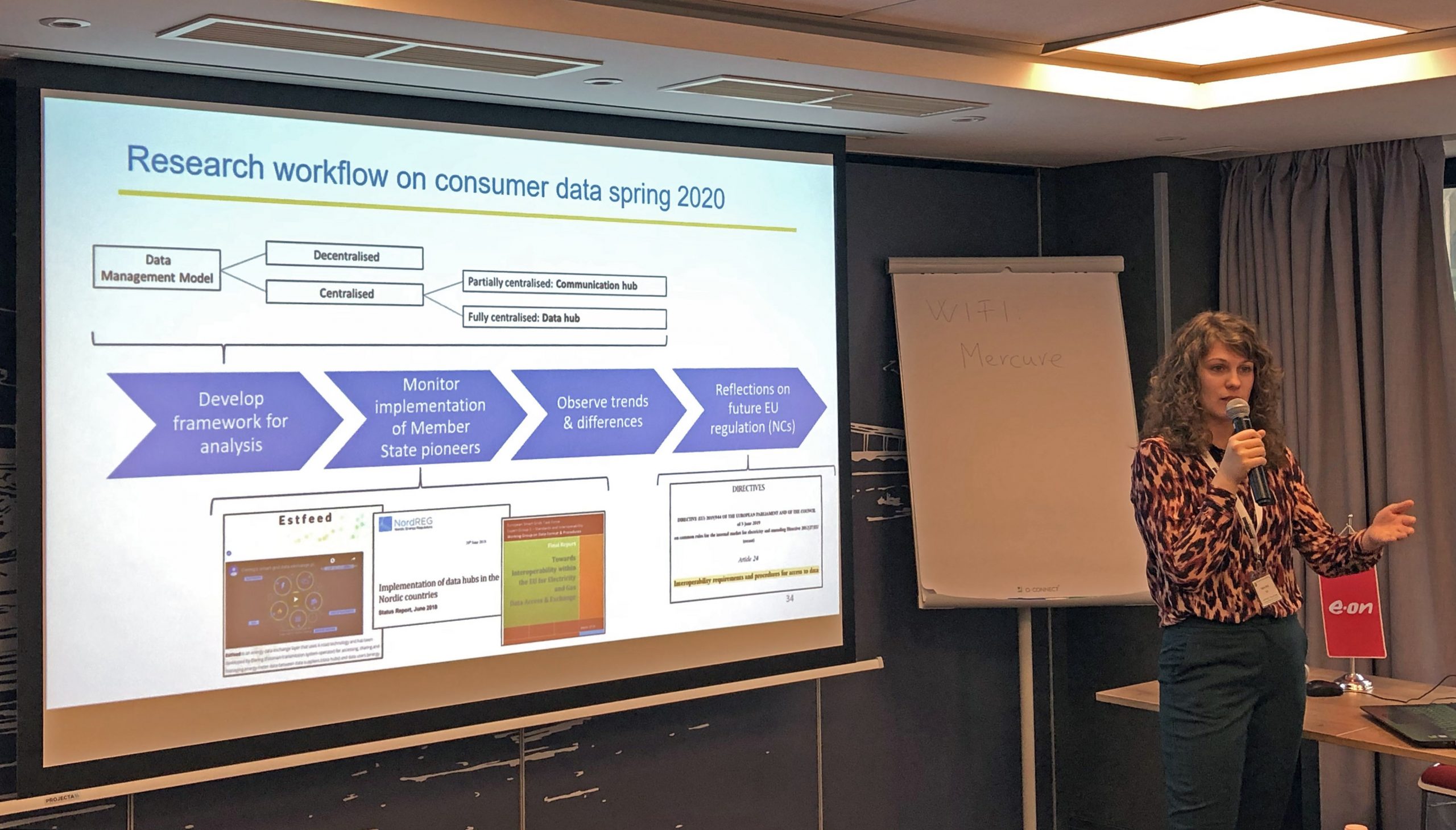
At the first plenary of the project held in Budapest on 5 and 6 February 2020, Valerie Reif and Tim Schittekatte presented FSR's work in Task 2.4 (Regulatory Framework) and Tasks 9.2 & 9.4 (Stakeholder involvement and management & foundations of new network codes).
The finalized deliverable for Task 2.4. can be found here.
Flexibility design and consumer data management
The topics covered by their presentation mainly revolved around flexibility market design and consumer data management. An important FSR contribution to the project so far was the publication of an academic paper on flexibility market design:
Flexibility markets: Q&A with project pioneers
Highlights
- Flexibility markets are recognised as a way to reduce future grid investment needs.
- Six controversies around the design of flexibility markets are identified.
- Four European pilot projects are analysed: Piclo Flex, Enera, GOPACS and NODES.
- Two trends and four differences among the projects are found.
Download the publication here
FSR in Budapest with INTERRFACE
[modula id=”24868″]
Don’t miss any update on this topic
Sign up for free and access the latest publications and insights