





Type of event: Online Debate
The Upcoming EU Legislation on Methane Emissions – What Should Be in It?

Following the EU Methane strategy’s adoption on 14 October 2020, the EU Commission will unveil the legislative proposal on measurement and mitigation of methane emissions.
Until 1 May 2021, all the stakeholders are invited to participate in public consultations by filling in a comprehensive questionnaire. The questionnaire aims to gather views on the range of issues, including the type and scope of regulation, leak detection, and repair programmes, venting and flaring, and on the actions to mitigate the emissions from biogas/biomethane production and the coal sector.
The companies and NGOs, both individually and in the industry groups, such as the Methane Guiding Principles, have been working to respond to the questions raised by the EU Commission in the questionnaire.
This event is an occasion to discuss the key challenges and considerations which arise from these discussions, as well as the way forward. On which issues is there a consensus? Where are divergencies and controversies?
Hosts:
- Christopher Jones, FSR
- Andris Piebalgs, FSR
Speakers:
- Myriam Hammami, Shell
- Tania Meixus Fernandez, Enagás
- Stefan Schwietzke, Environmental Defense Fund
- Nicolas Jensen, Eurogas
- Manfredi Caltagirone, UN Environment Programme
Comments and conclusions:
Malcolm McDowell, European Commission
#FSRDebates
#FSRDebates
The focus of this debate series is on policy issues to be discussed by a panel of experts. Learn more about the FSR series.
Presentations
Don’t miss any update on our events
Sign up for free and access the latest events from our community.
Speakers
More on the topic










Implementing The “Energy Efficiency First” Approach
In this Debate we will discuss which measures should be used and which mechanisms should be harnessed to pursue the “energy efficiency-first” approach, which is at the core of a more circular economy system, one of the pillars of the EU decarbonisation strategy.
This issue is particularly critical given that, since 2014, the trend in energy consumption in Europe has been pointing towards the EU not meeting its 2020 energy efficiency targets, for both primary and final energy consumption. In 2018 primary and final energy consumption were still 5.8% and 3.5%, respectively, above the 2020 targets. The COVID crisis significantly hampered the economy and decreased energy consumption in 2020. However, unless the European economy will become more energy-efficient, the subsequent recovery will lead to a rebound in energy consumption.
The fact that the EU seems to be unable sufficiently to promote energy efficiency appears all the more surprising considering that already in 2005 the Commission, in its Green Paper on Energy Efficiency or Doing More with Less1, was able to refer to “numerous studies” according to which “the EU could save at least 20% of its present energy consumption in a cost-effective manner”,
The 2018 Energy Efficiency Directive2 established a headline EU energy efficiency target for 2030 of at least 32.5% (compared to projections of the expected energy use in 2030), with a clause for a possible upwards revision by 2023. In fact, it is likely that the target will be increased sooner in line with the Green Deal strategy.
In this context, the Debate will aim at discussing:
- which have been the barriers which prevented the EU from reaching its 2020 energy efficiency target, despite the promising outlook back in 2005; and
- how these barriers could be tackled to achieve the more ambitious 2030 target.
Draft Programme
14.00 – 14.05 Introduction to the Debate
Alberto Pototschnig | Florence School of Regulation
14.05 – 14.15 The “energy efficiency-first” approach in the Green Deal
Claudia Canevari | European Commission, DG Energy
14.15 – 14.25 Energy efficiency in the National Energy and Climate Plans
Golnoush Soroush | Florence School of Regulation
Lessons learnt from auditing EU-funded energy efficiency projects in buildings
14.25 – 14.35
Lorenzo Pirelli | European University Institute
PANEL DISCUSSION:
Moderator: Alberto Pototschnig: Florence School of Regulation
14.35 – 14.55 Introductory remarks from the panellists
Sabine Löbbe | Reutlingen Energy Center
Zsuzsanna Pató | Regulatory Assistance Project
Giuseppe Velluto | Gianni Origoni
14.55 – 15.00 Polls
15.00 – 15.20 Comments on the outcome of the poll and Q&A from the audience
Panellists
15.20 – 15.30 Concluding remarks
Alberto Pototschnig | Florence School of Regulation
Leigh Hancher | Florence School of Regulation and Tilburg University
#FSRDebates
The focus of the debate series is on recent court cases, regulatory decisions, EU legislation, or public consultations to be discussed by a panel of experts. Learn more about the FSR series.
Presentations
Don’t miss any update on our events
Sign up for free and access the latest events from our community.
Speakers


Industry experience and prospectives in Pyrolysis
Hydrogen can be produced also from the decomposition of methane. This process yields only solid carbon and no carbon dioxide. The produced carbon can be sold, improving the cost-efficiency of the operations. Particularly interesting could be the pyrolysis of biomethane. Can pyrolysis of gas play a substantial role in the energy transition? What is the state of the latest technological developments? What are GHG savings using pyrolysis? What are the cost estimations compared with competing technologies?
This online debate on pyrolysis hydrogen will be moderated by Andris Piebalgs and Christopher Jones, Florence School of Regulation.
Speakers:
Dr. Klaus Langemann, Senior Vice President Technology &Innovation, Wintershall Dea GmbH
Prof. Bernd Meyer, Director, Institute of Energy Process Engineering and Chemical Engineering, TU Bergakademie Freiberg
Dr. Roh Pin Lee, Head of Technology Assessment Division, Institute of Energy Process Engineering and Chemical Engineering, TU Bergakademie Freiberg.
Prof. Laurent Fulcheri, Research Director, MINES ParisTech
Detlef Kratz,President, Process Research and Chemical Engineering, BASF
Conclusions:
Kitti Nyitrai, Member of Cabinet of Commissioner Simson
#FSRDebates
The focus of the debate series is on policy issues to be discussed by a panel of experts. Learn more about the FSR series.
Presentations
Don’t miss any update on our events
Sign up for free and access the latest events from our community.
More on the topic




The Regulation of Energy Storage Across the Vectors: Maximizing Flexibility
In this Debate, we aim at identifying some fundamentals for realising a coherent regulatory framework for energy storage facilities across the energy vectors with a focus on achieving the optimumal flexibility from storage facilities.
Storage for all forms of energy vectors is of key importance for achieving the EU’s climate and energy targets. Storage has a crucial role in achieving security of supply, reliability and flexibility. These goals cannot always be pursued simultaneously however and some forms of storage may be more suited to serving some goals than others.
In the FSR Debate, we ask whether we are considering all the options as to how to accommodate storage in the new regulatory frameworks under consideration, and in particular to maximise the demand and supply flexibility that different forms of storage can offer.
If the objective is to strive for flexibility maximisation, how should we position energy storage within the regulatory framework? Is storage to be positioned as part of the transmission or distribution network? Is it a back up for flexible supply or is it an independent service? Who should offer different types of storage-related services and who should not? Should we revisit the unbundling rules? How should injection into storage and withdrawal from storage be charged in order not to distort the efficient use of resources in the overall energy system?
In all these aspects we will consider whether and how to align gas and electricity regulatory principles and practice. Do we follow the existing rules on electricity or on gas or do we develop a new, harmonised approach across the sectors.
As to network tariff methodologies for gas storage – are these likely to be a barrier to innovative flexibility services or should we seek to maintain guarantees for fair access? Do we have to mirror this approach for other forms of storage such as batteries?
This in turn raises the issue of whether the current approach to fuel specific network codes, guidelines – one distinct set for gas – one set for electricity needs to revamped?
Programme
Introduction to the Debate and Opening Presentations
14.00 – 14.05 Introduction to the Debate
Leigh Hancher| Florence School of Regulation
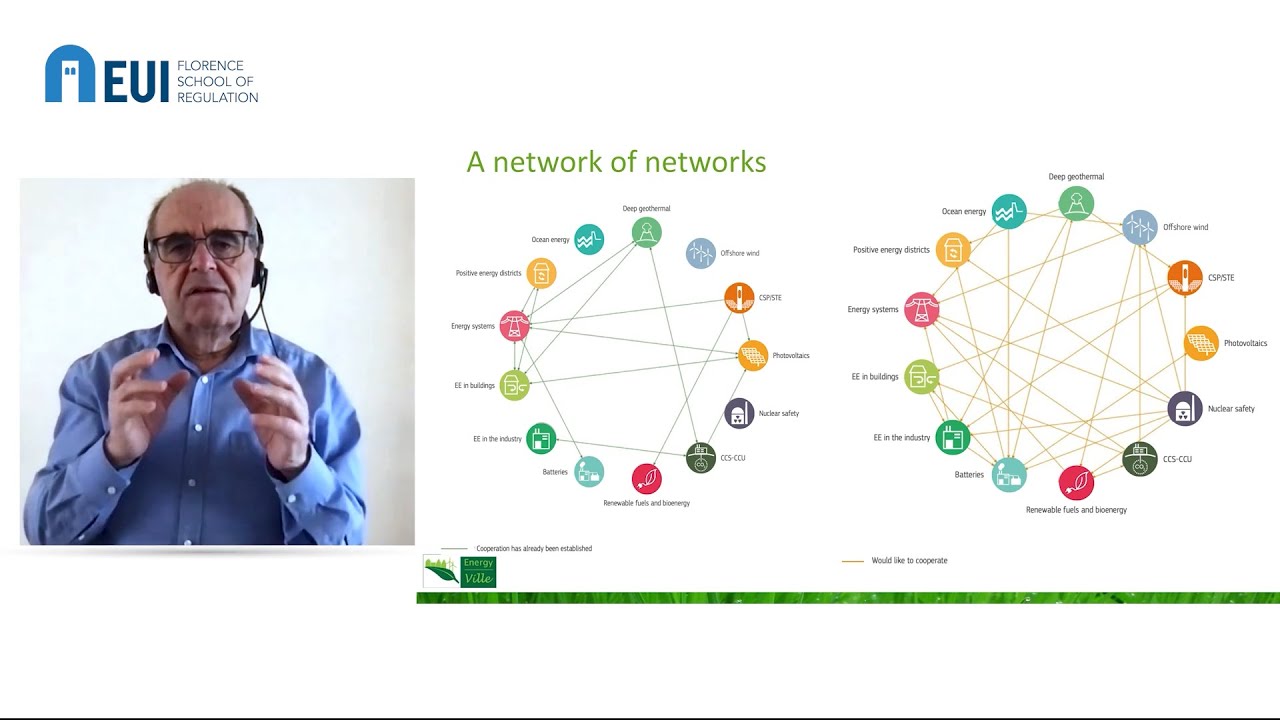
14.05 – 14.15 An energy system needs storage. Storage is everywhere
Ronnie Belmans | CEO Energyville
14.15 – 14.25 The role of gas storage – time for a regulatory upgrade?
Carole le Hénaff | GIE/Storengy
Panel Discussion: Introductory Remarks, Polls, and Comments
Moderator: Alberto Pototschnig | Florence School of Regulation
14.25 – 14.45 Introductory remarks from the panellists
Guido Cervigni | DFC Economic
Doug Wood | EFET
Benoit Esnault | ACER/CRE
14.45 – 14.50 Polls
14.50 – 15.20 Comments on the outcome of the polls and Q&A from the audience
15.20 – 15.30 Concluding remarks
Alberto Pototschnig | Florence School of Regulation
Leigh Hancher | Florence School of Regulation and Tilburg University
#FSRDebates
The focus of the debate series is on recent court cases, regulatory decisions, EU legislation, or public consultations to be discussed by a panel of experts.
Hosts: Prof. Leigh Hancher and Prof. Alberto Pototschnig
Presentations
Don’t miss any update on our events
Sign up for free and access the latest events from our community.
The Renovation Wave – making a step change on the EU’s energy objectives
In the EU buildings are responsible for 40% of energy consumption. 36% of the GHG emissions in the energy sector are related to buildings. The renovation has been a recognised priority of many governments in the EU. Still the developments in the renovation of the buildings have been slow. Only 1% of buildings are renovated per year. This put into question the achievement of the EU’s energy objectives.
The European Commission recently published Renovation Wave Strategy aiming to change this. It targets at least doubling the renovation rates. The renovations should lead to substantially higher energy and resource efficiency and decarbonisation of heating and cooling.
Watch the recording:
How to break existing barriers? How to provide well-targeted financing? How to connect the European ambition with national and local policies? What new European regulation to expect?
These are the issues we will be tackling during our debate.
Panel
Guests:
Stefan Moser, European Commission, DG ENER, Head of Unit
Gaspard Demur, European Commission, DG ENER
Hosts:
Christopher Jones, European University Institute, FSR
Andris Piebalgs, European University Institute, FSR
#FSRDebates
The focus of the debate series is on policy issues to be discussed by a panel of experts. Learn more about the FSR series.
Presentations
Don’t miss any update on our events
Sign up for free and access the latest events from our community.
More on the topic



Are hydrogen technologies ready for accelerated deployment?
In April 2020, the Florence School of Regulation held two workshops on renewable hydrogen and low-carbon hydrogen technologies. Since then, there has been a lot of significant developments that will try to address in this debate.
Watch the recording
Background
In December 2020, the European Council has endorsed a binding EU target of 55% in GHG emissions reduction by 2030 compared to 1990 to be achieved collectively in the most cost-effective manner possible.
The Council of the European Union has adopted Council Conclusions “Towards a hydrogen market for Europe”. The Council endorses the approach proposed by the European Commission in its Communication “Hydrogen Strategy for a climate-neutral Europe” and calls for more detailed pathways on how to get to the announced objectives of having 6GW of electrolysers by 2024 and 40GW by 2030. With a strong focus on renewable hydrogen, the Conclusions also mention transitional support of low carbon hydrogen produced from natural gas.
The Strategic Forum for Important Projects of Common European Interest has selected “Hydrogen Technologies and Systems” as one of the strategic value chains, which are essential to enhance the future competitiveness and sustainability of the EU.
The European Clean Hydrogen Alliance, uniting broad range of European stakeholders , has started its activities.
The new proposal of TEN-E Regulation recognises the support o the investments in hydrogen networks and power-to-gas facilities.
It is clear now that hydrogen together with renewable electricity and energy efficiency measures are key enablers towards carbon neutrality of the EU by 2050. Also, there is a political will to deploy hydrogen in the most cost-effective way using the strength of the EU internal market. Still, there are substantial challenges in the front of broad hydrogen deployment. There isn’t a market even in a most rudimentary form, important sustainability issues need to be resolved (Guarantees of Origin, additionality), but most importantly renewable and low carbon prices are relatively high compared with fossil fuel sources.
Are renewable and low carbon hydrogen technologies ready for accelerated deployment?
Has clean hydrogen technology development followed fast political development? Are there substantial barriers? What market design elements are needed to accelerate technological progress? These are the questions we will address during our policy debate.
Draft Programme
Moderators: Christopher Jones and Andris Piebalgs
11.00 – 11.10 Introduction to the debate
Christopher Jones | Florence School of Regulation
11.10 – 12.10 Panel debate
Barbara Jinks | IRENA
Kees van der Leun | Guidehouse
Jorgo Chatzimarkakis | Hydrogen Europe (TBC)
Ronnie Belmans | Energyville
12.10 – 12.25 Q&A
12.25 – 12.30 Concluding remarks
Andris Piebalgs | Florence School of Regulation
#FSRDebates on Policy
Starting from January 2020, our debate series will have a monthly episode on policy issues, hosted by Christopher Jones and Andris Piebalgs.
Presentations
Don’t miss any update on our events
Sign up for free and access the latest events from our community.
More on the topic


The Regulation of Power-to-Gas Facilities and Regulatory Sandboxes
Reaching the ambitious energy and climate targets to which the European Union (EU) is committing requires harnessing all the opportunities associated with hydrogen, for which a strategic approach is needed. In this context, in its Hydrogen Strategy, the European Commission launched a plan to reach 80 GW of electrolyser capacity by 2030, half of which within the EU and the other half in Europe’s neighbourhood, with the export of green hydrogen to the EU.
The envisaged massive increase in electrolyser capacity in the EU calls for clarity on the regulatory approach to these installations and, more generally, to power-to-gas facilities.
Watch the recording:
In this Debate, we intend to identify the best regulatory approach to power-to-gas facilities, and the potential use of regulatory sandboxes for this purpose.
In particular, we will assess whether:
- power-to-gas facilities should be considered as performing a monopoly activity, which would justify them being owned and run by Transmission System Operators (TSOs) or Distribution System Operators (DSOs);
- power-to-gas facilities should instead be considered as performing a competitive activity. In which case, under the existing unbundling provisions, TSOs and DSOs would be prevented from owning and/or operating them;
- a “hybrid” approach should be considered, in which the role of TSOs and DSOs would be tailored to the stage of market development of power-to-gas activities;
- different approaches should be tested in parallel using regulatory sandboxes.
Programme
14.00 – 14.05: Introduction to the Debate
Leigh Hancher | Florence School of Regulation and Tilburg University
14.o5 – 14.15: Regulatory Sandboxes
Tim Schittekatte | Florence School of Regulation
14.15 – 14.25: The possible regulatory approaches to power-to-gas facilities
Alberto Pototschnig | Florence School of Regulation
PANEL DISCUSSION
Moderator: Leigh Hancher | Florence School of Regulation and Tilburg University
14.25 – 14.50: Introductory remarks
- Benedikt Klauser | DG ENER
- Francesco Cariello| ARERA
- Dennis Hesseling | ACER
- Gerald Kaendler | ENTSOE
- Jan Ingwersen |ENTSOG
14.50-14.55: Live Polls for the audience
14.55 – 15.20: Comments on the outcome of the polls and Q&A from the audience
15.20 – 15.30: Concluding remarks
Leigh Hancher | Florence School of Regulation and Tilburg University
Alberto Pototschnig | Florence School of Regulation
#FSRDebates
The focus of the debate series is on recent court cases, regulatory decisions, EU legislation, or public consultations to be discussed by a panel of experts. Learn more about the FSR series.
Don’t miss any update on our events
Sign up for free and access the latest events from our community.
More on the topic


Update on ECJ Case Law: Round Two
In this online debate, we will discuss the latest energy sector decisions from the European Courts of Justice and consider the wider repercussions of these developments. Several important issues have been raised via the Courts in recent months and several further important rulings are expected in the coming weeks, including on dispute settlement, the Hinkley Point nuclear power plant, and EU state aid rules. We will present the key aspects of these cases, weigh the reasoning of the courts, and reflect on the implications of these decisions.
The cases we will address are:
· Case C-238/18: GRDF SA v Eni Gas and Power France SA on dispute settlement and the extent of the powers of regulatory authorities
· Case C-594/18 P: Austria v European Commission – an update on the ECJ’s review of the Hinkley Point judgment on state aid
· Case T-479/11 – Case T-157/12 (appeal of Case C-438/16 P Commission v France and IFP Énergies Nouvelles) on state aid
‘Ones to Watch’:
· Case C-705/19: AXPO Trading v Gestore dei Servizi Energetici SpA – GSE
· Case T-300/19: Achema and Lifosa v Commission
We will be taking questions throughout the live session, but we also invite you to submit your questions in advance in the registration form.
More on ECJ Case Law
If you want to catch up on earlier CJEU developments in the year, you can watch a recording of our session from April 2020 here.
#FSRDebates
The focus of the debate series is on recent court cases, regulatory decisions, EU legislation, or public consultations to be discussed by a panel of experts. Learn more about the FSR series.
Presentations
Don’t miss any update on our events
Sign up for free and access the latest events from our community.
What is the optimal regulatory regime to connect offshore wind infrastructure to land?
In this Debate we focus on the most appropriate regulatory regime for the infrastructure connecting offshore wind parks to land. In particular, we will assess:
- Whether this infrastructure should be considered as a connection infrastructure for the wind farm or a network element subject to third party access obligations, or a direct line?
- Whether the regulatory treatment of this infrastructure depends on the distance of the wind park from shore or on the fact that the wind park is connected to more than one country and therefore its connection infrastructure could also be used as an interconnector between different countries;
- To what extent the exemption conditions set out in Article 63(1) of the Electricity Regulation (Regulation (EU) 2019/943) could apply to this infrastructure if were not to be considered aa new ‘interconnector’? What scope is there for national policy?
Watch the recording:
Programme
Introduction to the Debate | Leigh Hancher | Florence School of Regulation and Tilburg University
The offshore strategy | Joachim Balke | DG ENER
Regulatory Principles for a Meshed Offshore Grid | Pradyumna Bhagwat | Florence School of Regulation
Panel discussion moderated by Alberto Pototschnig | Florence School of Regulation
Introductory remarks
Carsten Smidt | DUR (Danish NRA)
Dirk Van Hertem |KU Leuven
Anders Skanlund | ENTSO-E
Ursula Prall | Becker Büttner Held, Hamburg
Polls for the audience and comments on the outcome
Joachim Balke | DG ENER, European Commission
Concluding remarks
Leigh Hancher | Florence School of Regulation and Tilburg University
Alberto Pototschnig | Florence School of Regulation
#FSRDebates
The focus of the debate series is on recent court cases, regulatory decisions, EU legislation, or public consultations to be discussed by a panel of experts. Learn more about the FSR series.
Don’t miss any update on our events
Sign up for free and access the latest events from our community.
The regulation of hydrogen infrastructure: new wine in old bottles?
EU Hydrogen Strategy
The regulation of hydrogen infrastructure
In the first debate of the series, we will aim to tackle the fundamental question of whether the future hydrogen infrastructure will inevitably exhibit similar features to the natural gas and electricity networks and should be regulated in a similar way.
Watch the recording:
In this context, we will try to address the following questions:
- Should regulation disincentivise parallel delivery networks, reserving a preference for existing TSOs to replace/upgrade existing networks or should regulation foster competing networks?
- Will the hydrogen network necessarily exhibit the same ‘essential facility’ features – i.e. that it not easily or economically duplicated and tends to be a natural monopoly – so that access conditions and tariffs need to be regulated?
- Should the regulation follow the same approach as for gas? Ex ante regulation as opposed to ex-post tariff control?
#FSRDebates
The event will be hosted by the FSR Energy Union Law Director, Leigh Hancher.
Programme:
14.00 – 14.05 Introduction to the Debate
Alberto Pototschnig | Florence School of Regulation
14.05 – 14.15 The EU Hydrogen Strategy
Tudor Constantinescu | DG ENER, European Commission
14.15 – 14.25 The Hydrogen Sector cost structure
Piero Dos Reis | Florence School of Regulation
Panel Discussion: Introductory Remarks, Polls, and Comments
Moderator: Leigh Hancher | Florence School of Regulation and Tilburg University
14.25 – 14.45 Introductory remarks
Christopher Jones| Florence School of Regulation
Jorgo Chatzimarkakis | Hydrogen Europe
Stephan Kamphues | ENTSOG
Anneke Francois | ACM (Dutch NRA)
14.45 – 15.20 Polls and Q&A from the audience
15.20 – 15.30 Concluding remarks
Tudor Constantinescu | DG ENER, European Commission
Leigh Hancher | Florence School of Regulation and Tilburg University
Alberto Pototschnig | Florence School of Regulation
More about the FSR series
Started in September 2020, the new FSR series cover a wide range of topics and formats to meet the changing needs of the energy sector and the interests of our audience, across cutting-edge research, regulatory debate, and policy dialogue.
The focus of the debate series is on recent court cases, regulatory decisions, EU legislation, or public consultations to be discussed by a panel of experts.
Hosts: Prof. Leigh Hancher and Prof. Alberto Pototschnig
Presentations
Don’t miss any update on our events
Sign up for free and access the latest events from our community.