
Breaking the Barrier: Exploring Obstacles to Customer Engagement in Flexibility Markets

The customer’s role within the power sector is changing. Renewable integration requires a higher degree of real-time management of the power system, which has been made possible by digital technologies. New consumption patterns and an adaptation of customers’ behaviour is equally necessary to guarantee efficiency and security of supply. According to many experts, customers will play in the future a more active role in reacting to grid and market contingencies. However, this prediction does not seem to be materializing. Nowadays, only a limited number of customers has the possibility or show the willingness to play a more active role in the power system.
Do behavioural characteristics of customers hinder their engagement with electricity markets? Do customers have the necessary economic incentives to engage? Do current technologies or the existing legal and regulatory framework represent barriers to customer engagement?
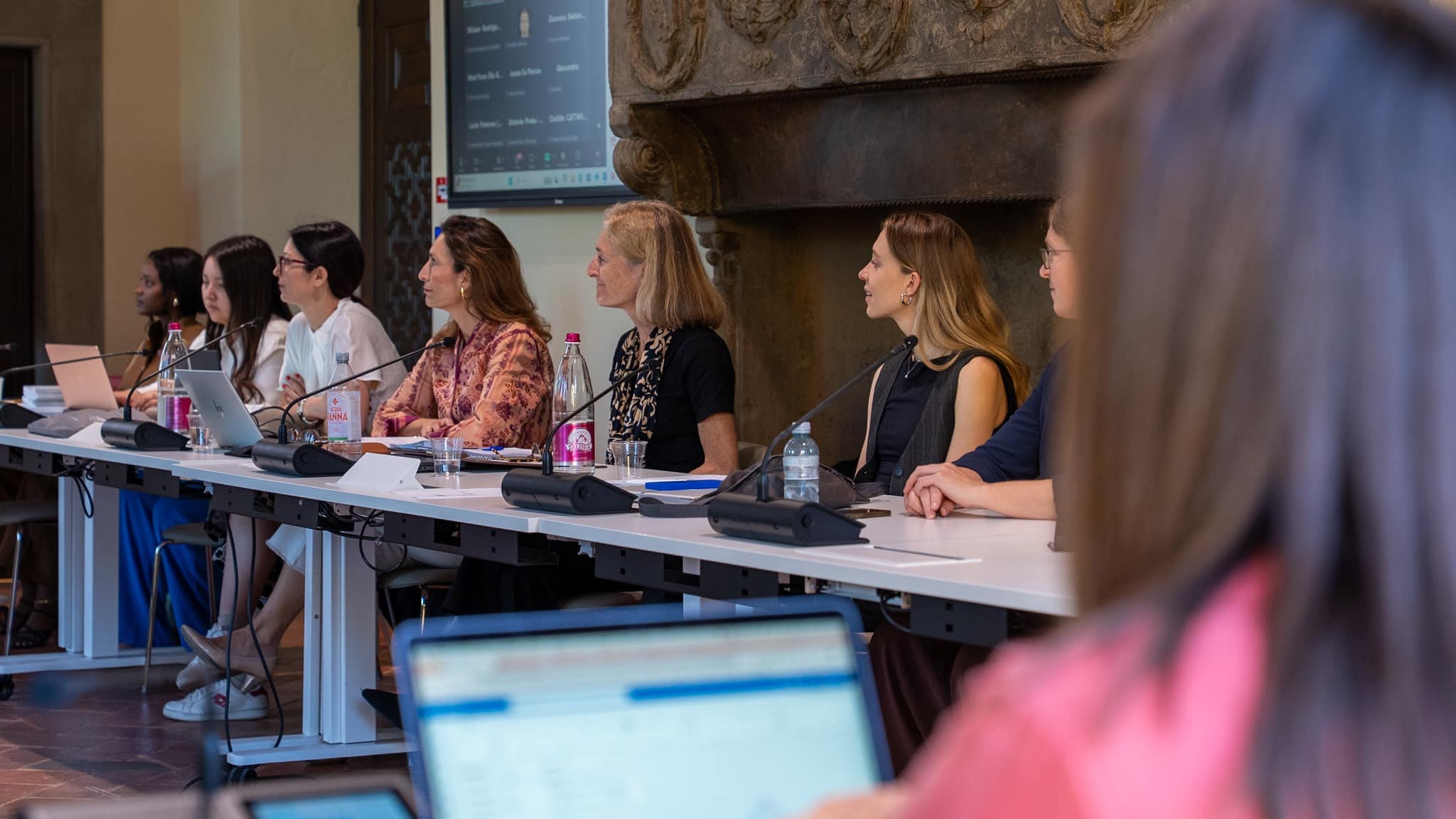
In this online event, organized in the context of the OneNet project, we aim to answer these questions and explore the main barriers related to customer engagement in TSO-DSO flexibility markets. Key results of the ongoing analysis will be presented together with our early thinking on potential recommendations to overcome these barriers.
We will discuss all that together with three experts, who will represent different point of view and experiences.
Agenda
Introduction | Nicolò Rossetto, EUI
- Welcome and agenda
- Short overview of the OneNet project
Barriers to customer engagement | Daniele Stampatori, EUI
- Presentation of the barriers to customer engagement (technical, economic, legal, behavioural)
- Presentation of recommendations to address some of those barriers (early results)
Expert interventions and debate
- Sonja Klingert, Senior Researcher at Universität Stuttgart (RENergetic, DECIDE)
- Jörg Mühlenhoff, Senior Energy Policy Officer at BEUC
- David Batič, Head of Development & Market Monitoring Department at Slovenian Energy Agency
Q&A
OneNet Project
The H2020 project OneNet (One Network for Europe) aims to develop a new generation of products and grid services to facilitate the participation of demand response, storage and distributed energy resources in the European electricity system and markets. OneNet builds on the results of the two preceding projects in the call, INTERRFACE and CoordiNet, and further develops the existing TSO-DSO-consumer coordination mechanisms. The OneNet system uses an IT architecture based on innovative platform federation mechanisms. Four demo clusters, consisting of a total of 13 European countries, demonstrate the OneNet concept through multiple use cases ranging from long-term to short-term operational planning, balancing, congestion management and voltage control. OneNet has also set up a mechanism for continuous interaction with all relevant stakeholders at EU and national level through its large-scale discussion forum GRIFOn.
OneNet project has received funding from the European Union’s Horizon 2020 research and innovation programme under grant agreement No 957739. Find more
Don’t miss any update on our events
Sign up for free and access the latest events from our community.