


Research

The School carries out applied research with the purpose of developing economically, legally, and socially-sound regulation and policy, using a multidisciplinary approach.

Proposal for reviewing the Regulation on trans-European Networks for Energy (TEN-E) : assessment and recommendations

Energy networks play an essential role in enabling competition, thus improving energy affordability, and in supporting decarbonisation of energy demand and security of supply....

Authors
Ronnie  Belmans Alberto Pototschnig ECSM
Article
Loss and damage of climate change : recognition, obligation and legal consequences
Discover more
Technical Report
A study on the relevance of consumer rights and protections in the context of innovative energy-related services
Discover more

Executive Education

We offer different types of training: Online, Residential, Blended and Tailor-made courses in all levels of knowledge.

Policy Events

A wide range of events for open discussion and knowledge exchange. In Florence, Brussels, worldwide and online.

More

Discover more initiatives, broader research, and featured reports.

Lights on Women

The Lights on Women initiative promotes, trains and advocates for women in energy, climate and sustainability, boosting their visibility, representation and careers.

Discover more

20 Years of EU ETS Data | Insights from the Life Coase Project
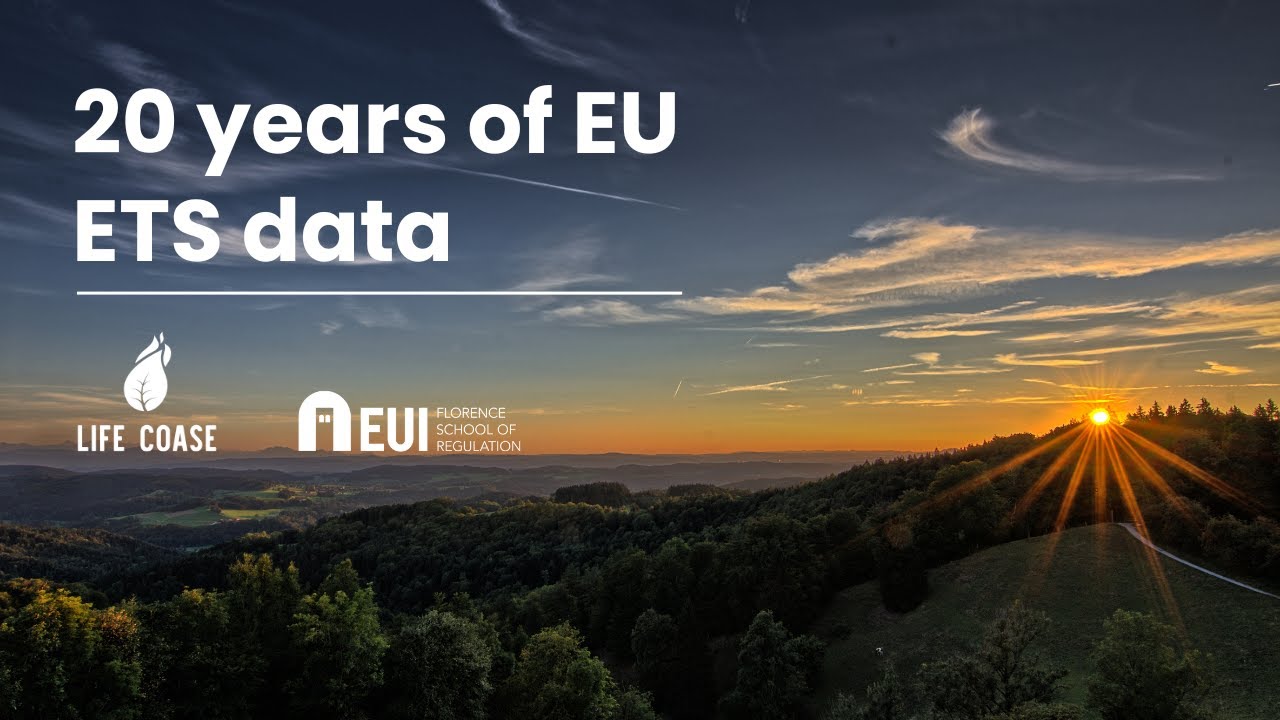
As carbon pricing grows in importance for EU climate policy, attention is turning to the data that underpins analysis and evaluation of the EU Emissions Trading System (EU ETS). While substantial datasets exist, challenges remain in ensuring transparency, compatibility, and accessibility across sources. These limitations hinder both rigorous research and broader stakeholder understanding of the system’s functioning and efficiency. In this webinar, Jan Abrell (University of Basel) and Marie Raude (European University Institute) introduce the viewers to the data, its limitations and efforts made to enhance its usability. These efforts have been an integral part of the EU-funded LIFE COASE project and are meant to pave the way for greater quality and greater quantity of empirical studies assessing the EU ETS.

Don’t miss any update on this topic

Sign up for free and access the latest publications and insights

Sign up
Back to top