





Practical Information
Capacity Remuneration Mechanisms (CRM) and Non-Fossil Flexibility Support Schemes (NFFSS)
This webpage has been designed to provide you with all the practical and logistical information you may need to prepare for your participation.
Please note that any updates will be published on this webpage, which should be considered your official reference for course logistics.
Here you will find guidance on:
- Getting to Brussels and the training venue
- Hotel suggestions
- Reimbursement guidelines
- Cancellation policy
- Contact details
We encourage you to review this information carefully to ensure a smooth and enjoyable experience.
General introduction and key steps
Travel and accommodation arrangements are the responsibility of each participant. Reimbursement will be processed after the training course, in accordance with the reimbursement guidelines.
To help things run efficiently, please make sure you:
- Register for the training course by the deadline
- Arrange your travel and accommodation in line with the reimbursement guidelines set out in the related section
- Submit your reimbursement claim after the training course, within one month, using the personal reimbursement link that will be sent to you by email after the training course. Please keep all receipts including boarding passes in PDF.
Page last updated on Aug 18, 2026
Getting to Brussels and the training venue
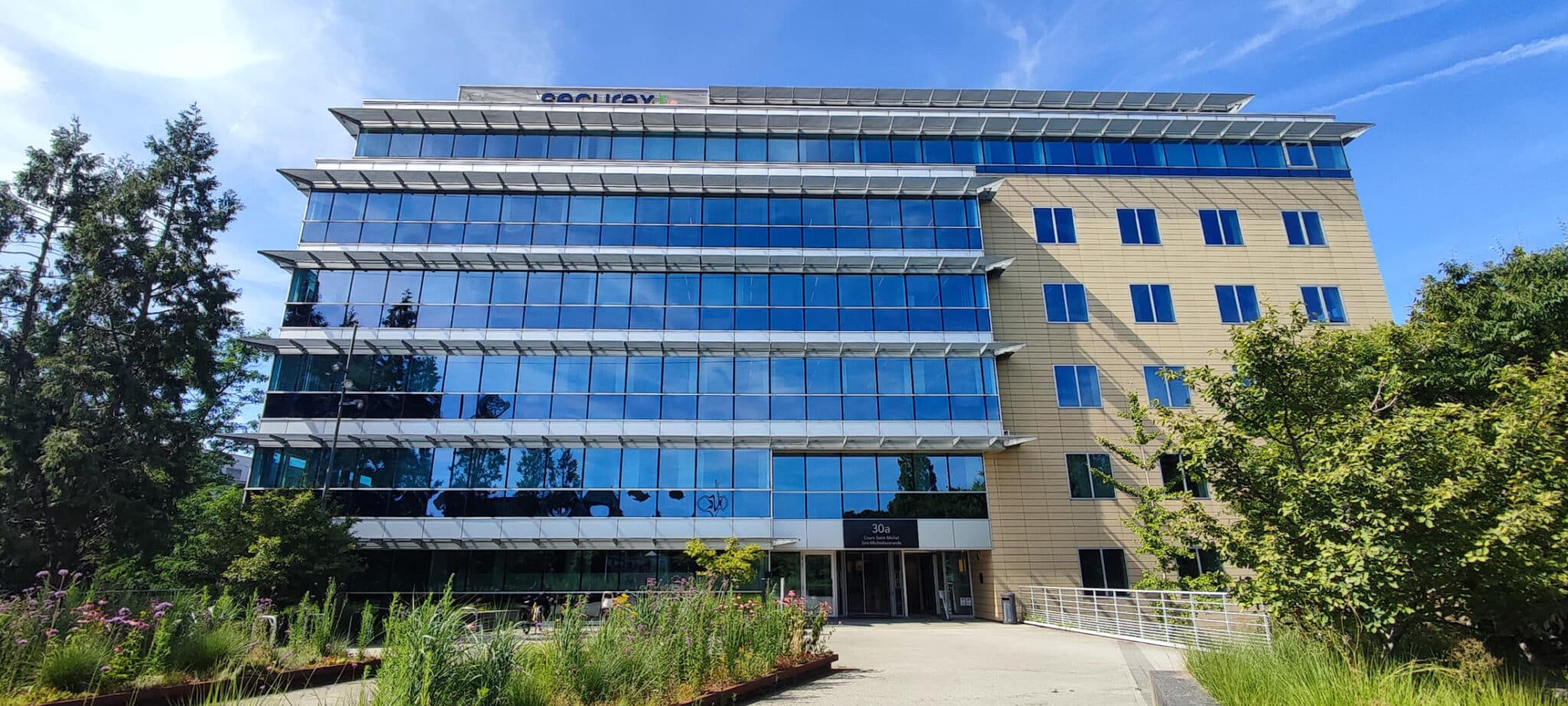
The training course will take place in Brussels at the Council of European Energy Regulators premises.
Address of the venue
Council of European Energy Regulators
5th Floor
Cours Saint Michel 30a
1040 Brussels
Conference room
5th Floor – Gold room
Ground Floor – Creative rooms
Public transportation – getting to the venue
- From Gare Centrale To CEER: take metro Line 1 (in the direction of Stockel) or Line 5 (in the direction of Herrmann-Debroux) and disembark at the Merode stop. Take the Avenue des Celtes exit. Cross Avenue des Celtes (keeping your back to the Cinquantenaire Park Arch) and turn right onto Rue Père de Deken. CEER is located about 150 meters away in the tall Securex building at entrance 30a (map). If you reach the ING building, you have gone too far and need to turn back.
- From Gare du midi to CEER: Take metro Line 6 (direction Elisabeth) and ride 6 stops to the Arts-Loi station. Change to metro Line 5 (direction Herrmann-Debroux) and ride 3 stops to the Merode station.
- From Gare Bruxelles–Luxembourg to CEER: Take Bus 27 (direction Andromède) and ride 5 stops to the Merode station.
You can call a local taxi service directly:
- +32 (0)2 349 49 49
- +32 (0)2 268 00 00
If the GPS doesn’t recognise “cours Saint-Michel 30a”, ask for Rue Père de Deken 36. Our offices
are located directly opposite
Public transportation – getting to Brussels
Hotel suggestions
For Hotel reimbursement conditions, please refer to the section: Reimbursement.
Please note that the list of suggested hotels is not binding. Participants are welcome to reserve alternative accommodation, ensuring the accommodation charges fall within the reimbursement ceiling.
Nearby CEER:
- Park Hotel Brussels, email: info@parkhotelbrussels.be
- 9Hotel Chelton, email: info@9hotelchelton.be
- Aloft Brussels Schuman, email: reservations.brussels@alofthotels.com
Brussels centre:
Nearby CEER:
- Eurostars Montgomery, email: info@eurostarsmontgomery.com
- Holiday Inn Brussels Schuman, email: info.hischuman@hi-brussels.com
- Pestana Brussels Schuman, email: res-brussel@pestana.com
Brussels centre:
Reimbursement
Travel expenses are reimbursed in accordance with the applicable ceilings – €171 per night for accommodation and €400 in total for travel – and exclusively on the basis of the most appropriate and cost‑effective means of transport between your place of residence and Brussels.
Kindly note that you may either submit your reimbursement request personally or appoint a delegated user to complete the procedure on your behalf. Both options are supported by the EUI Reimbursement Platform.
If you choose to submit the reimbursement request yourself, you will be asked to upload the relevant supporting documents to the platform.
Alternatively, if the reimbursement request is submitted on behalf of the participant, the participant only needs to provide the delegated user’s email address. The delegated user will then be invited to create an account and complete the reimbursement procedure through the platform. Additional information will be provided in a dedicated email after the event.
Travel must be arranged with departure no earlier than the day before the start of the training course and return no later than the day after the end of the course.
Travel outside the official dates of the training course is allowed only on an exceptional basis and must be approved in advance. If you plan to travel outside the authorised period, you are required to inform us beforehand. In such cases, the cost of air or train travel will be reviewed against a reference fare for the official course dates, based on a quotation provided by our internal travel agency. Reimbursement will be calculated exclusively on the basis of this reference fare, regardless of the actual travel cost incurred.
Reimbursement requests must be submitted through the EUI online platform no later than one month after the end of the training course.
After the training course, you will receive an automated email containing a link to access the platform and submit your reimbursement request. You can submit your reimbursement request yourself, or ask another person to do it on your behalf. If you delegate it, enter the person’s email address. That person will receive an email with instructions on how to access the EUI reimbursement platform and submit the request for you. In line with the project requirements, the reimbursement link will be shared only with participants who have correctly signed the attendance list for each residential day of the course, as requested by the organisers.
All supporting documents – including boarding passes, tickets, invoices, and receipts – must be uploaded in PDF format.
N.B. Please ensure that any questions or uncertainties are addressed before the training, to prevent delays or issues with reimbursement.
Ceiling 171 € / night
A maximum of 4 nights of accommodation are eligible for reimbursement, corresponding exclusively to stays from 22 November (check in) to 26 November 2026 (check out).
The maximum eligible rate is EUR 171 per night for a single‑occupancy hotel room and includes the city (tourist) tax. Hotel room invoice must be under the participant’s name.
What documentation is required for the reimbursement of accommodation expenses?
A final hotel invoice is required, which must clearly indicate the check in and check out dates as well as the applicable single occupancy room rate. Please note that booking confirmations are not accepted as valid supporting documents for reimbursement.
Not covered: Extra nights in the hotel, differences between single and double, all extra expenses. Please note that accommodation costs related to a no show, late arrival, or early departure are not eligible for reimbursement. This includes unused nights and any no show penalties, which cannot be reimbursed.
Overall ceiling for travel expenses: 400 €
Flight
Flight bookings must be made in economy class or equivalent, using the shortest and most cost effective route, and at the lowest available fare, with departure no earlier than the day before the start of the training course and return no later than the day after the end of the course. Reimbursement is capped at a maximum of EUR 400.
If you choose to fly to or from alternative airports other than Brussels, please note that the cost of the train ticket to reach the venue must be included within the EUR 400 ceiling.
What documentation is mandatory for the reimbursement of a flight expense?
1. Boarding passes for all flight legs (outbound and return)
Please note that boarding passes stored in mobile wallets may not always be downloadable in PDF format. In such cases, you may submit a clear screenshot converted into a PDF.
2. Flight ticket and proof of payment
For the reimbursement of flight travel, a separate invoice is not required provided that the ticket and proof of payment clearly indicate all relevant information, including the passenger’s name, travel dates, route, and cost.
An invoice is required only if the ticket does not show the amount paid, or if the travel was booked through a travel agency, in which case the travel agency invoice must be submitted.
Train
Train travel (including sleeping compartments) must be booked using the shortest and most cost effective route, with departure no earlier than the day before the start of the training course and return no later than the day after the end of the course.
What documentation is required for the reimbursement of a train expense?
1.Train ticket and proof of payment
For the reimbursement of train travel, a separate invoice is not mandatory provided that the ticket and proof of payment clearly indicate all relevant information, including the passenger’s name, travel dates, route, and cost.
An invoice is mandatory only if the ticket does not indicate the amount paid, or if the travel was booked through a travel agency, in which case the travel agency invoice must be submitted.
Car
While the use of public transportation is strongly recommended, travel by private car may be considered only in exceptional cases. If you intend to travel by car, you must contact us in advance, as prior authorisation is required for any reimbursement.
Please note that travel by private car is not recommended, and the organisers do not assume any responsibility or liability for insurance coverage, accidents, damages, or any other incidents arising from car travel.
Please note that only travel expenses (flight and/or train) and accommodation costs are eligible for reimbursement, as outlined above.
All other expenses cannot be reimbursed, including, but not limited to:
- Extra nights or additional hotel charges
- Car rental expenses
- Meals not included in the training programme
- Taxi fares
- Local transportation costs
- Airport parking expenses
- Breakfast at the hotel if it is billed separately
Cancellation policy
Please note that, in the case of cancellation of participation due to any circumstances, the organisers are unable to assume responsibility for any associated costs or reimbursements.
Participants are kindly requested to make the necessary provisions and arrangements with their respective institutions in advance.
Replacement of participants may be permitted upon prior notification and approval by the organisers. However, any costs incurred by the cancelled participant will not be covered or reimbursed, as outlined above.