

The Geopolitics Of Renewables | Andris Pielbags
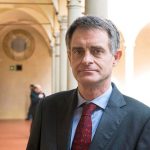
In this episode, Net Zero host Joana Freitas invites Andris Piebalgs, Professor at Florence School of Regulation and former EU Commissioner for Energy, to discuss how renewable energy is changing global geopolitics. While over the last 200 years, control of oil, natural gas and coal, as well as of bottlenecks in global sea routes (like the Strait of Hormuz) have shaped the world geopolitics, renewables are now expected to challenge this landscape. Andris Piebalgs sees an opportunity for those nations that have been investing in new technologies related to renewables, like China, to reinforce their global influence in the energy area. On the other hand, Russia and Saudi Arabia are pointed out as the countries where the energy transformation might be more difficult as “it will be very difficult domestically to change the pricing for fossil fuels”. In the specific case of Middle East countries, there are already some investments in renewables but mostly in the Emirates. In Andris Piebalgs’s perspective a change in consumers’ patterns might be a key trigger for these countries’ transformation – “If Europe will go massively for electric vehicles, then definitely, these countries also will be encouraged to make reforms”. Although China is the world’s largest producer, exporter and installer of solar panels, wind turbines, batteries and electric vehicles, Andris Piebalgs sees no reason to believe that Europe is changing from one type of dependency to another. Europe can always develop technologies on its own, while fossil fuels are clearly geographically located. “So my point is that definitely more renewable energy means more energy security, particularly for Europe”, Andris Piebalgs said. In a world where climate change is perhaps the biggest challenge, Andris Peibalgs also believes that the energy transition “definitely brings more peace”.
Don’t miss any update on this topic
Sign up for free and access the latest publications and insights