


TOM keyword: COP30
COP30: climate coalitions of the UN(willing)
This is the third and final installment of the Topic of the Month: Priorities of COP30

On Friday, November 21, COP30 in Belém ended with a compromise reached during nighttime negotiations that lasted until Saturday. Given the geopolitical tensions that divided parties at this year’s climate conference, it was crucial to reach a unanimous agreement, even if it fell short of collective expectations. Positive outcomes include a commitment to increase climate finance to $1.3 trillion annually by 2035, a pledge to double support for climate adaptation in developing countries by 2025 and triple it by 2035, and progress on operationalising the Loss and Damage Fund, which was established to help countries cope with climate damage that cannot be avoided through mitigation or adaptation measures.
Nevertheless, there was widespread disappointment that the opportunity to address the root causes of the climate crisis had been missed. More than 80 countries, including EU member states, small island states, and some Latin American countries, had advocated for a roadmap to phase out fossil fuels. However, the inclusion of this initiative in the Global Mutirão Decision, the major political agreement reached at COP30, was blocked by countries such as Saudi Arabia, Russia, and India, which rejected any binding commitment to phase out fossil fuels globally. In addition, although the conference was held in the Amazon region, no binding language on ending deforestation was included in the Global Mutirão Decision. Negotiations on both issues are now to be continued on a voluntary basis outside the UN process.
The increase in voluntary commitments and the emergence of new climate coalitions could indicate where the real momentum in global climate policy lies in times of international fragmentation.
Voluntary instead of unanimous action?
Indeed, many voluntary measures were proposed at COP30. For instance, the Tropical Forests Forever Fund, launched by the Brazilian presidency, has expanded to 53 countries and now totals $5.5 billion, with at least one-fifth of the funds earmarked for Indigenous peoples and local communities, and the Belém Health Action Plan addresses climate-related health risks with $300 million in philanthropic funding.
Other notable coalitions formed around the future of carbon markets, among them the Declaration on the Open Coalition on Compliance Carbon Markets, led by Brazil’s Ministry of Finance and currently supported by 18 parties, that aims to improve cooperation and interoperability between carbon pricing systems. The goal is to promote common principles for credibility, transparency, and the issuance of high-quality carbon credits. Similar to previous initiatives, this is intended to create conditions under which different emissions trading systems (ETSs) and carbon tax systems can work together more effectively, thereby reducing fragmentation.
Addressing carbon market fragmentation
A report by the Global Climate Policy Project at Harvard and MIT, which served as the basis for the initiative, argues that climate policy, carbon pricing, and international trade are closely intertwined and that fragmentation of markets would undermine both climate goals and economic stability. The report, as well as previous research conducted under the EUI-led Life Coase project, proposes that countries work together in a climate coalition to coordinate carbon pricing, support emerging economies, and manage emissions associated with trade in goods. This approach could reduce the need for countries to impose their own trade barriers and better manage the impact of national climate policies on global trade.
This topic was particularly relevant in the run-up to COP30, where the European Union’s Carbon Border Adjustment Mechanism repeatedly sparked discussions about fairness and international cooperation. Many developing countries express concern that unilateral border adjustments could effectively become trade barriers or shift the responsibility for decarbonisation to producers with limited resources. These concerns have heightened interest in cooperation frameworks that could provide clarity and avoid trade tensions. While CBAM was not specifically discussed at COP30, the issue of emissions embedded in traded products has received great attention, with the Brazilian presidency proposing a separate dialogue on trade.
High integrity as a precondition for integration
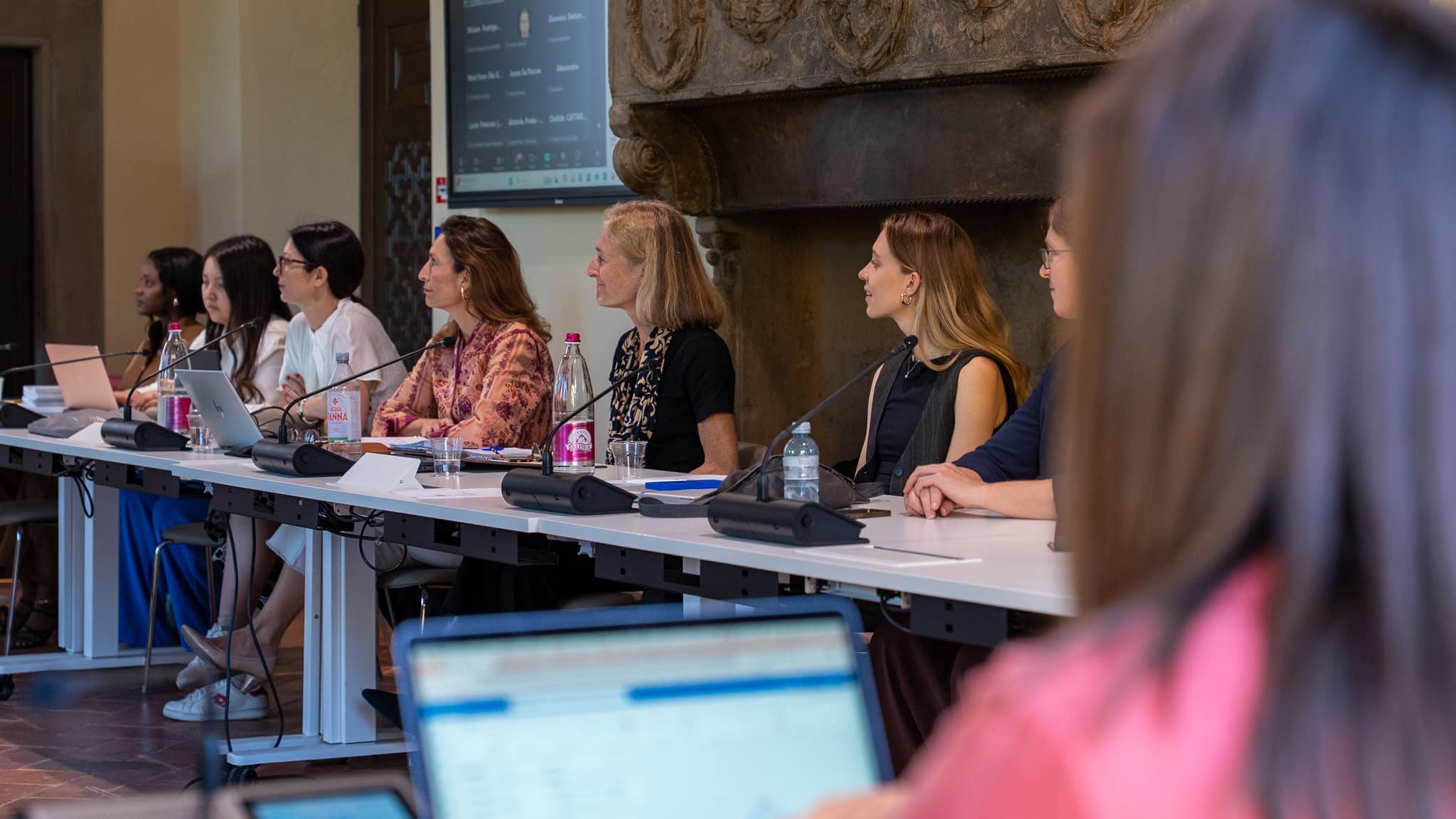
The momentum toward a more connected carbon market was also evident in the official UNFCCC side event organised by the EUI, the International Carbon Action Partnership, the German Emissions Trading Association, the Seoul International Law Academy, the World Union of Small and Medium Enterprises and Tsinghua University, which took place on 18 November. The discussion examined the rapid expansion of ETSs in major economies and emerging markets, alongside the evolution of existing systems as they align with net-zero goals.
The speakers noted that most systems now permit some use of emission credits, even though under strict conditions, and that demand for high-quality certification methods is on the rise. Other topics of focus included developments in China and Korea, the challenges faced by small and medium-sized enterprises in accessing carbon markets, and the importance of fair compensation for Indigenous communities. Panellists agreed that cooperation, credible standards, and regulatory harmonisation are essential to achieving a meaningful level of interoperability between systems. It remains to be seen if climate coalitions can pave the way for broader international cooperation in this regard.
Don’t miss any update on this topic
Sign up for free and access the latest publications and insights





COP30: a crucial moment for climate cooperation with strong calls for inclusion
This is the third and conclusive installment of the Topic of the Month: Priorities of COP30

The UN Climate Change Conferences have long served as fundamental pillars of international cooperation, providing a platform for nearly 200 countries to negotiate commitments and collectively advance the architecture needed to address the climate crisis. Indeed, each Conference of the Parties (COP) is a reminder of both the complexity and urgency of global climate action, and COP30 is no exception. As it unfolds in Belém, Brazil, the world’s attention is once again drawn to this annual gathering that stands at the core of global climate governance.
Hosting this year’s summit in Brazil carries a powerful symbolic meaning. The country contains roughly 60% of the Amazon rainforest, one of the planet’s most critical carbon sinks and a region whose protection is essential for meeting global climate goals. Moreover, COP30 marks a return to the country where, during the 1992 Earth Summit in Rio, the United Nations Framework Convention on Climate Change (UNFCCC) was established. However, the path to the conference was far from easy. The logistics surrounding COP30 have been particularly challenging, since Belém’s location in the northern Amazon, while strategically relevant, has made travel and coordination more complex. The absence of a formal U.S. delegation at COP30 has also been a key point of discussion, raising concerns about the implications for negotiation dynamics.
This year, the conference's start has been marked by significant protests too, particularly from Indigenous communities.
As reported in international media, Indigenous representatives demanded greater access to the UN pavilions and a more central role in decision-making. These protests, which blocked entrances to the summit venue, drew attention to the tension between global climate commitments and local realities, especially in regions directly affected by environmental degradation. The demands raised by these communities resonate with a core theme of COP30: the need to embed climate action within broader frameworks of justice. This aligns closely with the spirit of two events in which members of the FSR Climate team have participated, contributing to discussions aimed at incorporating local contexts into the global climate conversation.
The first event, “Stakeholder engagement and community-based approaches in energy transition processes and initiatives,” held on 13 November at the Italian Ministry of Environment and Energy Security (MASE) Pavilion, explored how engaging local communities and stakeholders can help drive sustainable transformations. Contributions to this workshop, including those by Jacopo Cammeo from FSR Climate, highlighted the value of multi-country consultations both within and outside Europe, as well as the importance of bridging feasibility gaps in energy transitions through participatory, context-sensitive approaches.
Similarly, the event “Anchoring global fairness and social partnership in the EU climate and energy transition”, held on 15 November at the Just Transition Pavilion hosted by the European Commission and the International Labour Organisation (ILO), reflected deeply on how Europe can pursue ambitious decarbonization while supporting global social justice. Simone Borghesi, representing FSR Climate, joined a panel examining how EU policies can promote fairness, including beyond European borders. The conversation underscored that climate transitions should be designed with attention to inclusiveness and global partnerships, which is an essential message in a COP marked by strong calls from frontline communities for recognition and reparative action.
Taken together, the two COP30 events in which the FSR Climate team participated highlight a clear connection: successful energy and climate transitions should be participatory and responsive to the needs of the local communities most affected by environmental change. Whether discussing stakeholder engagement or global fairness, the message emerging is consistent: climate policy should be shaped with, rather than merely for, the people it impacts.
With the summit still underway, the need to broaden inclusive approaches to climate governance remains a central concern. The FSR Climate team will continue to engage in these debates within COP30 and will host an official session during the conference; the UNFCCC side event “Towards a global carbon market: how to ensure integrity and cooperation”, organised by Lea Heinrich and Albert Ferrari from FSR Climate, will be chaired by Jacopo Bencini from EUI-STG and will feature Simone Borghesi as one of the panellists. The session will bring together experts and policymakers to discuss how to strengthen international coordination in emerging carbon market mechanisms, providing an opportunity to explore how international cooperation can enhance the credibility of global climate initiatives.
Don’t miss any update on this topic
Sign up for free and access the latest publications and insights



Turning Methane Commitments into Action: Priorities for COP30
This is the first installment of the Topic of the Month on Priorities for COP30

The 30th Conference of the Parties (COP30) taking place in Belem, Brasil, offers a pivotal opportunity to move from pledges to practice on methane. By defining sectoral targets, confirming OGMP 2.0 as the global oil and gas standard, and catalysing action in the steel sector, Brazil’s COP presidency can deliver a legacy of practical climate impact—one that cuts warming in this decade and strengthens global credibility on climate action.
Methane at COP
Ever since the Berlin Declaration at the first climate COP, presided over by Angela Merkel in 1995, methane has played second fiddle to the dominant greenhouse gas, carbon dioxide. As the world continues to fall short of climate goals, it has become increasingly clear that acting on methane is an imperative part of our collective climate agenda. Methane emissions from human activity account for a third of the warming that we will experience over the next two decades. Much of it can be reduced cost-effectively, and without curbing these emissions the agreed climate targets will remain out of reach.
Subsequent COPs have increasingly highlighted the role of methane in climate action, and COP30 is expected to echo this further. General declarations of intent are part of any COP, and while they are useful to set directions and signal agreement, more focused decisions are now called for. Hopefully, these can be delivered over the coming twelve months of the Brazilian COP presidency.
We highlight three such actions.
Defining sector targets for collective action
Collective action requires a clear focal point for each sector. The current Global Methane Pledge (GMP), which calls for an overall 30% reduction is a step in the right direction, but it is now imperative to break down the target into specific sectors.
The sectors that emit methane are very different, and evolving the associated socio-economic systems requires specific approaches. Mitigating emissions from livestock digestion has little in common with cutting leakage from a coal mine. The only common denominator is the gas itself, and to some extent the detection technology.
To take focused action in each of the sectors, the GMP target must be broken down into six sectoral targets: oil&gas, steel, thermal coal, waste, rice and livestock. While the total emissions per sector are relatively well quantified, the quality of the data at local level is often poor. The consequence is that the local baseline is often not well defined. Consequently, targets should be both in percentage reduction and emissions intensity.
Accelerating mitigation in the oil and gas sector
Accurately measured data is a means for mitigation, and not an end. The goal is the mitigation of emissions, not merely to report them. The oil and gas sector is sufficiently homogeneous that a single standard is both efficient and effective. Such a global mitigation standard already exists—it is the UN’s OGMP 2.0— and it already covers almost half of global production, and it is the foundation of methane regulation in several jurisdictions. OGMP 2.0 was developed hand in hand with industry, so it is at the same time practical and ambitious.
A declaration by governments confirming that OGMP 2.0 is the global standard and committing to align their regulations and national companies with it would be a powerful accelerator. No standard is perfect, so such a confirmation could be accompanied by a suggestion on how to make the standard more powerful still.
At COP28 a group of 54 oil and gas companies launched the Oil and Gas Decarbonization Charter (OGDC), pledging to reduce methane emissions. A concrete advance would be to complete the effort that was started at COP28 by having all of them join OGMP 2.0 (half of them have already joined).
Finally, OGMP 2.0 should be explicitly linked to the sectoral methane target proposed above, creating a clear framework for both action and accountability.
An under-valued opportunity: steel methane
Methane emissions add a quarter to the climate footprint of steel over twenty years and can be mitigated at less than 1% of the price of steel. Mitigating methane is a cost-effective component of the journey to full decarbonization of steel.
The technical solutions exist and have been coalesced into a methane program together with companies and NGOs: the UN’s Steel Methane Program. What is now required is a catalytic coalition of companies and governments to implement it.
A relatively small number of countries account for the majority of global steel and metallurgical coal production. Aligning them around a Steel Methane Program has the concrete opportunity for taking out a gigaton CO2eq a year over the next two decades – a concrete and scalable contribution to global mitigation.
The flame that lit the path to methane action (in memory of Manfredi Caltagirone)
“Chimera, a being of nature not human, but divine, with the head of a lion, the tail of a dragon, and the body of a goat, which breathed fiery and horrible flames.” The Iliad VI.145
In what is likely the first description of gas flaring, Homer in the Iliad describes the flames at Chimera. He appears to realise Chimera’s flames were both wondrous and dangerous. Now located in modern-day Turkey, they combusted the emissions of natural seepage of methane and hydrogen. The first Olympic flames were lit at Chimera.
Thus, methane has long been a source of both hope and fear for millennia. Over the last half century, this fossil gas has brought energy for better livelihoods, while its seepage—no longer natural but industrial—accounts for more than a third of global warming over the next two decades. Yet cutting methane emissions is one of the most cost-effective ways to combat climate change. But as often happens, while it is straightforward to know what to do, how to get this done at a relevant scale and speed is the real challenge.
It was with this challenge in mind that three individuals assembled under a massive tree at UNEP sprawling campus in Nairobi, Kenia. They had been closely involved in an early attempt to tackle the problem through the Oil and Gas Methane Partnership that was launched by the UN Secretary General in 2014. While this was a solid initiative, it was also clear that it would not deliver the outcome required for the climate. Delivering the opportunity to avoid two-tenths of a degree of warming was going to require a new approach. It would take more than an imperfect agreement, but an institutional solution, and a systemic theory of change.
It was clear that data assembled with adequate scientific rigour was imperative. Methane emissions had in the past overwhelmingly been estimated using generic factors from laboratory experiments. While this was more or less adequate to put together an inventory of emissions, it was an approach not fit for real mitigation. An engineer fixing a leak must have data on that specific source, not some global average. Rigorous data and scientific methodology would be at the heart of the new initiative.
Good data alone is not enough. For data to drive action, people must care about it, especially those with the agency to act. Central to the new theory of change was the idea that those who could take action would also need to be involved in the data collection. This would lead them to have ownership of the data, and as engineers, they would be intrigued to develop solutions. As much as data science, social engineering would need to be key to the solution.
Finally, this vision needed an institution; a sufficiently large skill pool of scientists, data engineers, project managers and systems change experts to become a focal point and provide longevity to the project. This would require resources: one hundred million dollars for the first five years. Brendan Devlin from the European Commission soon joined their efforts, helping mobilise funds and tie the initiative to the vast capabilities of the European Institutions to connect globally. And so, the International Methane Emissions Observatory (IMEO) – housed at UNEP, under the powerful brand of the United Nations.
Roland Kupers would continue to serve as the architect of IMEO, expanding it to new sectors and evolving its institutional design.
Manfredi Caltagirone became the head of IMEO, leading it with extraordinary warmth, energy and conviction. Under his leadership, IMEO grew to more than 80 staff and an annual budget of $20 million.
Manfredi’s passing in 2025 was a profound loss to the climate community. Yet his vision and humanity endure—in IMEO’s work, in the partnerships he nurtured, and in the many people he inspired. After his death, Giulia Ferrini took up the baton to lead IMEO beyond its fifth anniversary -continuing the mission that Manfredi helped ignite.
As the world approaches COP30, Manfredi’s legacy reminds us that lasting change begins when data meets purpose, and when science is guided by empathy.
Don’t miss any update on this topic
Sign up for free and access the latest publications and insights
More on the topic