


Assessing the Efficiency-Fairness Trade-Offs from a Revenue-Neutral Carbon Tax

Speaker: Lawrence H. Goulder, Professor in Environmental and Resource Economics, Stanford University /Director of the Stanford Environmental and Energy Policy Analysis Center
Discussant: Xavier Labandeira, Director, FSR Climate
In this seminar Professor Goulder presents recent research that evaluates quantitatively the trade-offs between cost-effectiveness and fairness (as measured by the evenness of distributional impacts) from a revenue-neutral US carbon tax. Applying a numerical general equilibrium model of environment-energy-economy interactions in the USA, Professor Goulder (1) suggests how the costs of the carbon tax are likely to be distributed across industries and household income groups, (2) shows how these costs differ, depending on the nature of revenue-recycling and various compensation schemes, and (3) evaluates the efficiency costs of reducing inequality in the distribution of policy impacts across industries and household income groups. The research applies a new method for addressing the distributional impacts across households and reveals that these impacts change dramatically over time.
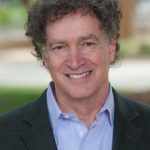 Lawrence H. Goulder is the Shuzo Nishihara Professor in Environmental and Resource Economics at the Stanford University and Director of the Stanford Environmental and Energy Policy Analysis Center. He is also a University Fellow at Resources for the Future and a Research Associate at the National Bureau of Economic Research. His research examines the environmental and economic impacts of U.S. and international environmental policies, including policies to deal with climate change and pollution from power plants and automobiles. His work also explores the “sustainability” of consumption patterns in various countries. At Stanford Goulder teaches undergraduate and graduate courses in environmental economics and policy, and co-organizes a weekly seminar in public and environmental economics. He graduated from Harvard College with an A.B. in philosophy and received his Ph.D. in Economics from Stanford.
Don’t miss any update on our events
Sign up for free and access the latest events from our community.
More on the topic