




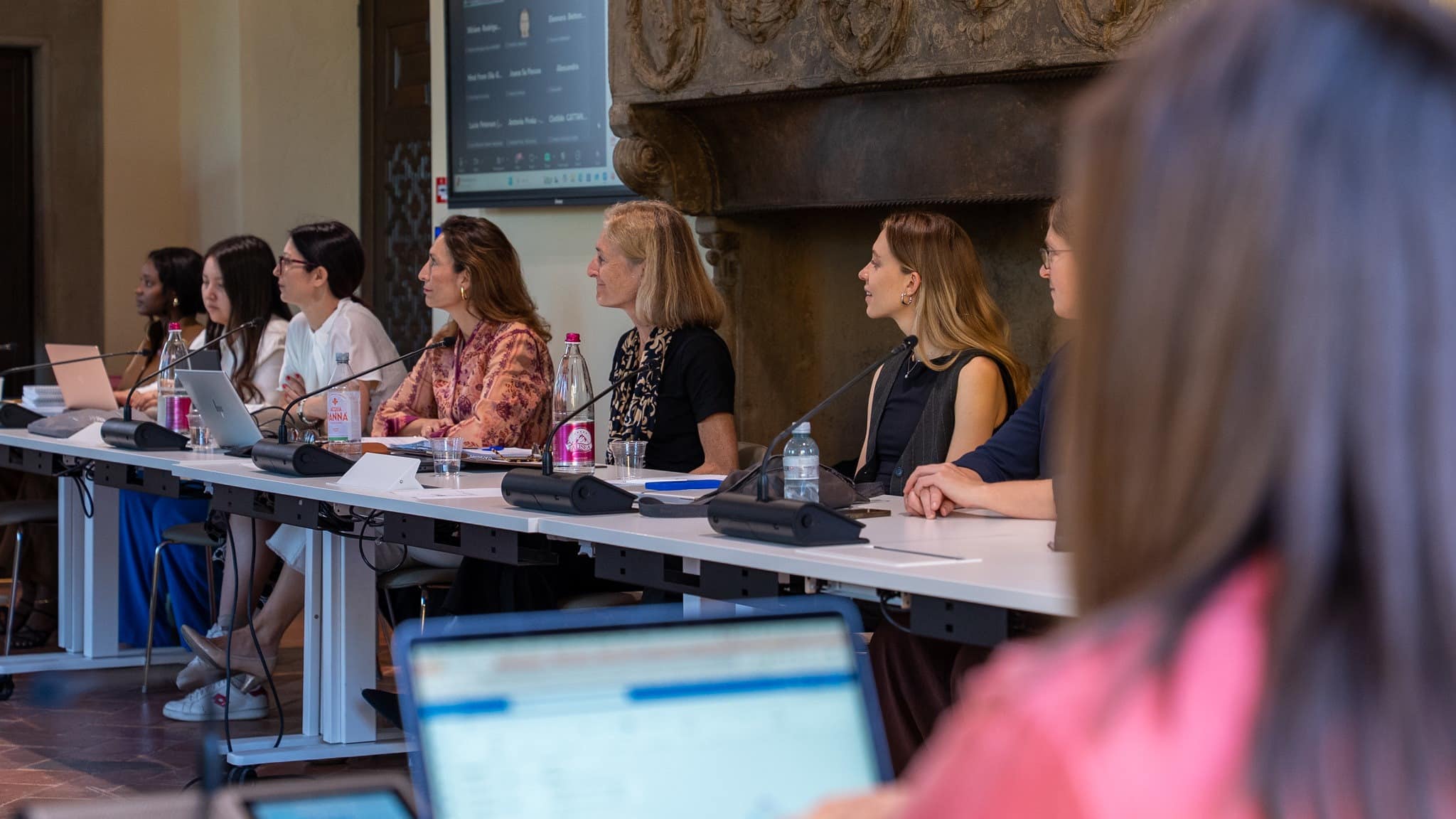
Research

The School carries out applied research with the purpose of developing economically, legally, and socially-sound regulation and policy, using a multidisciplinary approach.

Reflections on climate resilient tourism : evidence for the EU ETS-2 and voluntary carbon markets

The chapter discusses transition risk for tourism, addressing its relation with the Environmental Kuznets Curve and overtourism. Transition risk emerges when an economic model...

Authors
Matteo Mazzarano Simone Borghesi GG
Article
Research on the impact of urban rail transit on the financing constraints of enterprises from the perspective of sustainability
Discover more
Article
SPS and TBT measures through the lens of bilateral and GVC-related regulatory distance
Discover more

Executive Education

We offer different types of training: Online, Residential, Blended and Tailor-made courses in all levels of knowledge.

Policy Events

A wide range of events for open discussion and knowledge exchange. In Florence, Brussels, worldwide and online.

More

Discover more initiatives, broader research, and featured reports.

Lights on Women

The Lights on Women initiative promotes, trains and advocates for women in energy, climate and sustainability, boosting their visibility, representation and careers.

Discover more
PODCAST

How to deal with disruptions: the case of Engie │Thierry Lepercq (Executive Vice-President, Engie)

How to deal with disruptions: the case of Engie │Thierry Lepercq (Executive Vice-President, Engie)

Energy Today with Florence School of Regulation
15
15
00:09:16

Nicolò Rossetto (FSR) and Thierry Lepercq (Engie) discuss the way Engie, a major European energy company, is dealing with the series of disruptions that are affecting the energy business, both electricity and gas. Engie is navigating through the changes in Europe and beyond, and has decided to sell or close some of its less profitable assets in power generation. At the same time, Engie is looking towards the future by investing in renewables. According to Mr Lepercq the future is the exploitation of solar energy in prime locations around the world, like Chile or Australia, to produce hydrogen and then deliver it to Europe at a final cost that is in line with that of liquefied natural gas. This could possibly contribute to the decarbonisation of the gas sector, safeguarding the European gas grid form becoming a stranded asset. Hydrogen could then be used for district heating and power generation, solving the issue of the intermittency and seasonality of most renewables. A 100% renewable future would become much easier and cheaper to achieve. In line with this vision, large energy companies will continue to play a key role, even if large power plants will decrease in relevance.

Don’t miss any update on this topic

Sign up for free and access the latest publications and insights

Sign up
Back to top