

4th Florence Air Forum. Consolidating the Single European Sky: From Physical to Virtual
Europe is facing increasing competition from other areas of the world, forcing the continent to grow together and offer easy journey between different points. Air transport plays an important role for cross-continental travel, but projections by the European Commission suggest that under current conditions the European airspace and airports will lack the capacity to satisfy the needs of increasing air traffic. The Single European Sky (SES) aims at reducing delays, increasing safety, reducing the environmental impact, and reducing costs related to service provision. It contributes to these goals by de-fragmenting the European airspace, and creating a more efficient air traffic management (ATM) system. An important tool to decrease the fragmentation of the European airspace and enhance cooperation among air navigation service providers (ANSPs) are the Functional Airspace Blocks (FABs).
The FABS, however, are increasingly seen as an element slowing down the consolidation of the SES. Most EU Member States failed to create fully operational FABs by the deadline in early December 2012: only two, out of the nine planned FABs, were established by end 2012. The Commission reacted by warning Member States they would launch infringement procedures. Consequently, policy-makers and stakeholders are rethinking their approach to the SES; from an operational point of view, some of them are even questioning the current definition of the FABs as their slow delivery might be jeopardise the efficiency of the entire initiative.
ANSPs, in turn, are in need for a new business model and some stakeholders discuss the possibility of creating a common infrastructure approach (data centres, airspace management). The idea behind the common infrastructure approach is to create air traffic services units operating from different locations which use a common standardised interface. This is based on two pillars: standardised methods of operation, procedures and open systems enabling the download of licensed applications at the controller’s workplaces and the build up of several data centres over Europe which might finally lead to a security protected information cloud. The standardisation should reach such an extent, that the airspace user perceives it as a single system. A common infrastructure approach grants freedom and adjustments to local needs, while acting as one integrated body. Could this be a model to solve the current standoff?
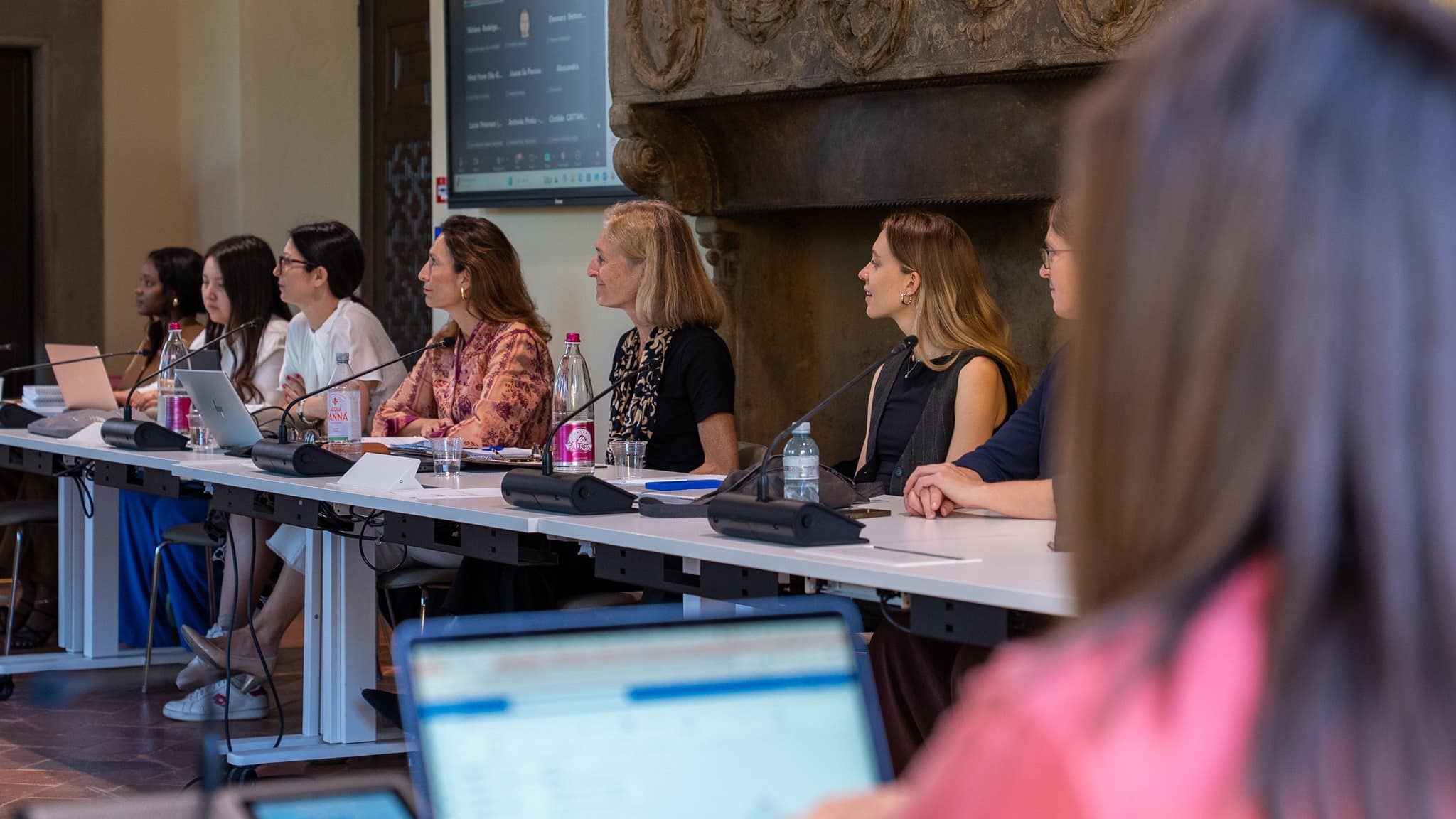
Stakeholders – operators, authorities, the European Commission, associations and academics – are invited discuss the current state of the SES and the possibility of creating a common infrastructure approach. The discussions will be centred on the following guiding questions:
- Why is the SES only progressing slowly?
- Can a common infrastructure approach bring the Single European Sky forward?
- What steps need to be taken to define a harmonized regulatory framework to implement a common infrastructure approach?
For more information please contact FSR.transport@eui.eu
DOWNLOAD
Final Programme
EUROPEAN TRANSPORT REGULATION OBSERVER
RELATED PRESENTATIONS
Introduction to the 4th Florence Air Forum – MATTHIAS FINGER
A Proposal for a Common Infrastructure Approach – DANIEL WEDER
The Perspective of an ANSP on the slow progress of the SES – MASSIMO GARBINI
Airports’ perspectvie on the slow progress of the SES – STEFANO BARONCI
An Analytical Perspective on the SES – ANDREW CHARLTON
Lufthansa’s Perspectvie on the slow progress of the SES – REGULA DETTLING-OTT
CANSO’s perspective on a common infrastructure approach – PAUL RIEMENS
Eurocontrol’s perspective on a common infrastructure approach – JOE SULTANA
The Performance Review Body on a Common Infrastructure Approach – MARC BAUMGARTNER
The German Air Traffic Control on a Harmonised Regulatory Framework – KLAUS-DIETER SCHEURLE
SESAR’s perspective on a Harmonized Regulatory Framework – CARLO MARIA BORGHINI
The British Civil Aviation Authority on a Harmonised Regulatory Framework – ANDREW HAINES
Don’t miss any update on our events
Sign up for free and access the latest events from our community.